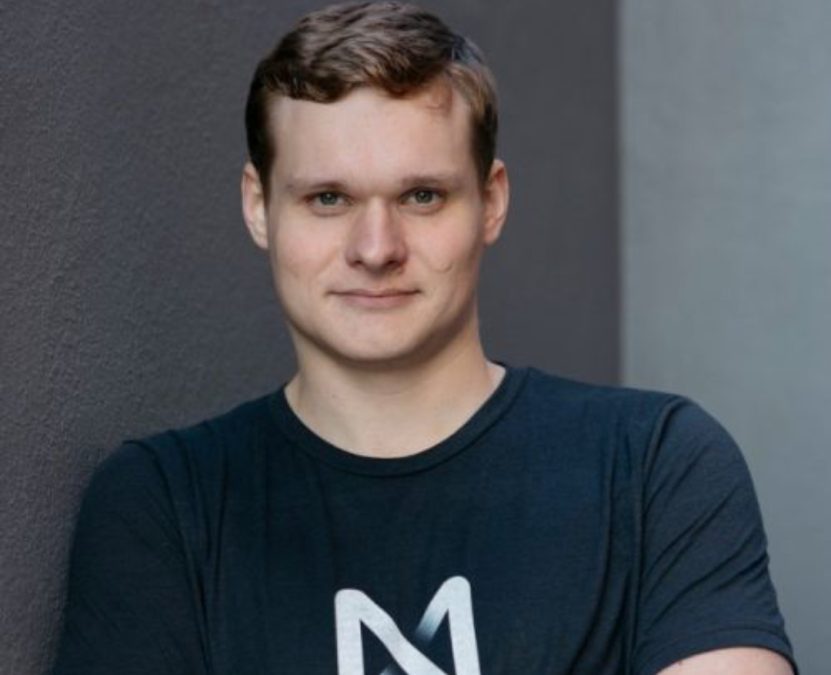
In the history of artificial intelligence, few names carry as much weight as Illia Polosukhin. Long before the world was captivated by ChatGPT and generative AI, Polosukhin was a researcher at Google, where he co-authored the seminal 2017 paper, “Attention Is All You Need.” This work introduced the Transformer model, the technical bedrock for almost every Large Language Model (LLM) in existence today.
However, Polosukhin’s story didn’t end in Silicon Valley’s research labs. In 2026, he is recognized as the man who saw the looming threat of “Big Tech” AI monopolies and pivoted to create NEAR Protocol—a blockchain designed to host the world’s first truly User-Owned AI.
This Illia Polosukhin biography tracks his meteoric rise from a Ukrainian coding prodigy to a global tech sovereign. By 2026, NEAR has transitioned from a high-performance Layer 1 into a comprehensive “AI-native” ecosystem, pioneered by Polosukhin’s vision of Chain Abstraction. This allows users to interact with decentralized AI assistants without ever knowing they are on a blockchain.
We explore how his background in deep learning and distributed systems has positioned him to lead the “Decentralized AI” revolution, ensuring that the intelligence of the future is not controlled by a handful of corporations, but owned by the people who provide its data.
What if one of the eight Google researchers who fundamentally changed the trajectory of artificial intelligence — by introducing the Transformer model that underpins ChatGPT, Claude, Gemini, and virtually every major large language model today — walked away from the world’s most powerful AI lab before their groundbreaking paper was even published? What if he did so not to chase bigger corporate resources, but to solve a seemingly mundane problem: how to pay unbanked student researchers worldwide for data labeling work without exorbitant fees or banking friction?
CHECK: Stani Kulechov Net Worth 2026: Best Ever Aave Labs CEO
That researcher is Illia Polosukhin. Born in Ukraine, a former competitive programmer and ICPC champion, he co-authored the seminal 2017 paper “Attention Is All You Need.” He then co-founded what became NEAR Protocol — a sharded, developer-friendly Layer-1 blockchain designed for extreme usability and scalability. In 2026, with NEAR evolving into an operating system for the open web, Polosukhin is doubling down on his original passion: building user-owned AI — private, verifiable, decentralized intelligence where individuals control their data, models, and agents rather than surrendering them to centralized tech giants.
At a time when AI risks concentrating unprecedented power in the hands of a few corporations, Polosukhin’s vision offers a compelling alternative: blockchain as the root of trust and coordination layer for an open, auditable AI ecosystem. His journey from Kharkiv to Google Brain to the frontiers of decentralized machine learning is one of intellectual restlessness, principled departure, and long-term thinking about technology’s societal impact.
Illia Polosukhin Biography: NEAR Co-Founder, Decentralized AI Advocate & Vision for AI Agents as Blockchain’s Primary Users

Early Life: Ukrainian Roots, Competitive Programming, and an Early Obsession with Intelligence
Illia Polosukhin was born in Ukraine and grew up during a period of rapid technological change following the Soviet era. From a young age, he displayed exceptional talent in mathematics and problem-solving. He became obsessed with artificial intelligence around age 10 after watching The Matrix, sparking a lifelong fascination with machine intelligence and natural language understanding.
Polosukhin excelled in competitive programming. He was an ICPC champion (International Collegiate Programming Contest), honing skills in algorithms, data structures, and efficient system design that would later prove invaluable in both AI research and blockchain architecture. These early contests taught him the joy of quickly understanding complex problem descriptions and translating them into working code — a skill he would later dream of teaching machines themselves.
His Ukrainian background instilled resilience and a global perspective. Like many technically gifted Eastern European talents, he sought opportunities abroad while maintaining deep ties to his roots. In later years, he channeled success into humanitarian efforts, helping raise over $10 million for aid in Ukraine through initiatives like the Unchain Fund.
Education: Master’s in Applied Mathematics and Computer Science from Kharkiv Polytechnic Institute
Polosukhin earned his Master’s degree in Applied Mathematics and Computer Science from the National Technical University “Kharkiv Polytechnic Institute” (also referred to as State Kharkiv Polytechnic University). The program provided rigorous training in mathematics, algorithms, and computational methods — foundational for both machine learning and distributed systems.
He supplemented formal education with intense self-directed learning and competition experience. While some sources mention PhD-level work or advanced studies, his primary credential remains the Master’s, which equipped him with the analytical depth needed for cutting-edge AI research. After graduating, he moved to the United States, drawn by opportunities in tech and machine learning.
This educational foundation — strong in theory yet oriented toward practical problem-solving — allowed Polosukhin to bridge academic research with real-world engineering challenges, whether at Google or in building scalable blockchain infrastructure.
Career Journey: From Software Engineer to Google Brain, Then Founding NEAR

Polosukhin’s professional path began around 2008 at Salford Systems (later Minitab), where he worked as a software developer on predictive analytics, text mining, and geo-data projects. These roles deepened his expertise in natural language processing (NLP) and machine learning applications.
In 2014, he joined Google Research (specifically Google Brain), rising quickly to roles involving machine learning tools and natural language understanding. He contributed to TensorFlow and focused on advancing search and question-answering systems. During his time at Google, he collaborated on ambitious NLP projects that pushed the boundaries of sequence modeling.
Frustrated by the pace of large organizations and inspired by the potential of faster iteration, Polosukhin left Google in 2017 — shortly before the publication of the paper he co-authored. With co-founder Alexander Skidanov, he started NEAR.AI, initially an AI startup aimed at teaching machines to code and enabling natural language interfaces for software development. They crowdsourced data labeling from international students but encountered massive friction in payments via traditional banking or even early Ethereum.
This practical pain point — high fees, slow settlements, and banking barriers for global talent — led the team to pivot. They realized a better blockchain was needed first: one optimized for usability, scalability, and low-cost micropayments. In 2018, the project evolved into NEAR Protocol, a sharded Layer-1 blockchain using the Nightshade architecture for high throughput and developer-friendly features like human-readable account names. Mainnet launched in October 2020 with a strong emphasis on never experiencing downtime.
Polosukhin served as co-founder and has held leadership roles, including CEO of the NEAR Foundation at times. By 2024–2026, with AI surging, he brought the original NEAR.AI vision full circle, repositioning NEAR as infrastructure for user-owned AI — building tools for decentralized compute, confidential machine learning (using TEEs and MPC), AI agents, and verifiable intelligence.
Polosukhin’s Major Achievements: Co-Creating the Transformer and Building Usable Blockchain for AI

Polosukhin’s contributions span two transformative fields:
- The Transformer Architecture: As one of the eight co-authors of the 2017 paper “Attention Is All You Need,” he helped introduce the self-attention mechanism that replaced recurrence and convolutions in sequence modeling. This breakthrough enabled efficient training of massive models and powers virtually all modern generative AI. The paper remains one of the most cited in computer science history. Polosukhin was part of the “Transformer 8,” recognized alongside colleagues at events like NVIDIA GTC, where Jensen Huang credited their work with launching the AI revolution.
- NEAR Protocol: Co-founding a blockchain focused on scalability (via Nightshade sharding), usability (account abstraction, simple naming), and developer experience. NEAR has grown into a major ecosystem with millions of users, strong DeFi and NFT activity, and increasing AI integrations. It raised substantial funding (over $550 million across rounds) and maintained high reliability.
- User-Owned AI Ecosystem: In recent years, Polosukhin has driven NEAR’s pivot toward decentralized AI infrastructure, including NEAR AI Cloud, confidential compute, IronClaw, and tools for private, verifiable AI agents. He advocates for AI as the front-end interface to the digital world, with blockchain as the trusted back-end for coordination, payments, and data sovereignty. Initiatives include hiring AI engineers and building Decentralised Confidential Machine Learning (DCML).
Additional impact includes humanitarian work in Ukraine and investments through SID Venture Partners.
Illia Polosukhin Net Worth: Significant NEAR Holdings Aligned with Long-Term Vision

As of early 2026, Illia Polosukhin’s net worth is not precisely public but is estimated in the range of $300 million to $600+ million, largely tied to his substantial NEAR token holdings as co-founder. Speculative figures around $550 million have circulated based on NEAR’s market capitalization (previously in the billions) and his vested stakes. Exact on-chain details are not always disclosed for security reasons, but like many protocol founders, he maintains strong skin in the game rather than aggressive early sales.
Additional value comes from equity in related entities, venture investments, and the broader ecosystem growth. Polosukhin’s wealth reflects alignment with NEAR’s success rather than short-term speculation, consistent with his focus on long-term technological impact over personal extraction.
Companies & Projects: NEAR Protocol, NEAR.AI, and the Push for Decentralized Intelligence
Polosukhin’s primary vehicle is NEAR Protocol (and the associated NEAR Foundation), which he co-founded with Alexander Skidanov. It serves as a scalable, user-friendly blockchain and is evolving into an operating system for Web3 and AI applications.
Key initiatives include:
- NEAR.AI revival: Building tools for user-owned, private AI — from compute layers and confidential inference to AI agents that interact natively with blockchain.
- Sharded architecture (Nightshade) and usability features that lower barriers for developers and everyday users.
- Privacy technologies: Combining trusted execution environments (TEEs) and multi-party computation (MPC) for secure, auditable AI without exposing data or models.
- Broader ecosystem support for decentralized applications, with growing focus on AI agents as primary blockchain users.
He has also been involved with Pagoda (infrastructure) and SID Venture Partners. Polosukhin emphasizes NEAR as neutral infrastructure rather than a closed platform.
Controversies: Limited Public Friction in a Values-Driven Career
Polosukhin maintains a relatively low-drama profile compared to some crypto founders. Public discourse around him centers on technical and philosophical contributions rather than scandals. Occasional governance or roadmap debates within the NEAR community occur, but he addresses them through transparent communication and long-term vision.
His departure from Google and the pivot from pure AI to blockchain drew curiosity but not major backlash. In 2024–2026, discussions around centralized vs. decentralized AI have highlighted his stance against big-tech dominance, positioning him as a thoughtful critic rather than a confrontational figure. He has openly reflected on institutional preparedness for advanced AI agents and the risks of power concentration, framing these as societal challenges requiring open solutions.
Overall, controversies are minimal; his reputation rests on technical excellence and principled advocacy for user sovereignty.
Web3/AI Impact: From Transformer to User-Owned, Private, and Verifiable Intelligence
Polosukhin’s dual legacy is profound. The Transformer model accelerated the generative AI boom, enabling breakthroughs in language, vision, and multimodal systems. Now, he applies similar systems-thinking to ensure AI does not repeat the centralization pitfalls of Web2.
Through NEAR, he advocates for user-owned AI: systems where individuals control their data, objectives, and agents. Blockchain provides the verifiable coordination layer — for payments, governance, compute marketplaces, and agent interactions — while technologies like confidential compute protect privacy. In 2026, he envisions AI agents as primary users of blockchain, with humans interacting via intuitive interfaces. AI becomes the front-end; blockchain the trusted back-end.
This includes Decentralised Confidential Machine Learning, open-source models, and infrastructure that resists single-point control or data harvesting. For regions like the US (innovation hubs), Asia (mass adoption), the Middle East (sovereign tech interest), and Ukraine/South Africa (emerging digital inclusion), NEAR offers accessible tools for building and owning intelligent systems without relying on foreign tech giants.
Polosukhin warns that institutions must prepare for capable AI agents and emphasizes auditable, user-aligned objective functions over profit-driven black boxes.
Lessons & Quotes: Openness, Verifiability, and Human-Centric Technology

Polosukhin’s insights reflect deep experience across AI and blockchain:
- On the Transformer: The paper showed that “attention is all you need,” shifting focus from complex recurrent structures to scalable self-attention.
- On leaving Google: “I wanted to move faster. I wanted to build a startup.”
- On user-owned AI: “AI should optimize your life — not companies’ profits.” He pushes for systems where the objective function prioritizes user well-being and transparency.
- On AI agents: They will become primary interfaces and users of blockchain; preparation for AGI-like capabilities is essential, with privacy and verifiability as critical infrastructure.
- On decentralization: Blockchain provides the root of trust for secure, private AI; open-source and auditable platforms prevent harmful concentrations of power.
- A recurring theme: Technology should empower individuals and communities rather than centralize control. Feedback loops between humans and their personal AIs are vital for aligned intelligence.
Actionable lessons:
- Combine deep theory with practical problems — competitive programming and research led to real-world breakthroughs.
- Pivot when friction reveals bigger opportunities — payment issues for AI workers inspired a superior blockchain.
- Prioritize usability and openness — NEAR’s design lowers barriers; AI should do the same.
- Defend sovereignty — users must own their data, models, and agents to avoid surveillance or bias risks.
- Think in systems and long horizons — from Transformer to user-owned AGI requires sustained infrastructure building.
- Engage with societal implications — prepare institutions and individuals for advanced AI through verifiable, decentralized tools.
Polosukhin models intellectual honesty: acknowledge AI’s transformative power while actively building safeguards for human agency.
The Road Ahead: NEAR as the Operating System for Open, User-Owned AI
In 2026 and beyond, Polosukhin continues advancing NEAR’s role in decentralized AI — from confidential compute and agent infrastructure to integrations that make blockchain seamless for intelligent applications. With AI agents poised to become primary users of on-chain systems, NEAR positions itself as the neutral, high-performance layer enabling private, verifiable intelligence at scale.
For a global audience — from developers in Silicon Valley to innovators in Asia, the Middle East, and emerging markets — his work offers a hopeful counter-narrative to centralized AI dominance. Illia Polosukhin didn’t just help invent the technology behind today’s generative revolution; he is now working to ensure its future remains open, private, and owned by users rather than platforms.
From a Ukrainian competitive programmer obsessed with machine intelligence to co-creator of the Transformer and architect of user-owned AI infrastructure, Polosukhin’s path reminds us that the most profound innovations often begin with someone asking: “What if we built this differently — for people, not power?”