
As we assess the most influential investment philosophies of 2026, Charlie Munger stands as the definitive authority on long-term wealth creation and cognitive excellence. While others sought shortcuts, Munger championed the “sit on your ass” investing style, anchored by a deep understanding of human psychology and economics. This comprehensive report on Charlie Munger’s legacy and mental models provides a data-driven look at his impact, from his early days at Munger, Tolles & Olson to his stewardship of WesCO Financial and Berkshire Hathaway. In 2026, his “Poorman’s Almanack” remains the gold standard for anyone seeking to master the art of the multi-disciplinary approach.
This analysis details the specific catalysts that defined Munger’s multi-billion dollar career, including his role in shifting Warren Buffett’s focus from “cigar butt” stocks to quality companies at fair prices. We dive into the mechanics of his “Checklist Manifesto” and how his 2026 legacy continues to shape the strategies of the world’s top hedge funds and AI-driven quantitative firms. As new generations of investors discover the “psychology of human misjudgment,” Munger’s status as a “Best Ever” investment mind is bolstered by his ability to simplify the complex and ignore the fleeting noise of the market.
What if the greatest investment mind of the 20th and 21st centuries wasn’t defined by complex financial models or Wall Street pedigree, but by a relentless commitment to multidisciplinary thinking, inverting problems, and avoiding stupidity rather than chasing brilliance? What if a man who survived the Great Depression, World War II service, personal tragedies, and decades of market cycles credited his success not to genius, but to building a “latticework of mental models” drawn from psychology, physics, biology, history, and engineering?
That man was Charlie Munger — Warren Buffett’s indispensable partner, Berkshire Hathaway’s Vice Chairman for nearly five decades, and one of history’s most profound thinkers on decision-making, human nature, and wealth creation. Munger didn’t just help turn Berkshire from a struggling textile mill into a trillion-dollar conglomerate; he reshaped how generations of investors approach life and business. Known for his wit, candor, and intellectual honesty, Munger lived to 99, leaving behind a legacy of “worldly wisdom” that continues to influence CEOs, investors, students, and leaders worldwide.
CHECK: Stani Kulechov Biography: Creator of Aave, Lens Protocol & the Future of Onchain Lending
His story is one of resilience, intellectual curiosity, and a profound belief that clear thinking, ethical behavior, and patience outperform raw intelligence or luck in the long run.
Charlie Munger Biography: Investor, Philanthropist & Warren Buffett’s Right-Hand Man

Early Life: Omaha Roots, the Great Depression, and Formative Hardships
Charles Thomas Munger was born on January 1, 1924, in Omaha, Nebraska — the same city where Warren Buffett was born six years later. His father, Alfred Case Munger, was a respected lawyer, and his mother, Florence “Toody” Russell Munger, came from a family with strong values. The family lived modestly, and young Charlie worked odd jobs, including at Buffett & Son’s grocery store (owned by Warren’s grandfather), where he first crossed paths with the Buffett family indirectly.
The Great Depression left a lasting mark. Munger witnessed widespread hardship, bankruptcies, and the importance of financial prudence. These experiences instilled in him a deep aversion to debt, speculation, and unnecessary risk — principles he would later champion throughout his investing career. He attended Central High School in Omaha, where he excelled academically and developed a love for reading and independent thinking.
At 17, Munger enrolled at the University of Michigan to study mathematics. However, after the attack on Pearl Harbor in 1941, he dropped out in early 1943 (just days after turning 19) to enlist in the U.S. Army Air Corps. He trained as a meteorologist at the California Institute of Technology (Caltech) and served as a second lieutenant, forecasting weather for flight missions. This period honed his analytical skills and exposed him to California, a state he would later call home.
Personal tragedies shaped him deeply. In 1953, at age 29, he went through a painful divorce and lost his young son Teddy to leukemia. These events tested his character profoundly; Munger later reflected on pushing forward through grief and financial hardship, refusing to let adversity define him.
Education: Self-Taught Path to Harvard Law Without an Undergraduate Degree
Munger’s educational journey was unconventional. After military service, he applied to Harvard Law School despite lacking a completed bachelor’s degree. He was admitted based on his exceptional performance on entrance exams and intellect. He graduated magna cum laude in 1948, ranking among the top of his class.
Though he studied mathematics at Michigan and meteorology at Caltech, Munger’s true education came from voracious, lifelong reading. He devoured books across disciplines — psychology (especially cognitive biases), history, biology, physics, and philosophy. This multidisciplinary approach became the foundation of his famous “latticework of mental models,” a framework for understanding the world by connecting ideas from different fields rather than relying on narrow specialization.
Munger often credited his legal training with sharpening his ability to identify incentives, risks, and logical flaws — skills that proved invaluable in investing and business.
Career Journey: From Practicing Law to Real Estate, Investing, and Berkshire Hathaway
After Harvard, Munger returned to California and practiced law, eventually co-founding the prestigious firm Munger, Tolles & Olson (still thriving today). He found law intellectually stimulating but limiting in financial upside. He began investing on the side, focusing on real estate development and small businesses.
In the 1950s and 1960s, Munger built wealth through calculated real estate deals and partnerships. He met Warren Buffett in 1959 through mutual friends in Omaha. Their famous dinner at the Omaha Club marked the beginning of one of the most successful partnerships in business history. Buffett was impressed by Munger’s intellect; Munger pushed Buffett toward higher-quality businesses at reasonable prices rather than pure “cigar-butt” bargains.
Munger joined Berkshire Hathaway formally in 1978 as Vice Chairman. Together, they transformed the company through disciplined capital allocation, acquiring exceptional businesses like See’s Candies, Coca-Cola, and later Apple, while avoiding major blowups. Munger also influenced Buffett’s shift toward long-term holding and understanding economic moats.
Beyond Berkshire, Munger served on boards, invested personally (including through his partnership Wheeler, Munger & Co.), and championed philanthropy, particularly education and architecture at universities like Stanford and the University of California, Santa Barbara.
Major Achievements: Mental Models, Berkshire’s Transformation, and Lifelong Wisdom
Munger’s greatest contributions include:
- Developing and popularizing mental models — a latticework of ~80–100 concepts from diverse fields to improve decision-making and avoid cognitive errors.
- Helping Berkshire Hathaway achieve extraordinary compounded returns (averaging ~20% annually for decades) through rational, patient investing.
- Key influence on landmark acquisitions, including See’s Candies (which taught the power of strong brands) and pushing for quality over quantity.
- Advancing ethical business practices, long-term thinking, and continuous learning. His speeches, such as the 1994 USC “Worldly Wisdom” talk, remain must-reads.
- Philanthropy: Major donations to universities, hospitals, and causes, including significant gifts for architecture and education.
- Publishing Poor Charlie’s Almanack, a compilation of his speeches and ideas that has inspired millions.
Munger lived to 99, passing on November 28, 2023, widely regarded as one of the sharpest minds in investing history.
Charlie Munger Net Worth: A Fortune Built on Discipline and Long-Term Compounding
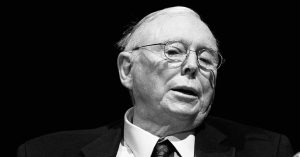
At the time of his death in November 2023, Charlie Munger’s net worth was estimated at approximately $2.6–2.7 billion. The vast majority came from his substantial holdings in Berkshire Hathaway Class A shares (around 4,033 shares), which represented the bulk of his wealth. He was ranked among the world’s richest individuals despite his relatively frugal lifestyle compared to other billionaires.
Munger’s wealth reflected decades of patient compounding rather than flashy trades. He lived modestly in Pasadena, California, and donated generously throughout his life, reducing his personal fortune while maximizing societal impact.
Companies & Projects: Berkshire Hathaway and Beyond
Munger’s primary platform was Berkshire Hathaway, where he served as Vice Chairman from 1978 until his death. He also founded or co-founded:
- Munger, Tolles & Olson law firm.
- Early investment partnerships.
- Significant influence on Daily Journal Corporation (as chairman) and other holdings.
He was a director on multiple boards and a vocal advocate for strong corporate governance and ethical standards.
Controversies: Blunt Opinions, Crypto Criticism, and Architectural Debates
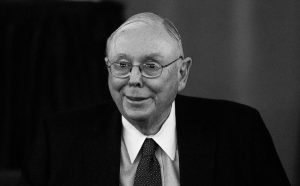
Munger was famously outspoken, which sometimes sparked backlash. He was a vocal critic of cryptocurrencies, calling Bitcoin “rat poison squared” and dismissing much of the crypto ecosystem as speculative folly. This drew ire from younger investors and crypto enthusiasts.
Other controversies included his support for a controversial windowless student housing design at UCSB (Munger Hall), which faced significant opposition over livability concerns. He also expressed strong views on politics, economics, and culture that polarized some audiences. Munger shrugged off criticism, famously saying he’d “rather be a billionaire and not be popular” than the reverse.
Despite controversies, his intellectual honesty earned respect even from critics. He owned his opinions without apology.
Web3/AI Impact: Skepticism of Hype, Emphasis on Fundamentals, and Timeless Thinking

Munger was largely skeptical of cryptocurrencies and much of the Web3 hype, viewing them through his lens of speculation versus productive assets. He believed true value comes from businesses that generate real earnings and serve society. However, his mental models framework remains highly relevant to AI and Web3: understanding incentives, avoiding mania, and focusing on durable advantages.
His emphasis on multidisciplinary thinking and avoiding stupidity offers powerful guidance for navigating AI-driven disruption, tokenization, and decentralized technologies. In 2026, Munger’s ideas continue influencing how investors evaluate emerging tech — prioritizing long-term utility over short-term excitement.
Lessons & Quotes: Timeless Wisdom from the Sage of Pasadena

Munger’s philosophy is captured in memorable lines:
- “Invert, always invert.” (Solve problems by thinking backward.)
- “The big money’s not in the buying and selling… but in the waiting.”
- “All I want to know is where I’m going to die so I’ll never go there.”
- On mental models: “You must have a latticework of models in your head… and hang experience on that latticework.”
- “It is remarkable how much long-term advantage people like us have gotten by trying to be consistently not stupid, instead of trying to be very intelligent.”
Key lessons:
- Build a broad latticework of mental models from multiple disciplines.
- Focus on avoiding stupidity and permanent capital loss.
- Prioritize quality businesses with strong moats and ethical management.
- Practice patience and long-term compounding.
- Stay intellectually curious and humble — read widely and admit mistakes.
- Live below your means and maintain high personal standards.
Munger taught that success stems more from character, rationality, and continuous learning than from raw IQ.
The Enduring Legacy: A Life Well-Lived Through Clear Thinking

Charlie Munger died on November 28, 2023, at age 99, in a California hospital. He left behind a transformed Berkshire Hathaway, countless inspired investors, and a body of wisdom that transcends finance. His partnership with Warren Buffett created one of history’s most remarkable value-creation machines, but his real gift was teaching people how to think better.
In an era of rapid technological change, short attention spans, and financial hype, Munger’s insistence on fundamentals, ethics, and multidisciplinary wisdom feels more relevant than ever. He didn’t just help build wealth — he helped build better decision-makers.
Whether you’re an investor, entrepreneur, student, or leader, Munger’s latticework offers a timeless map for navigating complexity with clarity and integrity.
By 2026, Charlie Munger has transcended his status as a billionaire investor to become the patron saint of rational decision-making. His legacy is not merely the multi-billion dollar market cap of Berkshire Hathaway, but the democratization of critical thinking. Through his focus on “mental models” and the “Lollapalooza effect,” he provided a blueprint for how to navigate a world where information is abundant but wisdom is scarce.
Ultimately, Munger’s impact is measured in the sovereignty of the individual mind. By teaching us to “invert, always invert,” he gave us the tools to dismantle our own biases and see the world as it truly is. As we look toward the 2030s, Charlie Munger remains the definitive “Master of Models,” proving that the most sustainable wealth is not found in a bank account, but in the latticework of a well-trained brain.