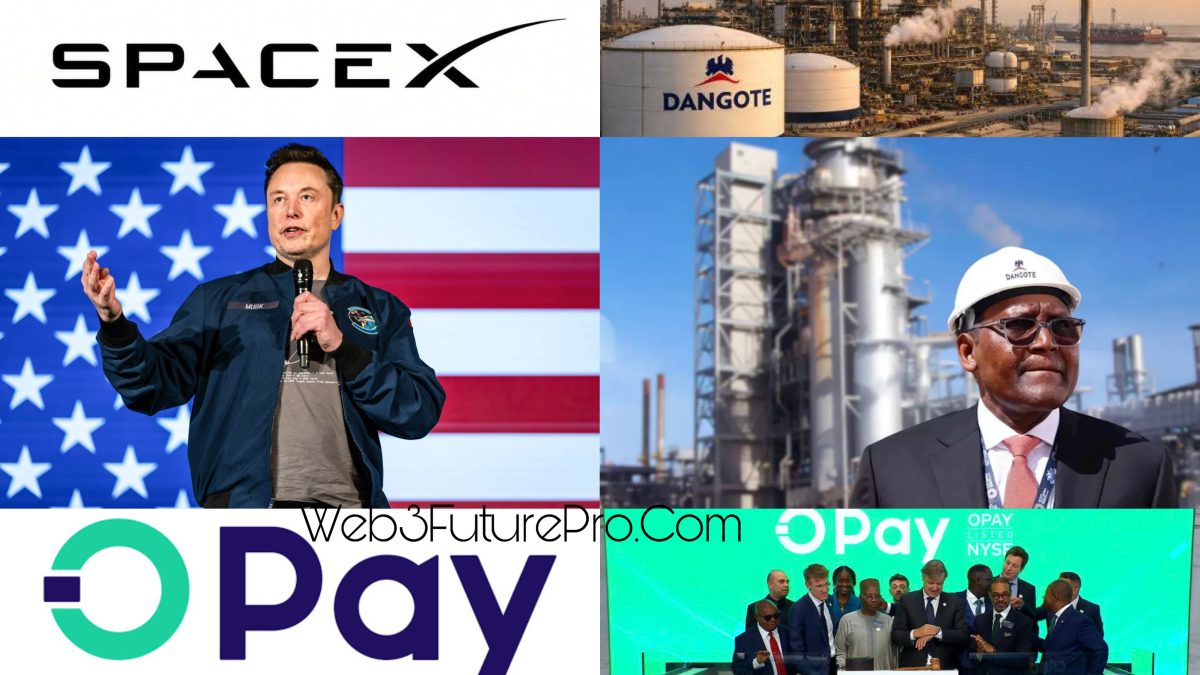
The 2026 IPO market is experiencing an unusual transformation: companies are raising record amounts of money through initial public offerings, even as the number of businesses entering the public markets declines. This apparent contradiction is reshaping conversations about startup valuations, venture capital returns, investment opportunities, and the future of public listings.
For founders preparing to go public, venture capital firms seeking liquidity, and investors evaluating newly listed companies, understanding what is happening behind the headline figures is more important than ever.
An initial public offering (IPO) occurs when a privately held company offers its shares to public investors for the first time, usually through a stock exchange. Going public can provide access to substantial capital, increase corporate visibility, create liquidity for early shareholders, and offer venture capital investors an opportunity to realise returns on previous investments. However, an IPO also introduces regulatory requirements, public financial disclosures, shareholder scrutiny, and pressure to deliver consistent business performance.
CHECK: Startups & Venture Capital 2026: Funding Data, Stages & How to Raise
The defining feature of the 2026 US IPO market is the difference between the amount of money raised and the number of companies going public. According to Renaissance Capital’s qualifying IPO data, 118 companies had completed US IPOs by October 23, 2026, approximately 34% fewer than during the corresponding period in 2025. Despite the lower number of listings, these companies raised approximately $148.3 billion, exceeding the previous annual proceeds record of $142.4 billion set in 2021.
This article is general information, not investment advice.
Here is a pair of numbers that look like a contradiction. According to Renaissance Capital, U.S. companies have raised about $148 billion through IPOs so far in 2026, more than three times the $44 billion raised in all of 2025. Yet the number of IPOs is down roughly 34%: 119 priced this year, against 202 in 2025. Record money, far fewer companies.
Both are true, and the gap between them is the most useful thing to understand about the 2026 market. A handful of enormous listings, led by SpaceX, are carrying the totals, while the typical startup still faces a narrow door to the public markets. This guide explains what happened, how an IPO actually works, what a Nigerian fintech’s offering and a reported filing by an AI company tell us, and what founders, investors and employees with stock options should take from it.
CHECK: How to Invest in Web3 Startups Before They Go Public (2026 Guide)
How this guide was researched
We relied mainly on Renaissance Capital, whose IPO statistics, quarterly reviews and news are the standard U.S. reference, as read on its own pages and in coverage that restates them. We also used reporting on OPay’s filing and terms and on the 2026 mega-listings. Where a figure reached us only through a secondary site, we say so.
Three limits matter. Counting methods differ. Renaissance counts IPOs with a market value of at least $50 million and excludes SPACs from its main count, while other sources count differently, so totals and percentage changes vary by source and date. The market moves daily, and several items here were days old when we wrote. And we saw only the headlines of some of the newest Renaissance reports, including the ones on Anthropic’s filing, so read them before quoting details.
2026 IPO Market: Record Proceeds, Fewer Deals Explained
The numbers: record money, fewer deals
As of late October, Renaissance Capital’s live statistics showed:
- 119 IPOs priced in 2026, a 34.6% decline from the same point last year.
- $148.3 billion raised, up 345.8% from last year. Another outlet notes that this passes the previous record of $142.4 billion set in 2021, a secondary comparison worth checking.
- 210 IPOs filed, down 9.5%.
The year’s path, by quarter, according to Renaissance’s reviews:
| Quarter | IPOs priced | Proceeds | What drove it |
|---|---|---|---|
| Q1 2026 | 34 | $15.3 billion | A cautious start |
| Q2 2026 | 48 | $104.8 billion | The largest quarter for U.S. listings ever recorded; SpaceX priced in June |
| Q3 2026 | 30 | $32.8 billion | SK hynix’s $26.5 billion offering; excluding it, proceeds were $6.2 billion |
| 2025 (full year) | 202 | $44.0 billion | The comparison year |
Two more details from the third-quarter review: 18 IPOs raised $100 million or more, featuring a wider variety of businesses than in earlier quarters, and the number of listings was fairly modest after a string of postponements near the end of the quarter. Renaissance’s September count was the lowest of the year, with just seven IPOs.
Why the totals are so lopsided
The biggest deals are the story.
Renaissance counts these as 2026’s largest:
| Company | Month | Proceeds | Note |
|---|---|---|---|
| SpaceX | June | About $75.0 billion | Priced June 11 at $135 a share; the largest IPO ever. Other counts that include the over-allotment option are higher. |
| SK hynix | July | $26.5 billion | A Korea-listed memory chip firm raising money in the U.S. |
| Cerebras | May | $5.55 billion | An AI chip company |
These were the only three 2026 deals in Renaissance’s all-time top 25 U.S. IPOs.
Now some simple arithmetic, which is ours rather than Renaissance’s. SpaceX and SK hynix together account for about $101.5 billion, or roughly two thirds, of the $148.3 billion raised. Remove those two and the rest of the year’s proceeds are about $46.8 billion, which is close to what the entire U.S. IPO market raised in 2025, and that came from only 117 other deals against 202 last year. In other words, outside the giants, 2026 looks like an ordinary-to-modest IPO year, not a boom.
That is why averages mislead. A market can set a record because a few enormous companies listed, while most would-be issuers wait. One analysis citing PitchBook and the National Venture Capital Association found 1,029 venture-backed acquisitions in the fourth quarter of 2025 compared with only 48 listings, a reminder that for most startups, an IPO is the exception and an acquisition is the usual exit. We saw that figure through a secondary source. CB Insights reported earlier that third-quarter 2026 M&A hit a four-year low, so neither exit route is easy at the moment.
How an IPO actually works
An initial public offering is the first time a company sells shares to the public on a stock exchange. This is the general process, simplified:
1. Preparation. The company hires investment banks (the underwriters), audits its financials and often files confidentially with the regulator first. OPay, for example, filed confidentially on February 12, 2026, according to Renaissance Capital.
2. The public filing. The company publishes a registration statement. For U.S. companies it is called an S-1. Foreign companies such as OPay file an F-1. It describes the business, finances, risks and how the proceeds will be used.
3. The roadshow. Executives pitch the offering to large institutional investors. The banks collect orders and gauge demand.
4. Terms and pricing. The company sets a price range, and then the final price the night before trading. Renaissance’s coverage tracks the “terms” step, such as OPay’s range of $19 to $21 per share.
5. Allocation. The underwriters decide who gets shares, mostly large institutions. According to one IPO calendar site, others usually buy once the stock starts trading, typically the morning after pricing. Retail access to IPO allocations is limited.
6. Trading begins. The price then moves with the market, sometimes sharply on the first day.
7. The lock-up. Insiders such as founders, early investors and employees are usually barred from selling for a period, commonly around 180 days. One site lists a 180-day lock-up for OPay’s insiders; check the prospectus for any company.
What an ADS is. Some foreign companies list through American depositary shares, which are certificates traded in the U.S. that represent a number of ordinary shares in the company’s home market. In OPay’s case, each ADS represents 10 ordinary shares.
What a SPAC is. A special purpose acquisition company is a shell that lists first and then merges with a private company. Renaissance counted 157 SPAC IPOs this year, the most of any sector, but its main IPO count excludes them, which is one reason sources disagree.
Case study: OPay and the African angle
For readers in Nigeria and across Africa, the most interesting 2026 listing is not SpaceX. It is OPay, a digital bank and payments platform whose customers are mostly Nigerian.
Semafor reported that a U.S. listing would be the first by a fintech company with a mostly Nigerian customer base. Here is what the filings and Renaissance Capital’s coverage show.
The business. OPay says it provides payments, money management and credit services to consumers and merchants in Nigeria and other emerging markets. Renaissance Capital reports revenue of $806 million for the 12 months ended June 30, 2026, a gross transaction value growth rate of 143% and an operating margin of 28% in that period.
According to reports on its prospectus, first-half 2026 revenue rose 137% to $467.1 million from $197.5 million a year earlier, net income rose to $90.9 million from $21.7 million, and the total value of transactions processed reached $339.1 billion, up from $139.3 billion. Loan financing revenue was $236.1 million, up from $88.1 million, and one report says lending overtook payments as the largest source of revenue.
The offering. OPay filed publicly on October 9 and set terms on October 23: 16 million American depositary shares at $19 to $21 each, to raise $320 million at the midpoint, implying a market value of about $4.2 billion at $20. Each ADS represents 10 ordinary shares. Citi, Deutsche Bank, Standard Bank and CICC are joint bookrunners, and a Standard Bank subsidiary agreed to invest up to $200 million in a private placement linked to the IPO, according to a Nigerian business outlet.
Pricing was expected the week of October 26, and one IPO calendar listed trading as starting October 30. We could not confirm whether it priced or how it traded, so check the outcome before publishing and update this section.
The Nigerian angle. OPay’s board and shareholders approved a possible secondary listing on the Nigerian Exchange after the U.S. offering, according to its F-1, which would give Nigerian investors a local route, though the company said there is no guarantee that it will happen. Some analysts quoted in the African press worry that an offshore listing sends the value created by Nigerian users abroad, a debate that a successful local listing could ease.
The risks the filing itself highlights. Reports on the prospectus say Nigeria generated 89.5% of OPay’s first-half revenue, so the business depends heavily on Nigerian consumer spending and exposure to the naira. Renaissance Capital makes the same point. A news report notes that in 2024 the Central Bank of Nigeria temporarily restricted new customer onboarding at several fintechs, including OPay, over verification compliance concerns. And with lending now a large share of revenue, credit quality matters.
A lesson about headlines. Months before the filing, reports described OPay’s target valuation in very different ways. One aggregator reported a target above $20 billion in May, while a business-press report put it near $4 billion, and the terms Renaissance Capital published implied about $4.2 billion at the midpoint. IPO valuation headlines before a filing are often guesses, so wait for the actual terms.
Renaissance Capital also ran an October 20 story titled “Africa-linked IPOs pick up steam in 2026.” We saw only the headline, so we make no claims about its contents.
The AI listings: SpaceX, Cerebras and Anthropic

SpaceX and Cerebras. SpaceX’s June 11 pricing at $135 a share, raising about $75 billion by Renaissance’s count, and Cerebras’s May offering of $5.55 billion, were the year’s two largest technology listings, according to Renaissance. Cerebras makes chips for AI workloads.
Anthropic. Renaissance Capital headlines dated October 26 and October 30 say that Anthropic, the AI developer that makes Claude, filed for an estimated $75 billion IPO, which it described as one of the largest ever and aimed at mid-November. We saw only the headlines, so check the reports for details and any change in timing. As noted in our disclosure above, Anthropic made the assistant that helped draft this article, so we stick to reported facts and offer no view on its shares.
Others on hold. Renaissance said OpenAI is now expected to wait until 2027, according to a secondary summary, and another analysis says Databricks pushed its listing to 2027. A U.K. AI data center company, Nscale, filed in September to list in New York, according to U.S. News, but had not yet listed.
Why it matters. AI is the common thread. The mega-listings are in AI chips, AI infrastructure, memory and space, which mirrors the venture funding picture we described in our Startups & Venture Capital 2026 guide, where AI took 64% of global venture funding in the third quarter.
Why the fall pickup stumbled
After a strong summer, Renaissance Capital described the third quarter as below expectations because of concerns about AI spending, a 19-year high in bond yields and resumed rate hikes, with several offerings postponed near quarter end. In the week ending October 23, its recap headline spoke of a tech sell-off, and its October 30 look ahead said November would start quietly.
Newly public companies have not outperformed the broader market this year. As of October 22, Renaissance’s IPO Index was up 6.0% year to date, compared with 13.0% for the S&P 500. A secondary summary says the index fell 11.5% in the third quarter while the S&P 500 rose 2.3%. The index is weighted by market value, so it is heavily influenced by the largest listings.
The lesson is not that IPOs are bad. It is that IPO windows open and close with market mood, interest rates and sentiment about a hot sector, and companies that wait for the perfect moment may wait a long time.
What it means for founders

This is editorial analysis informed by the data above.
• Plan for the exit you are likely to get, not the one in the headlines. For most venture-backed companies, acquisition is the more common route, and even that is slow this year.
• Public investors are asking for scale and profit. OPay’s filing leads with growth and net income, and Renaissance noted a wider variety of businesses among Q3 listings, but the megadeals are unusual companies. Profitability and clear unit economics make any exit easier.
• Concentration is a risk investors will price. OPay’s reliance on one country for nearly 90% of revenue is the kind of risk factor an S-1 or F-1 spells out. Know yours.
• Keep your books IPO-ready early. Audited financials, clean legal structure and governance take time, and OPay’s confidential filing in February preceded its public filing in October by eight months.
• Do not treat a window as a promise. The same market that raised $104.8 billion in one quarter raised $6.2 billion (excluding one giant deal) in another.
• For Web3 founders, we did not verify 2026 crypto-company listings, so we make no claim about the crypto IPO market. Your pillar reading on funding is in our Startups & Venture Capital 2026 guide.
What it means for venture capital funds and employees
For funds. Venture funds make money when portfolio companies are sold or listed. If exits concentrate in a handful of giant listings and M&A is at a four-year low, distributions to the funds’ investors come from fewer events, and the funds’ next fundraising depends on them. That is general reasoning, not a measured result.
For employees with stock options. An IPO is often when paper equity becomes real, but the lock-up usually restricts selling for months, the share price can move a lot in that time, and tax treatment depends on your country and option type. Read your option agreement, understand any expiry dates, and speak to a qualified tax adviser. This is general information, not tax advice.
What it means for everyday investors
This section is educational and not financial advice.
• Most IPO shares go to institutions. According to an IPO calendar site, others typically buy after trading begins, at whatever the market price is, which can be far above the offer price.
• Newly public companies are volatile. The Renaissance IPO Index’s 2026 lag behind the S&P 500 is a reminder that new listings are not automatically winners.
• A famous name is not a valuation. Read the prospectus, or at least a trustworthy summary, and ask what you are paying relative to revenue and profit.
• Know what you are buying. ADSs, ordinary shares and local secondary listings can trade in different currencies and markets with different costs and rules. OPay’s possible Nigerian listing is explicitly not guaranteed.
• Diversify. If you want exposure to newly listed companies without picking one, funds that track IPO indices exist. We did not review any, and fees and holdings vary.
• Beware hype and scams. Pre-IPO “allocations” sold by strangers are a classic fraud. Our guide to investing in Web3 startups before they go public covers the risks of private-market access.
How to read an IPO filing: ten questions

You do not need to read all 300 pages. These ten questions cover most of what matters. The OPay column uses only facts reported above, and “not verified” means we did not find it.
| # | Question | What to look for | OPay, as reported |
|---|---|---|---|
| 1 | How fast is revenue growing? | Growth rate and whether it is slowing | First-half revenue up 137% |
| 2 | Is it profitable? | Net income and operating margin | H1 net income $90.9 million; operating margin 28% (12 months) |
| 3 | What drives revenue? | The mix of products and risks within it | Lending reportedly now the largest source |
| 4 | How concentrated is it? | One country, customer or product | Nigeria 89.5% of H1 revenue |
| 5 | What multiple is the price? | Value relative to revenue and profit | About $4.2 billion at the $20 midpoint against $806 million of trailing revenue, about 5.2 times (our arithmetic) |
| 6 | Who is selling? | New shares versus existing holders cashing out | Not verified |
| 7 | When can insiders sell? | The lock-up length and any early release | One site lists 180 days; check the prospectus |
| 8 | Who controls the company? | Share classes and large holders | One report names a controlling shareholder; check the F-1 |
| 9 | What are the regulatory risks? | Past enforcement, licenses, local rules | 2024 onboarding restrictions reported |
| 10 | What could go wrong? | The risk-factors section | Naira exposure, Nigerian consumer spending |
Frequently asked questions
How much money have IPOs raised in 2026?
According to Renaissance Capital, about $148.3 billion in the U.S. through late October, up roughly 346% from last year and above the 2021 record according to a secondary comparison, from 119 IPOs, down about 35%.
Why are there fewer IPOs but more money raised?
A few enormous deals, mainly SpaceX at about $75 billion and SK hynix at $26.5 billion, account for about two thirds of the proceeds. Excluding them, proceeds are about $46.8 billion by our arithmetic.
What was the biggest IPO of 2026?
SpaceX, which priced on June 11 at $135 a share and raised about $75 billion by Renaissance Capital’s count, the largest IPO on record.
Did Anthropic file for an IPO?
Renaissance Capital headlines dated October 26 and 30 say it filed for an estimated $75 billion IPO, aimed at mid-November. Read the reports for details.
Is OPay listing in New York?
It set terms on October 23 for a NYSE offering under the symbol OPAY and was expected to price that week and begin trading October 30. Check the latest reports for the outcome.
Can I buy IPO shares?
Most shares are allocated to institutions by the underwriters. Others generally buy once trading begins. Some brokers offer limited retail access.
What is a lock-up?
A period, commonly about 180 days, during which insiders cannot sell their shares after the IPO. Check the prospectus for the exact terms.
Is an IPO better than being acquired?
Not necessarily. IPOs are rarer and costlier to prepare, and one analysis counts about 1,029 venture-backed acquisitions against 48 listings in the fourth quarter of 2025. The best route depends on the company and the market.
Will more IPOs come in 2026?
Renaissance Capital’s October 30 look ahead expected a quiet start to November, with the reported Anthropic offering as the major item. Market conditions can change quickly.
The 2026 IPO market is a record by money and a below-average year by company count, and both facts matter. Two giant offerings, SpaceX and SK hynix, account for roughly two thirds of what has been raised, while a typical startup still faces slow M&A, a narrow public window and investors who ask hard questions about growth, profit and concentration. Case studies like OPay show what the public market rewards, rapid growth with real profit, and what it scrutinizes, dependence on one economy and a lending-heavy model.
For founders, the lesson is to build a business that can survive any window. For employees and investors, it is to understand lock-ups, allocation and valuation before getting excited by a headline. And for everyone, to check the numbers on the day, because this market is moving as we write. Verify the sources below, and update the OPay and Anthropic items as soon as the outcomes are public.
Sources
URLs below were returned during our October 31, 2026 research. Secondary sources are labeled; verify key figures against Renaissance Capital and company filings before quoting.
9. IPO Statistics (2026). Walnut (secondary; 2025 and year-to-date figures).
11. 7 Best Recent and Upcoming IPOs in 2026. U.S. News (Nscale filing).
12. The IPO Buzz: OPay Ltd. of Nigeria Launches $320 Million IPO. IPOScoop (terms and ADS ratio).
13. OPay. IPOX (expected NYSE trading date, October 30, 2026).