Prediction markets are becoming one of the most closely watched developments in the digital finance and emerging technology industries. From forecasting election results and interest rate decisions to predicting cryptocurrency prices, sports outcomes and major global events, these platforms allow participants to trade contracts based on what they believe will happen in the future. As interest in blockchain technology, decentralized finance (DeFi) and alternative financial markets continues to grow, prediction markets are attracting traders, investors, technology companies and regulators.
But how do prediction markets actually work, and why are some of their biggest platforms facing legal challenges in 2026?
At their core, prediction markets turn expectations about future events into tradable financial contracts. Participants can purchase positions representing possible outcomes, with contract prices changing as new information enters the market. In a typical yes-or-no contract, a participant might buy a position on whether a particular event will happen. If the outcome matches the contract’s terms, the position pays out; if it does not, the participant loses the amount invested, subject to the platform’s fees and settlement rules. Because prices are influenced by buying and selling activity, they can also provide an indication of how likely traders believe an event is to occur.
Platforms such as Kalshi and Polymarket have helped bring prediction markets into mainstream discussions about financial technology. However, their rapid expansion has raised difficult questions about whether certain event contracts should be treated as financial derivatives or illegal gambling. In the United States, the Commodity Futures Trading Commission (CFTC) maintains that it has regulatory authority over qualifying event contracts traded on registered exchanges, while several state authorities have challenged the legality of particular markets, especially sports-related contracts. These disagreements have resulted in lawsuits, regulatory disputes and uncertainty about the industry’s future.
CHECK: Startups & Venture Capital 2026: Funding Data, Stages & How to Raise
In this guide, we examine how prediction markets work, how participants make money or lose it, the role of blockchain and decentralized platforms, the leading companies in the industry, and the legal battles influencing the sector in 2026. We also explore the opportunities, risks and regulatory questions that investors, technology professionals and everyday users should understand before participating.
• Research date: November 6, 2026. This story moves daily.
• Not financial, legal or gambling advice, and This article was Published for Information and Knowledge Essence.
In July 2025, the two biggest prediction markets, Kalshi and Polymarket, together traded about $2 billion worth of contracts. In July 2026 they traded $53 billion, according to a Pew Research Center analysis of data from The Block. That is a 26-fold increase in a year, and it happened while the same companies were being sued, banned or investigated in more than a dozen U.S. states.
Meanwhile, the event everyone assumed would be the engine of this industry underwhelmed. According to a CNN count reported by Trefis, the whole 2026 midterm-election market, about $1.1 billion on Kalshi and $340 million on Polymarket, adds up to roughly three days of Kalshi’s normal trading. About 80% of Kalshi’s volume is sports.
That is the tension at the heart of this story: prediction markets present themselves as financial tools that aggregate information, while most of the money is flowing into contracts that look and feel like sports betting, and the courts are now deciding which one they are. This guide explains how the markets work, what the numbers show, where the legal fight stands and how much weight an “odds” number deserves. It is educational, not an invitation to trade.
CHECK: Top Web3 Trends Every Crypto Investor Should Know This Year
How this guide was researched
We prioritized the Pew Research Center’s September 23, 2026 analysis (using The Block’s data), which publishes its monthly figures and methodology. We used Bloomberg-, CNBC– and CNN-originated reporting as relayed by secondary sites (RotoWire’s legal timeline, Trefis and Shift Markets) for the legal developments and the investigations, because those outlets’ own pages were not all available to us. We used Fortune’s report for Kalshi’s valuation.
Three limits matter. Trackers disagree, and the gaps are large: one monthly brief put September’s total at $77.7 billion using a method that counts every contract at $1 face value across all venues, while Pew’s August figure for the two main platforms was about $47 billion, and other sources report other numbers. Several sources are commercial, including a sports-betting publisher and sites that sell prediction-market data or tools, so we note where we rely on them and where figures could not be confirmed. The law is changing weekly, so check each item against a current source.
What a prediction market is
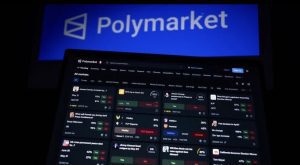
A prediction market lets people trade on whether something will happen. According to Pew, users buy and sell event contracts with binary outcomes, valued between $0 and $1. A “yes” contract priced at 40 cents is meant to represent a 40% chance that the event happens. If it does, the contract pays $1, so a trader who paid 40 cents earns 60 cents; if it does not, the contract is worth nothing. Prices move as people trade, and the idea is that the price becomes a crowd-sourced probability.
Who runs them.
• Kalshi is a U.S. exchange regulated by the Commodity Futures Trading Commission (CFTC). Fortune says the CFTC’s 2020 decision to approve it is a large part of why it became the biggest U.S. prediction market.
• Polymarket began as an international platform and, per Pew, faced legal trouble for allowing Americans to trade on its unregulated international venue. It settled with the CFTC in 2022 over unregistered binary options, then launched the CFTC-regulated Polymarket US in late 2025.
• Others include exchanges that already serve crypto and retail traders. Reporting on the Illinois litigation names Coinbase as a co-plaintiff with Kalshi, a lawsuit names Crypto.com, and coverage of the midterm markets mentions Robinhood, Gemini and ForecastEx.
What can be traded. Sports, politics and elections, cryptocurrency prices, economic data, entertainment and more. Kalshi has listed tens of thousands of markets; one report says it went from 564 settled markets in January 2025 to 32,835 in September 2026.
The growth in numbers
Pew’s analysis counts notional taker volume, in which each contract is valued at its $1 payout rather than the price paid. That makes the numbers look larger than the cash that changed hands, but it is a consistent way to compare months. Selected figures for Kalshi and Polymarket combined (including Polymarket US):
| Month | Combined monthly volume | What was going on |
|---|---|---|
| July 2024 | $0.8 billion | Before the 2024 U.S. election run-up |
| October 2024 | $4.5 billion | Election run-up, mostly Polymarket politics |
| August 2025 | $2.0 billion | A quiet baseline |
| September 2025 | $4.5 billion | Football season starts; Kalshi sports takes off |
| December 2025 | $12.0 billion | |
| March 2026 | $24.3 billion | |
| May 2026 | $25.7 billion | |
| June 2026 | $47.7 billion | FIFA World Cup begins |
| July 2026 | $53.0 billion | Pew’s latest full month |
Pew notes that volume dipped slightly in August, to a combined $47 billion, and that early September data suggested it was ticking back up as football season began. A separate monthly brief, using a different method, reports September at $77.7 billion, up 53% from August, with weekly volume passing $20 billion for the first time. We could not reconcile that with Pew’s series, so treat it as a different measurement, not a correction.
Platform valuations rose with the volumes. Fortune, citing the Wall Street Journal, reported in March that Kalshi had locked in a $22 billion valuation in a round of about $1 billion led by Coatue Management. A market brief says Polymarket was reported by Bloomberg, the New York Times and the Wall Street Journal in late August to be raising at about $21 billion, though Polymarket had not confirmed it.
What is driving it: sports, not elections

The single most important fact for understanding the boom is where the money is going. From Pew’s category data for July 2026:
| Category | Kalshi, July 2026 | Polymarket, July 2026 |
|---|---|---|
| Sports | $31.4 billion | $10.6 billion |
| Cryptocurrency | $6.1 billion | $1.2 billion |
| Other | $2.4 billion | $0.4 billion |
| Politics | $0.17 billion | $0.73 billion |
In June and July, around the World Cup, sports trading topped $58 billion on Kalshi and approached $22 billion on Polymarket. For scale, Pew compares that with the roughly $40 billion Americans wagered through legal sportsbooks in the first quarter of 2026, which was about the same as combined prediction-market sports volume over a comparable period.
Three details stand out:
• Politics is small by comparison. Polymarket’s politics volume has averaged about $2 billion a month in 2026, and Kalshi’s has stayed under $300 million.
• Crypto contracts are growing. Kalshi’s crypto category reached $6 billion in July, second only to sports.
• Election volume is spiky. The CNN count reported by Trefis puts the midterm total at about 3 days of Kalshi’s normal volume, and notes that Polymarket’s volume fell 84% the morning after the 2024 election. Kalshi’s CEO called the midterms the first meaningful prediction-market election, and Kalshi reported that its 2026 election volume ran ahead of the same point in 2024, so expect a test of whether volume holds after the vote.
Kalshi vs Polymarket, and the Web3 connection

The balance flipped. Pew notes that as recently as March 2026, Kalshi and Polymarket each had about 50% of total volume. Since then Kalshi accelerated much faster.
Datawallet reports Kalshi at about 82% of August volume ($37.17 billion versus $8.16 billion), a complete reversal from late 2024, when Polymarket held over 90%. A market brief puts Kalshi at 78% of September.
Polymarket’s regulated arm is growing. Pew says Polymarket US went from 4% of Polymarket’s total volume in January to 39% in July.
Where Web3 comes in. Several threads connect this industry to crypto, and they are worth knowing, though we did not verify technical details such as settlement currencies or chains:
• Polymarket was built as a crypto-native platform, and one comparison describes it as the “crypto-native” venue set against the CFTC-regulated one.
• Crypto exchanges such as Coinbase, Crypto.com and Gemini are involved in distributing or litigating over event contracts.
• Cryptocurrency price contracts are now the second-largest category on Kalshi.
• Platforms and trackers rely on crypto-industry data providers, and Pew’s data came from The Block.
The point for Web3 readers is that prediction markets are one of the first consumer-scale products from the crypto world to be absorbed by regulated U.S. finance, and the legal fight below will shape what comes next.
The legal fight: swaps or gambling?

The central question is whether event contracts are swaps (a type of derivative regulated federally by the CFTC) or gambling (regulated state by state). The CFTC’s position, as summarized by RotoWire, is that platforms registered as designated contract markets fall under the Commodity Exchange Act, so states cannot enforce gambling laws against them. States say otherwise.
A timeline of recent developments, from RotoWire’s legal tracker (a sports-betting publisher; verify against court records):
| Date (2026) | Development |
|---|---|
| March | Arizona files criminal charges against Kalshi; a federal judge quickly blocks them at the CFTC’s request |
| April 2 | The federal government sues Illinois, Arizona and Connecticut over enforcement against prediction markets (CNN’s count, via Trefis, says at least nine states have been sued) |
| August | A Washington state judge blocks several Kalshi markets, making Washington at least the fourth state, after Michigan, Nevada and Massachusetts, to block Kalshi in some form (CNBC) |
| September 25 | The Sixth Circuit rules unanimously against Kalshi in a consolidated Ohio and Tennessee case; the tracker says the Sixth and Ninth Circuits have rejected the industry’s argument in four unanimous rulings since August |
| October 1 | The U.S. Supreme Court declines New Jersey’s petition in Flaherty v. KalshiEX, leaving a split between the Third Circuit (states cannot regulate) and the Ninth (states can) |
| October 2 | A federal judge in Chicago partly blocks Illinois from applying its licensing rules, finding the contracts likely to be swaps |
| October 9 | The NFL, tribal governments, Christopher Dodd and Gary Gensler file Supreme Court briefs opposing the industry; Kalshi seeks a rehearing in the Sixth Circuit |
| October 18 | Crypto.com and Novig sue Missouri; Kalshi, Polymarket and Robinhood stay in talks with the state attorney general |
| October 21 | Baltimore sues Kalshi and Polymarket, the first city to do so |
Other fronts: Congress has bills including a bipartisan proposal that would bar CFTC-registered exchanges from listing contracts resembling sports betting, and bills aimed at insider trading; the UK’s financial regulator confirmed it is in talks with Kalshi and Polymarket about entering Britain, though its rules on retail binary options are a hurdle; and an OpenSecrets analysis reported by the tracker found the industry spent at least $3 million in 2026 on lobbying and political donations, split across both parties’ attorneys general and governors associations.
One trend matters for the economics. Several analysts note that as sports dominates volume, the claim that event contracts are financial instruments rather than gambling becomes harder to sustain in court, which is exactly what the state and circuit rulings seem to turn on.
Can the odds be trusted?
Prediction markets are often described as “truth machines.” The evidence we found is mixed, and the platforms’ own incentives complicate it.
Longshot bias. A Bloomberg data investigation, summarized by RotoWire, found that bettors on both platforms heavily favor outcomes priced below 10%, which lose 98% of the time, a pattern that looks more like casino play than careful forecasting.
Wash trading questions. Wash trading means a trader or group buying and selling to themselves to inflate volume. CNBC reported that scrutiny of volumes on both platforms remained unresolved on October 6, a concern because both cite volume growth to justify valuations and possible IPOs next year. We saw only a summary and found no confirmed finding of wrongdoing, so treat it as an open question.
Manipulation and insider trading. The CFTC issued an advisory in February 2026 about enforcement against traders using material non-public information. A Fortune report notes concerns about insider trading on both platforms, including a Polymarket trader who made more than $400,000 on a bet about Nicolas Maduro’s removal. Critics describe some markets, such as “mention” markets, as easy for one person to move.
Thin markets. Kalshi launched “low-volume” tags for markets below $10,000 in trading, which concedes that thinly traded prices are weak signals.
Influence on voters. A study supported by the Brennan Center for Justice found that showing voters Kalshi’s election odds shifted their beliefs about which candidates were electable, even when polling said the race was close, and that broad majorities in both parties favored regulation. Bloomberg reported that Kalshi’s odds now appear in CNN and CNBC broadcasts next to polls, and critics warn of self-fulfilling narratives. We saw these through summaries, and the study’s design may have limits, so read it before relying on it.
What the platforms offer. Kalshi began publishing Brier scores, a standard measure of forecast accuracy, for its election markets in October. That is a step toward transparency, but we found no independent, peer-reviewed accuracy study for 2026 in our research, so we cannot say how well the prices forecast.
How to read a market price

If you see a prediction-market number quoted in a news story, this is a way to judge it. It is general guidance, not a trading strategy.
1. Check the volume. A price on a market with a few thousand dollars traded is closer to an opinion than a probability.
2. Read the resolution rule. The exact wording decides who gets paid, and ambiguity is a common source of disputes.
3. Remember the price is not a pure probability. Fees, the gap between buy and sell prices and the longshot bias all push prices away from true odds.
4. Look at the time horizon. A price for an event months away reflects the cost of tying up money as well as the odds.
5. Compare with other evidence. Polls, models and expert analysis all have different biases.
6. Watch who benefits. Platforms earn from activity, so “market says” headlines are not independent.
Why it matters beyond betting
It is changing how news is presented. Bloomberg reported, as summarized by RotoWire, that Kalshi’s odds now appear in CNN and CNBC broadcasts alongside polling data, and that legacy outlets have moved from treating market prices as a curiosity to a primary indicator. Whether that is progress or a risk is exactly what the Brennan Center study and its critics dispute.
It is a big test of crypto-adjacent finance going mainstream. Two companies valued around $20 billion or more, according to reports, are pursuing even higher private valuations and, per CNBC, possible IPOs next year, while the volume numbers they cite are under scrutiny. If you want to understand how an IPO window works and why investors will ask hard questions about volume quality, read our guide to the 2026 IPO market.
It sets a regulatory precedent. The “swap or gambling” question is a version of the same problem crypto has faced for years: whether a new product fits an old legal category. Our Startups & Venture Capital 2026 guide explains why regulatory uncertainty is now a cost every Web3 founder prices in.
It is a security target. Wherever crypto and money meet retail users, scams follow. See our crypto wallet security guide.
A note for readers in Nigeria and across Africa

We did not verify whether prediction markets are legal or available in Nigeria or other African countries, and we found no reliable reporting on African user numbers. What we can say, as general guidance:
• Rules differ by country. Depending on how a contract is classified, local gambling, derivatives or securities law may apply. Check your country’s rules before considering any platform, and remember that platforms may block some countries.
• Age limits and local licensing apply. Many jurisdictions restrict gambling-like products to adults, and some require licensing.
• Impersonators are common. Fake apps, fake support accounts and “guaranteed prediction” groups on messaging apps target people interested in crypto and betting. Use only official websites you reach by typing the address yourself, and never share a seed phrase.
• Currency and fees matter. If a platform uses a foreign currency or crypto, exchange rates, withdrawal costs and delays can erase small gains.
• This article does not encourage trading. The point is to understand a new financial product and its risks.
Risks and responsible use

This section is general information, not advice.
• You can lose everything you put in. A contract that expires worthless pays nothing, and the data shows most longshots lose.
• It can feel like gambling because for many users it is. Sports contracts dominate the volume, and regulators and courts are treating them that way in several states.
• Do not trade with borrowed money, or with money you need for essentials.
• Set limits in advance for deposits, losses and time, and take breaks.
• Thin markets can be manipulated, and insider trading is a stated enforcement priority.
• Know the exit rules. Check fees, withdrawal terms and what happens if a market is disputed.
• Get help if it stops being fun. In the United States, the National Problem Gambling Helpline is 1-800-522-4700, as listed by RotoWire. Elsewhere, contact local support services.
What to watch next
• The courts. Kalshi has petitions for rehearing pending at the Sixth and Ninth Circuits, the Fourth Circuit heard a Maryland case in May, and the Supreme Court can take up the issue again if the circuit split deepens, which the Illinois ruling the day after its October 1 refusal arguably did.
• Congress. Bills that would remove sports contracts from CFTC-registered exchanges, or target insider trading, could change the economics overnight if they move.
• The CFTC. Blockonomi reports thousands of public comments on a CFTC request and a proposed rule, which we could not verify directly. The agency has also warned platforms against casino-style presentation of odds.
• The post-election test. After the 2024 election, Polymarket’s volume fell 84% the next morning. Watch whether sports and crypto contracts keep the totals up through November.
• Volume quality. Any independent finding on wash trading would matter for valuations and IPOs.
• International expansion. The UK regulator’s talks with both platforms may show how other countries classify the contracts.
Myths and facts

| Claim you may see | What the evidence says |
|---|---|
| “Prediction markets are mostly about elections.” | No. Sports made up about 80% of Kalshi’s volume, and the midterm total equals about three days of Kalshi trading. |
| “The price is the probability.” | Not exactly. Thin markets, fees and the longshot bias push prices away from true odds. |
| “They are legal everywhere in the U.S.” | Disputed. They operate under CFTC oversight, but courts and states are split on sports contracts. |
| “The Supreme Court settled it.” | No. It declined to take a petition on October 1, leaving the circuit split in place. |
| “Polymarket is only a crypto platform.” | It started as one, but its CFTC-regulated U.S. arm reached 39% of its volume in July, per Pew. |
| “Volume proves the markets are accurate.” | No. Volume measures activity, and its quality is under scrutiny. |
| “Anyone can trade anywhere.” | No. Availability depends on the platform, the state and the country. |
Frequently asked questions
What is a prediction market?
A platform where people trade contracts that pay $1 if an event happens and nothing if it does not. A price of 40 cents is meant to suggest a 40% chance.
How big are prediction markets in 2026?
Pew, using The Block’s data, reports combined monthly volume on Kalshi and Polymarket of $53.0 billion in July 2026, up from about $2.0 billion in July 2025. Other trackers report different figures, so check the method.
Are prediction markets legal?
It depends on who you ask. The CFTC says registered platforms are federally regulated, but at least four states have blocked Kalshi in some form, several circuit courts have ruled against it, and the Supreme Court has not resolved the split.
Is Kalshi bigger than Polymarket?
Yes, by volume. Pew says the two were about even in March 2026, and secondary sources put Kalshi at roughly 78% to 82% of recent monthly volume.
Is Polymarket a crypto platform?
It began as a crypto-native platform, and its international venue remains that. Polymarket US, launched in late 2025, is CFTC-regulated. We did not verify technical details such as settlement assets.
Are prediction markets just sports betting?
A large share of the volume is sports, which is why courts and states are treating it that way, while the platforms argue the contracts are financial instruments. The question is being decided in court.
Are the odds accurate?
We found no independent 2026 accuracy study. Evidence on the other side includes Bloomberg’s finding that longshots below 10% lose 98% of the time and open questions about wash trading. Kalshi began publishing Brier scores for election markets.
What is wash trading?
A trader or group trading with themselves to make volume look higher. CNBC has reported that scrutiny of both platforms’ volumes is unresolved, and we found no confirmed finding of wrongdoing.
Did the midterms boost prediction markets?
Volume rose in October, according to trackers, but the total for the midterms was small compared with sports. After the 2024 election Polymarket’s volume fell 84% the next morning, so the post-election weeks are a useful test.
Can I use prediction markets in Nigeria?
We did not verify availability or legality in Nigeria or other African countries. Check local law, beware impersonators and do not treat this article as encouragement to trade.
Will Kalshi or Polymarket go public?
CNBC reported that both pursue high private valuations and potential IPOs next year, according to a summary of its reporting. Nothing has been filed that we could verify.
Prediction markets are real, large and growing, and they are in an unusually open legal fight. The numbers are striking: about $2 billion a month in mid-2025 became $53 billion in mid-2026, most of it in sports. At the same time, courts are splitting over whether the contracts are swaps or gambling, investigators are asking about volume quality, and the evidence that the odds are reliable is thinner than the “truth machine” claim suggests.
For readers, the useful posture is neither hype nor panic. Treat a market price as one imperfect signal, check the volume and the rules behind it, understand that most of this activity is sports trading rather than forecasting, and take the legal and personal risks seriously. This is educational information, not advice, and details here can change quickly, so check the sources below.
Sources
URLs below were opened or returned during our November 5, 2026 research. Secondary and commercial sources are labeled; verify key figures before quoting.
- Prediction markets’ trading volume doubled between May and July, largely driven by sports. Pew Research Center, September 23, 2026 (Kaitlyn Radde; data from The Block). Monthly volumes, category splits, method, Polymarket US share.
- Prediction Markets Legal Timeline: Every Major Ruling, Ban, and Regulatory Update. RotoWire, last updated October 23, 2026 (a sports-betting publisher; relays Bloomberg and CNBC reporting, court and Supreme Court developments, OpenSecrets and Brennan Center items).
- What’s Happening With Prediction Markets? Trefis, November 2, 2026 (relays CNN’s midterm-volume count, sports share and the post-2024 volume drop).
- The Prediction Markets Brief, September 2026. Shift Markets (commercial; DeFi Rate tracker figures, valuation reports; method differs from Pew’s).
- Kalshi locks in $22 billion valuation, gaining slight edge over its rival Polymarket. Fortune, March 2026.
- Prediction markets scrutiny mounts from regulators and banks. CNBC, August 14, 2026 (Washington state order, other states, mention markets; seen as a search excerpt).
- Prediction Market Statistics & Trends in 2026. Datawallet (secondary; market share by platform).
- Prediction Market Statistics 2026. Blockonomi (secondary; lawsuit counts, CFTC comment counts, settled-market counts).
NOTE: This is Educational Article, Published With Aim of Helping Our Daily Readers and Those Using Web3futurepro.com For Research or Publication. Thanks For Your Understanding.