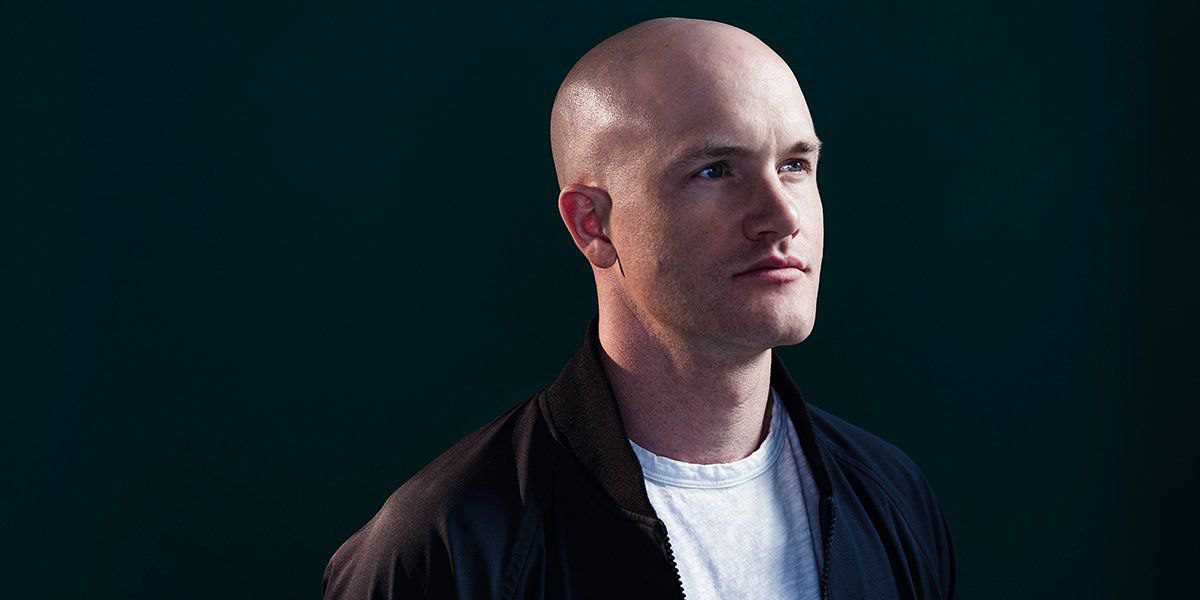
Few entrepreneurs have played a more significant role in bringing cryptocurrency into the mainstream than Brian Armstrong. As the co-founder and CEO of Coinbase, Armstrong has helped transform digital assets from a niche technological experiment into a global financial movement. Through his leadership, Coinbase grew into one of the world’s most trusted cryptocurrency platforms, serving millions of users and becoming the first major crypto company to go public on a U.S. stock exchange.
Born with a passion for technology and innovation, Brian Armstrong pursued a career that combined software engineering, entrepreneurship, and finance. Before launching Coinbase in 2012, he gained valuable experience in the technology sector, including working as a software engineer and exploring the challenges of global payments. His discovery of Bitcoin convinced him that blockchain technology had the potential to revolutionize financial systems by making transactions faster, more accessible, and less dependent on traditional banking institutions.
Beyond Coinbase, Armstrong has expanded his influence through innovative projects such as ResearchHub, a platform designed to improve scientific collaboration and knowledge sharing using modern technology and incentive-based systems. As a strong advocate for economic freedom, decentralized finance, and blockchain innovation, Armstrong continues to champion a future where cryptocurrency plays a central role in the global economy. This biography explores his early life, education, entrepreneurial journey, the rise of Coinbase, the creation of ResearchHub, net worth, achievements, and his vision for a crypto-powered world.
He built America’s largest cryptocurrency exchange while working nights and weekends at another company. He refused to settle when the U.S. government’s most powerful financial regulator came after him. And when the dust cleared, his company joined the S&P 500.
Most people in Silicon Valley talk about disrupting finance. Brian Armstrong actually did it — quietly, methodically, and with the kind of stubborn patience that makes great entrepreneurs impossible to stop once they find their direction.
But here is the part the headline numbers miss: Armstrong is not just building an exchange. He is building a vision. A world where financial freedom is a default condition for every human being on earth, not a privilege handed down by banks and governments to those who qualify. Where open scientific research replaces gatekept journals. Where aging — yes, biological aging — becomes a programmable problem rather than an inevitable fate.
This is the story of a man who grew up in Silicon Valley, read a nine-page whitepaper by an anonymous author, and decided to bet his career on it. A decade later, that bet is worth billions and his company is woven into the fabric of American retirement accounts.
Let’s trace every step.
Brian Armstrong Biography: Airbnb Engineer Turned Crypto Billionaire and Champion of Clear US Regulation
Early Life: Silicon Valley Roots, Engineer Parents, and a Boy Who Loved Systems
Born Into the Technology Heartland
Brian Armstrong was born on January 25, 1983, near San Jose, California. To understand why that birthplace matters, consider the timing. In 1983, Silicon Valley was transitioning from a region of aerospace and defense contractors into the global capital of software and personal computing. Apple had released the Lisa computer. The internet as a public utility was still a decade away. But the culture — the belief that technology could change everything — was already saturating the air.
Both of his parents were engineers, and from a young age he showed an aptitude for technology and systems thinking. In many households, dinner-table conversation revolves around sports or politics. In the Armstrong home, it likely revolved around how things work. That engineering household shaped a child who looked at the world not as a series of fixed conditions, but as a series of systems waiting to be optimized.
Bellarmine and the Making of a Focused Mind
For his high school years, Armstrong attended the private, all-male Catholic school Bellarmine College Preparatory. Bellarmine is not a casual institution. It is one of the most academically rigorous high schools in the San Francisco Bay Area — a place that produces engineers, doctors, and entrepreneurs in disproportionate numbers relative to its size. It demands discipline, intellectual seriousness, and a work ethic that most teenagers never develop.
At Bellarmine, Armstrong’s interest in computer science began to flourish. The environment was right. The timing was right. And the student was more than ready.
Education: Dual Degrees, a First Startup, and the Paper That Changed Everything
Rice University: Where Economics Met Computer Science
Brian Armstrong pursued his higher education at Rice University, where he initially obtained a dual bachelor’s degree in computer science and economics in 2005. Following his undergraduate studies, Armstrong continued at Rice University to earn a master’s degree in computer science, completing the program in 2006.
That combination — economics and computer science — is not accidental. It is precisely the intellectual toolkit you need to look at a broken financial system and see, in technical terms, how it could be rebuilt. Most economists cannot code. Most programmers do not understand monetary systems at a deep level. Armstrong understood both. That dual fluency became the foundation of everything Coinbase would later become.
This strong educational foundation in both economics and computer science would later play a crucial role in his career and the founding of Coinbase.
The First Startup: UniversityTutor.com
Here is something that distinguishes Armstrong from many tech founders who claim entrepreneurial instinct but only act on it after graduation with investor money in hand: he started building while still a student.
During his time at Rice, he co-founded his first venture, UniversityTutor.com, in 2003. This EdTech startup connected students and parents with tutors globally. He served as UniversityTutor.com’s CEO until 2012, when the business was acquired by Johnson Educational Technologies LLC.
Stop and appreciate what this tells us. At age 20, Armstrong was not just taking classes and attending parties. He was running a company — managing it alongside his studies, scaling it to a point where it attracted an acquisition. The fundamentals of what he would later do at Coinbase — build accessible infrastructure for a complex system, make it usable by people who are not experts — were already visible in embryonic form at UniversityTutor.com.
The subject matter would change. The method would not.
The Whitepaper That Rewired His Thinking
After reading Satoshi Nakamoto’s Bitcoin whitepaper, his career trajectory changed in 2010. Armstrong was working in enterprise software at the time. He was earning a comfortable salary, building conventional technology for conventional clients. And then he read nine pages that described, in clean, logical prose, a peer-to-peer electronic cash system that required no central authority to function.
For a man with his exact combination of skills — software engineering depth, economic understanding, and a systems thinker’s instinct for spotting broken architecture — the Bitcoin whitepaper was not abstract. It was a blueprint. And it pointed directly at the single largest, most underserved, most broken system on earth: global finance.
Career Journey: From IBM Desks to Airbnb Payments to Crypto History
IBM, Deloitte, and Learning Traditional Infrastructure From the Inside
After graduating, Armstrong began his professional career working as a developer at IBM and later as a consultant at Deloitte. These were not glamorous moves for a Silicon Valley tech graduate with entrepreneurial instincts. But they were educational ones. His early career included roles at major tech companies, including IBM and Deloitte, where he worked on software development and enterprise solutions.
To disrupt a system, you need to understand it from the inside. Armstrong spent years inside the machinery of traditional technology infrastructure. He saw firsthand how slow, expensive, and fragmented it was. He saw how many layers of intermediaries were involved in even basic financial operations. That understanding would become weaponized knowledge when he started building an alternative.
Airbnb: The Moment the Problem Became Personal
Armstrong’s most formative experience before founding Coinbase was at Airbnb, where he worked as a software engineer focusing on fraud prevention and global payments. During his time there, he witnessed firsthand the inefficiencies of traditional payment systems, especially when handling cross-border transactions.
This is the detail that brings everything into sharp focus. Airbnb in 2011 was trying to pay hosts in dozens of countries — and the global payments infrastructure was fighting them at every turn. Wire transfers were slow. Currency conversions were expensive. Payment processors declined transactions in certain regions entirely. Fraud was rampant, and the tools to fight it were blunt instruments.
Armstrong was not just observing this dysfunction from a distance. He was writing the code that had to work around it, day after day. He understood, at a granular engineering level, exactly where the breaks were — and exactly why a decentralized digital currency, accessible anywhere with an internet connection, was not just an interesting technology experiment. It was a necessary one.
Building Coinbase in the Margins
What most people do not know about Coinbase’s origin is how unglamorous it actually was. Brian quietly built Coinbase nights and weekends while at Airbnb. No grand departure announcement. No dramatic pivot moment. Just a software engineer writing code after dinner, on weekends, on the edges of an already demanding job, because he believed in something enough to sacrifice his free time for it.
That discipline — the willingness to build quietly and seriously before making any public moves — would define Armstrong’s entire approach to leadership.
Y Combinator and Finding Fred Ehrsam
After leaving Airbnb in 2012, he entered the Y Combinator startup accelerator program and successfully won an investment of $150,000, which he primarily used to build Coinbase.
Y Combinator’s acceptance was validation, but finding a co-founder was the next critical step. Armstrong wrote a post on Hacker News about seeking a co-founder, and it instantly became a hit. After doing more than fifty conversations, Armstrong met Fred Ehrsam, a British Bitcoin enthusiast and computer scientist. They teamed up and started to develop Coinbase.
That Hacker News post has become something of a Silicon Valley legend — a moment of radical transparency from a founder who knew exactly what he was building and exactly what kind of partner he needed to build it with.
In 2012, Coinbase launched.
Major Achievements: The Milestones That Redefined an Industry
Building America’s Go-To Crypto On-Ramp
Before Coinbase, buying Bitcoin required navigating sketchy forum posts, clunky wallet software, and exchanges that looked like they had been designed in 2003. Armstrong’s insight was deceptively simple: if you make buying crypto as easy as buying a stock, millions of ordinary people will do it.
Before Coinbase, buying and selling cryptocurrencies was a complex process reserved for tech-savvy enthusiasts. Armstrong’s platform changed that, making crypto accessible to millions. In 2012, when Coinbase launched, there were approximately one million Bitcoin users worldwide. By 2021, Coinbase alone had over 56 million verified users.
That is the scale of the transformation. One million global users to fifty-six million on a single platform. In less than a decade.
The 2021 Nasdaq Direct Listing
Under his leadership, Coinbase went public in a direct offering on Nasdaq in 2021, reaching a market capitalization of $100 billion.
The direct listing — rather than a traditional IPO — was itself a statement. Armstrong chose not to sell new shares to investment banks at a negotiated price. He let the market decide what Coinbase was worth on day one. It was a transparent, market-driven approach entirely consistent with his broader philosophy of open systems over closed ones.
At peak valuation on listing day, Armstrong’s stake was worth close to $20 billion. It was one of the most valuable debuts in American financial history.
Joining the S&P 500
He also launched Base, a Layer 2 blockchain network aimed at scaling Ethereum applications. Under his leadership, Coinbase grew from a 2012 startup into a public company and, in May 2025, joined the S&P 500.
The S&P 500 inclusion is not just a prestige milestone. It has structural consequences that ripple across the entire U.S. investment landscape. The inclusion forced every S&P 500 index fund to buy Coinbase stock. Coinbase is now embedded in the most-tracked equity benchmark in the world, which means a portion of every American 401(k) tracking the S&P now owns a sliver of Brian Armstrong’s company.
Crypto — once dismissed as a fringe technology for libertarian hackers — is now in American retirement accounts. That is not a small thing. That is a civilizational shift in how the United States relates to digital assets.
Base: Building the Blockchain Infrastructure Layer
Coinbase is planning to launch a crypto super app that will replace banks, offering payment services like credit cards and rewards. The launch of Base — Coinbase’s own Layer 2 network built on Ethereum — is the clearest signal yet that Armstrong is not content to remain a trading platform. He is building the rails that future decentralized applications will run on, positioning Coinbase not just as an exchange but as infrastructure for the entire on-chain economy.
AI at the Heart of Operations
Brian Armstrong said that Coinbase is ramping up AI adoption, with nearly 40% of the exchange’s code now written by AI tools. That statistic deserves attention. Most technology companies talk about integrating AI into their workflows. Coinbase has done it at a scale that fundamentally changes the economics of software development. When forty percent of your codebase is AI-generated, your cost structure, your speed of iteration, and your competitive positioning are categorically different from companies still writing everything by hand.
Brian Armstrong Net Worth: The Most Transparent Billion-Dollar Fortune in Crypto
A Fortune That Moves With the Market
Brian Armstrong’s net worth in 2026 is estimated to range between $9 billion and $14 billion, depending primarily on Coinbase’s stock price, crypto market cycles, and regulatory sentiment toward digital assets.
Brian Armstrong’s net worth is probably the cleanest test case in finance for what the crypto industry is actually worth at any given moment. Almost every dollar he has tracks COIN, which in turn tracks the volume, regulatory standing, and adoption curve of digital assets in the United States.
Here is the full arc of how his wealth has moved:
- 2021 (Peak) — Coinbase IPO valued his stake at close to $20 billion
- 2022 (Crypto Winter) — The crypto winter of 2022 dropped Coinbase’s market cap by over 90% and Armstrong’s net worth to below $2 billion.
- 2025 (Recovery Peak) — Bloomberg had his fortune at $17.7 billion by July 2025.
- 2026 (Current) — His net worth was tracking around $8.9 billion in April 2026 according to Bloomberg, while Forbes estimates his net worth to be $9.4 billion.
The Structure of His Wealth
According to the Bloomberg Billionaires Index and recent Form 4 filings, Brian holds approximately 14% of Coinbase but his voting power is closer to 64% of the company. That gap between economic ownership and voting control is significant. It means that despite dilution from equity grants and share sales over the years, Armstrong retains near-absolute decision-making authority over the company he built.
Beyond Coinbase, his wealth components include:
- NewLimit equity — Brian co-founded the longevity biotech NewLimit in 2021 with Blake Byers. The two committed roughly $110 million in personal capital. Brian holds approximately a 19% stake, worth approximately $150 million on paper.
- ResearchHub — A self-funded open science platform, treated as a long-term mission investment rather than a financial return vehicle.
- Coinbase Ventures portfolio — Equity stakes across dozens of crypto and Web3 companies
Companies & Projects: Beyond the Exchange
ResearchHub: GitHub for Science
Armstrong self-funded ResearchHub, a platform attempting to make scientific research more accessible and incentivized, modeled on how GitHub democratized code sharing. The platform pays researchers in cryptocurrency for publishing and reviewing work.
The logic is elegant. Academic research is one of humanity’s most valuable outputs — yet it is locked behind expensive journal paywalls, subject to replication crises, and produces no financial reward for the researchers who actually do the work. ResearchHub applies the same open-access philosophy that drove Armstrong to crypto — remove intermediaries, create direct value exchange, democratize access — to scientific knowledge.
Whether ResearchHub achieves Armstrong’s ambitions remains to be seen. But the vision is coherent and the need is real.
NewLimit: Programming Away Aging
A May 2025 funding round valued NewLimit at $825 million post-money. Armstrong has framed the investment as the most important problem he could be working on after crypto: if aging is programmable rather than inevitable, the implications are more significant than any financial system transformation.
This is the most ambitious item in Armstrong’s portfolio — not because biotech startups are rare, but because of how he frames it. Aging as a programmable problem. The same intellectual framework he applied to broken financial systems — identify the underlying mechanics, find the failure points, engineer a better architecture — applied to human biology. Whether this succeeds or fails, the audacity of the vision is worth noting.
GiveCrypto.org
In 2018, Armstrong launched GiveCrypto.org, a nonprofit with the mission to financially empower people by distributing cryptocurrency globally. That same year, he signed the Giving Pledge, committing to give the majority of his wealth to charitable causes throughout his lifetime.
GiveCrypto is Armstrong’s direct answer to the question: what does financial inclusion actually look like in practice? Not financial inclusion through traditional banking infrastructure that takes decades and billions to build in underserved regions — but direct crypto distribution to individuals who can use it immediately.
Coinbase Ventures
Coinbase Ventures has become one of the most active investors in the Web3 space, backing hundreds of early-stage blockchain and crypto infrastructure projects. It functions as both a financial vehicle and a strategic tool, keeping Coinbase embedded in the emerging ecosystem of applications that will eventually drive users to its exchange.
Controversies: The Battles That Defined His Resolve
The SEC Lawsuit: A $130 Million Political Fight
In June 2023, the Securities and Exchange Commission filed a landmark enforcement action against Coinbase, alleging the exchange operated as an unregistered securities platform. It was the most significant regulatory challenge in the company’s history.
The SEC sued Coinbase, alleging it operated as an unregistered exchange, broker, and clearing agency. Brian refused to settle.
That refusal was not just a legal strategy. It was a statement of principle. Armstrong believed the SEC’s position — that most crypto tokens were securities — was legally wrong and would devastate the U.S. crypto industry if allowed to stand unchallenged.
Brian Armstrong joined forces with industry leaders like Brad Garlinghouse, the CEO of Ripple, to launch an unprecedented influence campaign to sway politicians to support crypto. They spent more than $130 million up and down the ballot to elect pro-crypto candidates in the 2024 elections.
The SEC’s decision to drop the lawsuit came just a month after Gensler resigned as chair of the SEC. “I have to give credit here to the Trump administration, for winning the election, and for the departure of the activist head of the SEC, Gary Gensler,” Armstrong said.
The lawsuit was ultimately dismissed in 2025. The case was dismissed as the agency shifted its approach to crypto under new leadership, with SEC Chair Paul Atkins saying that “most crypto tokens trading today are not themselves securities.”
The NYDFS Compliance Settlement
In January 2023, Coinbase reached a $100 million settlement with the New York State Department of Financial Services — split evenly between a $50 million penalty and $50 million earmarked for strengthening its compliance program — after regulators found “wide-ranging and long-standing failures” in its anti-money laundering controls.
This was a genuine compliance failure, not a regulatory overreach. Coinbase grew fast — faster, it turned out, than its internal controls could keep pace with. The settlement acknowledged real deficiencies and imposed real consequences. It is one of the more candid examples of a crypto company being held accountable for operational failures rather than ideological disagreements with regulators.
The Shareholder Derivative Lawsuit
A derivative suit was filed against Brian and other Coinbase executives in the District of New Jersey, alleging materially false statements between April 2021 and June 2023 about custody, listings, and AML controls. The suit alleges that executives knew about compliance weaknesses well before they became public and failed to adequately warn shareholders.
Between the NYDFS settlement, the SEC lawsuit, and two parallel shareholder actions, the period covered by this complaint reads like a case study in how rapid growth can outpace internal controls — and how markets eventually price in the gap.
The ResearchHub Origin Controversy
A startup accelerator, MouseBelt Labs, filed a lawsuit in California alleging that Armstrong had used his position to gain knowledge of a competing platform called Knowledgr and allegedly used that information to build ResearchHub. MouseBelt alleged Armstrong went behind its back in contacting Knowledgr’s founder privately, indicating a potential investment from Coinbase Ventures while allegedly benefitting ResearchHub.
The allegations were serious and attracted attention. The lawsuit remains part of Armstrong’s documented record. As with all litigation of this nature, the full truth lives in the court filings — and the outcome is separate from the allegations themselves.
The “No Politics at Work” Policy
Armstrong attracted significant criticism in 2020 when he published a memo declaring Coinbase a “mission-focused” company where employees were discouraged from engaging in political activism or social commentary on company channels. A number of employees departed, and the response across the tech industry was sharply divided. Some praised the clarity. Others condemned it as tone-deaf suppression of employee voice.
Armstrong’s position was consistent: Coinbase exists to build financial freedom for the world. Political distraction, however well-intentioned, dilutes that mission. Whether you agree with him or not, the policy was implemented, the departures occurred, and Coinbase continued to grow.
Web3 & AI Impact: Armstrong’s Vision for What Finance Becomes Next
Base and the On-Chain Economy
The launch of Base — Coinbase’s Ethereum Layer 2 network — is Armstrong’s most concrete technological bet on where Web3 goes next. By building and operating its own Layer 2, Coinbase is not just facilitating trades between buyers and sellers. It is becoming the foundation layer on which the next generation of financial applications is built. Lending protocols, stablecoins, decentralized identity, tokenized assets — all of these applications need fast, cheap, reliable infrastructure. Base is Armstrong’s answer to that need.
AI as Coinbase’s Operating System
With nearly 40% of the exchange’s code now written by AI tools, Coinbase is ramping up AI adoption aggressively. Armstrong has been unusually specific about this number — and unusually willing to discuss its implications. Most CEOs speak about AI in vague, aspirational terms. Armstrong is implementing it at the code level, treating it as an engineering resource multiplier rather than a marketing talking point.
The convergence of AI and crypto — where AI agents transact autonomously on-chain, where smart contracts execute without human intervention, where financial services are delivered by algorithms rather than institutions — is the future Armstrong is building toward.
Financial Inclusion as the North Star
Throughout his career, Armstrong has returned repeatedly to one central idea: billions of people are excluded from the global financial system through no fault of their own. They lack access to banking. They pay crippling fees to send money home. Their savings are destroyed by hyperinflation in unstable currencies. Crypto, built correctly, fixes this.
Armstrong has been a vocal advocate for crypto adoption, regulatory clarity, and financial innovation, frequently engaging with policymakers and investing in blockchain projects. His vision of an open financial system, built on the foundation of Bitcoin and blockchain technology, has driven Coinbase to become one of the most influential companies in the space.
Lessons & Quotes: What Armstrong’s Journey Teaches Us

Five Lessons From Brian Armstrong’s Career
1. Build at night before you burn the ships. Armstrong coded Coinbase while still at Airbnb. He did not quit his job on instinct. He validated the idea in his own time before making an irreversible commitment. That patience between conviction and action is rare — and valuable.
2. The best founders understand the system they are disrupting, from the inside. Armstrong spent years inside traditional technology and financial infrastructure before building an alternative. His understanding of exactly why global payments were broken gave him the precision to build something that was not — a precise diagnosis led to a precise solution.
3. Refusal to settle is sometimes the only sustainable position. When the SEC sued Coinbase, every pragmatic voice likely counseled settlement. Armstrong refused. That refusal — backed by legal resources, political engagement, and genuine principle — ultimately produced a better outcome for the company and for the entire U.S. crypto industry.
4. Volatility is not failure. Armstrong’s net worth dropped from nearly $20 billion to below $2 billion during the 2022 crypto winter. He did not pivot. He did not rebrand. He continued executing. The recovery, when it came, validated that approach. Fortune rewards those who survive the down cycles, not just those who enjoy the up ones.
5. Mission focus scales. Distraction does not. Whether you agree with his no-politics policy or not, the underlying principle — know what your company exists to do, and protect that clarity against every competing demand — is sound operating wisdom.
Memorable Quotes From Brian Armstrong
“The goal of Coinbase is to create an open financial system for the world.”
“Every person in the world deserves access to basic financial services.”
“Cryptocurrency is the most important technological innovation since the internet.”
“If we do our job right, Coinbase will look more like a financial services super app in the future.”
“I want to fight for economic freedom, and I want to fight for basic science.”
The Quiet Architect of a New Financial System
Brian Armstrong does not move loudly. He does not dominate conference stages or build his personal brand with the aggressive frequency of many of his peers. He builds. Systematically, patiently, with the methodical discipline of an engineer who has thought carefully about the architecture before writing a single line of code.
The result, over thirteen years, is an exchange that weathered crypto winters, survived a landmark SEC lawsuit, joined the S&P 500, and now processes transactions for tens of millions of users across the globe. Beyond Coinbase, Armstrong is reaching into longevity science, open academic research, and AI-accelerated software development — applying the same disruptive lens to every major system he believes is broken.
His story is not one of overnight success or lucky timing, though timing certainly helped. It is one of compound effort — ideas built on top of skills built on top of habits built on top of values formed in an engineering household in San Jose, California, a very long time ago.
The crypto-powered economy Armstrong envisions is not fully built yet. But it is more real today than it was when he started. And the distance between here and there, increasingly, runs through Coinbase.
Quick Facts: Brian Armstrong at a Glance
| Detail | Info |
|---|---|
| Full Name | Brian Armstrong |
| Date of Birth | January 25, 1983 |
| Birthplace | San Jose, California, USA |
| Nationality | American |
| Education | Rice University (BA Economics & CS; MS Computer Science) |
| Co-founded | Coinbase (2012) |
| Other Ventures | ResearchHub, NewLimit, GiveCrypto.org |
| Net Worth (2026) | ~$9.4 billion (Forbes) / ~$8.9 billion (Bloomberg) |
| COIN Voting Power | ~64% |
| Spouse | Angela Meng (m. 2024) |
| Based In | San Francisco, California |
Brian Armstrong’s journey from software engineer to one of the most influential figures in the cryptocurrency industry reflects the transformative power of innovation, vision, and persistence. Through Coinbase, he created a platform that made digital assets more accessible to everyday users, helping millions participate in the emerging blockchain economy and accelerating the global adoption of cryptocurrency.
His contributions extend beyond financial technology. Through ResearchHub, Armstrong has demonstrated a commitment to improving how knowledge is shared and scientific discoveries are rewarded, highlighting his broader interest in using technology to solve complex societal challenges. This combination of entrepreneurial ambition and long-term thinking has positioned him as a leading voice in both the cryptocurrency and technology sectors.
As blockchain technology continues to evolve and digital assets become increasingly integrated into the global financial system, Brian Armstrong’s influence is likely to remain significant for years to come. Whether through Coinbase, ResearchHub, or future innovations, his vision of a more open, accessible, and crypto-powered economy continues to shape discussions about the future of finance, technology, and economic opportunity around the world.