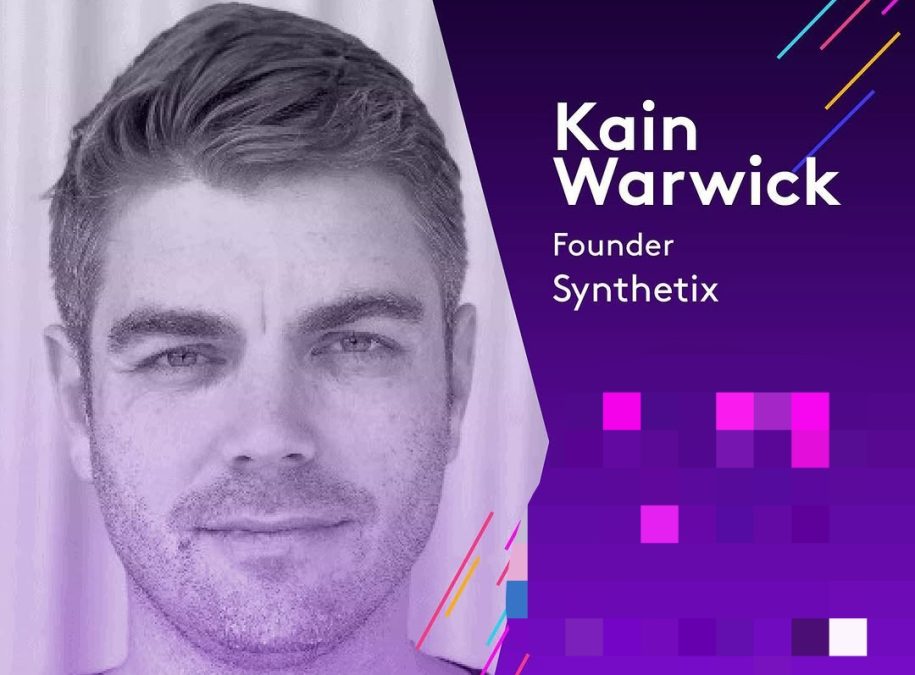
The 2026 crypto conversation is no longer about “layer wars”—it is about “user wars”—and Kain Warwick is winning. After stepping back from the day-to-day management of Synthetix to empower its DAO, Warwick returned to the front lines to found Infinex, a platform that mimics the seamless feel of Robinhood while maintaining the self-custody ethos of Ethereum. This Kain Warwick biography and 2026 wealth update examines how this “agentic” shift has impacted his standing in the industry. With the January 30, 2026, transition of Patron NFTs into a core governance and PFP set, Warwick has successfully created a “Patronage” model that funds massive innovation without the extractive nature of traditional VC rounds.
In early 2026, Warwick’s leadership was put to the test as major exchanges like Coinbase suspended legacy SNX perpetuals, forcing a migration toward native, onchain solutions. Rather than retreating, Warwick leaned into the volatility, unveiling a 2026 roadmap focused on systematic token buybacks and the restoration of the sUSD peg. This deep dive explores how his “grit-first” philosophy, honed through years of building in Australian retail and the global crypto trenches, has resulted in a personal net worth that remains robust despite the market’s shifting tides. As he continues to champion onchain derivatives and “defrag” the fragmented crypto experience, Kain Warwick is proving that the best is yet to come for the decentralized web.
What if a former punk rock band frontman, failed genetics student, and e-commerce hustler looked at the rigid, centralized world of traditional finance in 2017 and decided the solution wasn’t better banks or smarter brokers — but synthetic assets anyone could mint, trade, and hold on Ethereum without ever owning the underlying gold, stocks, or currencies?
That audacious idea became Synthetix (originally Havven), one of the earliest and most influential DeFi protocols. Launched via ICO in 2018, it pioneered on-chain synthetic assets (synths) and, in 2020, helped spark the explosive DeFi Summer by popularizing yield farming — the practice of staking tokens to earn rewards that turned liquidity provision into a global phenomenon. Kain Warwick, its founder, earned the tongue-in-cheek title “father of modern agriculture” for igniting that frenzy.
Now in his mid-40s in 2026, Warwick has stepped back from day-to-day Synthetix operations while remaining a key voice in its evolution. His latest project, Infinex, aims to solve DeFi’s persistent UX nightmare by creating a seamless, non-custodial front-end that abstracts away wallets, bridging, and gas fees — all while preserving decentralization. From Sydney’s eastern suburbs to luxury real estate buys and family ties to tennis legend Kim Warwick (his father), Kain’s story blends rebellious creativity, relentless entrepreneurship, painful personal lessons, and an unwavering belief that open, permissionless systems can outperform closed financial empires.
Kain Warwick Biography: The Visionary Behind Synthetix and the Birth of DeFi Yield Farming

Early Life: From US Childhood to Australian Punk Scene and Entrepreneurial Sparks
Kain Warwick was born in the early 1980s (around 1981–1983 based on public timelines) and spent his first 12 years in the United States before his family relocated to Australia. He attended Waverley College in Sydney from 1996 to 1998, an experience that exposed him to a more structured academic environment than his American roots.
As a teenager, Warwick displayed a rebellious streak mixed with creative energy. He became the vocalist, guitarist, and keyboardist for an emo/punk rock band called The Lie Society, performing in Victorian-era outfits across Australia’s east coast. Music wasn’t just a hobby — it reflected his independent mindset and willingness to challenge norms.
He also showed early entrepreneurial flair. At 14, his parents reportedly shut down his small tennis racquet restringing business, an incident he later cited as planting seeds of crypto-anarchist thinking: frustration with centralized authority limiting individual initiative. These formative years — blending artistic expression, business experimentation, and a distrust of gatekeepers — would later fuel his approach to building decentralized financial systems.
Warwick Education: Brief Genetics Studies at UNSW and a Pivot to Real-World Hustle

Warwick enrolled at the University of New South Wales (UNSW) in Sydney, initially studying Genetics. He was drawn to biology but quickly realized organic chemistry was not his strength. After about 18 months, he dropped out to pursue opportunities abroad, including a move to Seattle for a startup venture with a friend.
He never completed a formal degree, a choice that aligned with his hands-on, learn-by-doing philosophy. Instead of academia, Warwick dove into practical experience: IT roles, project management, and multiple startup attempts. This self-directed path gave him flexibility and real-world skills in technology, operations, and business development — far more valuable for crypto innovation than traditional credentials.
His diverse background (music, failed genetics studies, early tech ventures) created a unique lens: he approached finance not as a Wall Street insider but as an outsider seeking elegant, code-based alternatives to broken systems.
Warwick Career Journey: E-Commerce Experiments, Blueshyft, and the Leap into Blockchain
Before crypto, Warwick was a serial entrepreneur in Australia’s e-commerce and tech scene. He founded or co-founded several startups, including Pouncer, a live auction platform. In 2014, he co-founded Blueshyft, which grew into Australia’s largest cryptocurrency payment network with over 1,200 retail locations — bridging traditional commerce with digital assets.
He also served as a non-executive director at Blueshyft and worked in project management roles. Around 2012, Warwick discovered Bitcoin and became drawn to its principles of censorship resistance, decentralization, and self-sovereignty. By 2016–2017, as Ethereum gained traction, he saw an opportunity to build beyond simple payments.
In 2017, Warwick founded Havven, a stablecoin protocol that raised approximately $30 million in one of the earlier significant ICOs. The project pivoted and rebranded to Synthetix, shifting focus from a single stablecoin to a broad platform for synthetic assets (synths) that track real-world prices without requiring direct ownership or custody of the underlying assets. This innovation allowed users to gain exposure to currencies, commodities, equities, and more entirely on-chain.
Synthetix introduced debt-based issuance, collateralized by SNX tokens, and became a cornerstone of DeFi derivatives. In 2020, Warwick and the team popularized yield farming (also called liquidity mining), incentivizing users to stake SNX and provide liquidity in exchange for rewards — a mechanism that helped trigger the explosive growth of DeFi Summer.
Warwick later launched Infinex in 2023–2024 as a next-generation DeFi front-end. It aims to unify experiences across protocols, abstracting complexities like wallet setup and bridging while remaining non-custodial. Infinex raised significant funds via a Patron NFT sale ($67.7 million) and a subsequent Sonar token sale, with an INX token generation event planned for 2026.
He has also invested through Bodhi Ventures and supported family projects, including his brothers’ involvement in the NFT game Illuvium.
Major Achievements: Synthetix, Yield Farming, and Pushing DeFi Forward
Kain Warwick’s key accomplishments include:
- Founding Synthetix (formerly Havven), one of the first major synthetic asset platforms on Ethereum, enabling on-chain exposure to diverse assets with deep liquidity in perpetual futures and perps on mainnet.
- Popularizing yield farming in 2020, which incentivized massive liquidity inflows and helped define DeFi’s growth phase.
- Building robust on-chain derivatives infrastructure that has processed billions in volume and influenced the broader ecosystem, including perpetual futures and multi-collateral models.
- Co-founding Blueshyft, a pioneering crypto payments network in Australia.
- Launching Infinex to improve DeFi usability without sacrificing core principles, with ongoing 2026 developments around token launches and integrations.
- Contributing to governance discussions and protocol evolution, including Synthetix’s 2026 roadmap focused on fee-funded buybacks, multi-collateral support (ETH, cbBTC), commodity markets, and deflationary mechanics for SNX.
Synthetix has remained a resilient player in DeFi derivatives, with recent emphasis on perps, stablecoin (sUSD) peg restoration, and liquidity innovations.
Kain Warwick Net Worth: Substantial SNX Holdings, Real Estate, and Ecosystem Value

As of early 2026, Kain Warwick’s net worth is estimated in the range of $200 million to over $600 million, with figures varying based on SNX price, private valuations, and real estate holdings. Earlier reports (2023–2024) placed it around $211–657 million, with significant portions tied to SNX tokens (he has publicly stated over 95% of his wealth was once in SNX due to vesting and staking).
Additional wealth comes from:
- Success with Blueshyft and earlier ventures.
- Investments via Bodhi Ventures and personal crypto portfolio.
- Luxury real estate, including high-profile Sydney properties (e.g., a $12.2 million Bronte home for his parents and other eastern suburbs acquisitions totaling tens of millions) and a Manhattan penthouse listed around $36 million in recent reports.
Warwick has demonstrated “skin in the game” with long-term SNX alignment, though he has diversified into property and other assets. Family wealth (including brothers’ Illuvium success) adds context but is separate. His fortune reflects both protocol success and savvy personal investments, with volatility inherent to crypto holdings.
Companies & Projects: Synthetix, Infinex, Blueshyft, and Beyond
Warwick’s flagship remains Synthetix, focused on on-chain synthetic assets and perpetual futures, with a 2026 roadmap emphasizing buybacks, multi-collateral, and enhanced trading experiences. He has transitioned toward a more advisory or strategic role as the protocol matures under decentralized governance.
Infinex, launched in recent years, is his active focus — a user-friendly DeFi aggregation layer designed to compete with centralized exchanges by offering seamless onboarding, hardware wallet support, and integrations while staying non-custodial. It raised funds through Patron NFTs and Sonar sales ahead of the INX TGE in 2026.
He co-founded Blueshyft, Australia’s leading crypto payment network, and has been involved with Bodhi Ventures. Warwick has also supported music and creative pursuits from his punk rock days.
Controversies: Governance Critiques, Token Sales, and DeFi’s Growing Pains
Warwick has been outspoken about DeFi’s challenges. He has called early governance infrastructure “pretty terrible” and critiqued voting mechanisms, while advocating for better alignment between builders and communities. Synthetix faced debates over design issues (e.g., claim windows, debt pools) in its early years, with Warwick responding transparently via blog posts and community proposals.
Infinex’s token sales drew scrutiny: a Patron NFT round raised $67.7 million, followed by adjustments to the Sonar sale (initial $2,500 cap reportedly lifted while keeping lockups), sparking accusations of changing terms mid-process. Warwick has addressed these directly, framing decisions as pragmatic for broader distribution and long-term sustainability, while emphasizing non-custodial principles as non-negotiable.
He has reflected on personal and industry lessons, including past struggles with addiction mentioned in interviews, and critiqued centralized elements creeping into DeFi. Regulatory pressures and competition (e.g., from Hyperliquid) have also featured in public discussions. Warwick generally engages openly, viewing controversy as part of healthy protocol evolution rather than a flaw.
Web3/AI Impact: Synthetic Assets, Yield Innovation, and Usable DeFi Infrastructure
Warwick’s work has been foundational to DeFi’s derivatives and liquidity layers. Synthetix demonstrated how synthetic assets could bring real-world exposure on-chain, while yield farming unlocked capital efficiency and participation at scale. These ideas influenced perpetual futures, stablecoins, and broader liquidity mining models still used today.
With Infinex, he addresses DeFi’s UX gap — making advanced trading accessible without forcing users into custodial platforms. In 2026, Synthetix’s roadmap includes AI-assisted tooling (e.g., Cursor and AI agents for protocol development), reflecting broader convergence. Warwick envisions hybrid on/off-chain systems, better oracles, and infrastructure that supports professional-grade trading while remaining decentralized.
For users in the US (regulatory navigation), Asia (high derivatives interest), the Middle East (asset tokenization potential), and South Africa (emerging DeFi adoption), his projects offer tools for exposure to global markets, yield generation, and simplified on-chain finance — reducing reliance on traditional intermediaries.
Lessons & Quotes: Rebellion, Pragmatism, and Long-Term Building
Warwick’s career offers grounded insights:
- On DeFi’s origins: “I was drawn to Bitcoin because of the promise of censorship resistance, decentralisation, and self-sovereignty.”
- On yield farming: He helped popularize incentives that drove liquidity but has since reflected on sustainability and governance pitfalls.
- On building: Trade-offs are necessary for usability, but core principles (non-custodial, permissionless) must remain non-negotiable.
- On governance: “DeFi governance has gotten worse” in some ways; open debate and alignment are essential but challenging.
- On the future: Focus on simplifying professional trading, restoring stablecoin pegs, and using fees for deflationary buybacks to create sustainable value.
- A recurring theme: Crypto rewards persistence and learning from cycles; personal setbacks (like early business shutdowns or addiction struggles) build resilience.
Key lessons:
- Challenge authority early — small rebellions can lead to systemic innovation.
- Pivot ruthlessly — from Havven stablecoin to broad synthetics shows the power of adaptation.
- Incentivize participation thoughtfully — yield farming worked but requires ongoing governance fixes.
- Prioritize UX without compromise — Infinex balances accessibility with decentralization.
- Align long-term — skin in the game and fee mechanisms sustain protocols through cycles.
- Learn across domains — music, e-commerce, and genetics all inform better system design.
- Engage honestly — address controversies head-on to build community trust.
Warwick models eclectic creativity paired with pragmatic execution: question broken systems, build alternatives, and iterate publicly.
The Road Ahead: Synthetix Comeback and Infinex as DeFi’s Next UX Layer
In 2026, Synthetix pursues aggressive upgrades — fee-funded SNX/sUSD buybacks, multi-collateral perps, commodity markets, and liquidity vaults — aiming for a deflationary, high-utility future. Infinex advances toward its INX TGE, focusing on seamless integrations, hardware support, and competing with CEX-like experiences on decentralized rails.
For a global audience, Kain Warwick’s trajectory from punk rocker and dropout to DeFi pioneer illustrates that innovation often comes from outsiders willing to experiment boldly. Whether through synthetic assets that democratize exposure or front-ends that make DeFi feel intuitive, he continues pushing toward a financial system that is more open, efficient, and user-controlled.
Kain didn’t set out to become “the father of yield farming” or process billions in derivatives volume. He set out to build tools that reflect crypto’s core promises — and in doing so, helped birth entire categories of decentralized finance while reminding builders that usability and principles can coexist.