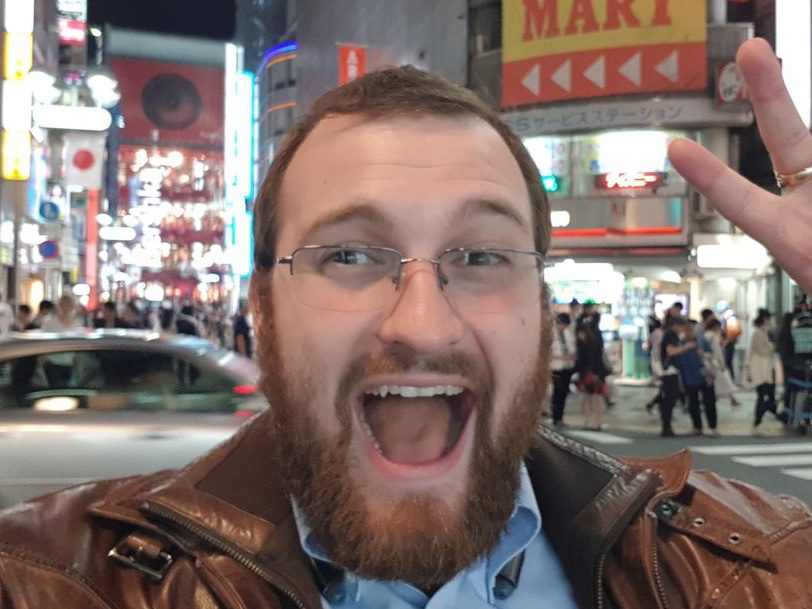
As a co-founder of Ethereum and the mastermind behind Cardano, Charles Hoskinson is one of the few individuals to have shaped two of the top-tier blockchain ecosystems in existence. Known for his rigorous, peer-reviewed approach to development, Hoskinson has transitioned from a mathematician to a global tech leader. Today, his work with IOHK (Input Output Global) and the launch of the privacy-centric Midnight network positions him as a premier privacy pioneer in the space. This Charles Hoskinson biography explores the journey of the man who is bridging the gap between decentralized finance and real-world compliance.
What if the co-founder of Ethereum walked away from what would become a trillion-dollar ecosystem because he believed it wasn’t ambitious enough? What if he then spent nearly a decade building a rival platform grounded in peer-reviewed academic papers rather than rapid hype, only to watch it get criticized for moving too slowly — while quietly positioning it as the most privacy-conscious and sustainable infrastructure for the real world?
That’s the story of Charles Hoskinson. Born in Hawaii, raised with a love for mathematics, and driven by libertarian ideals and a deep distrust of centralized power, Hoskinson helped ignite the smart contract revolution with Ethereum. Then he left to create Cardano, a blockchain designed from first principles with formal methods, peer-reviewed research, and a focus on scalability, interoperability, and — increasingly — privacy.
CHECK: Vitalik Buterin Biography: Who Is Founder of Ethereum? Life, Achievements & Future Plans
At 38 in 2026, Hoskinson remains one of crypto’s most polarizing and prolific voices. He’s a CEO who livestreams marathon updates, a critic of regulatory overreach who claims personal paper losses in the billions, and a visionary pushing Midnight — a privacy-preserving partner chain — as the next evolution. His journey reveals the tension between academic rigor and market speed, between decentralization ideals and the messy reality of building in public.
Here’s the full, unfiltered biography of the man who wants Cardano to outlast hype cycles and deliver tangible impact for billions.
Charles Hoskinson Biography: The Mathematician Behind Cardano, Midnight & Web3 Innovation
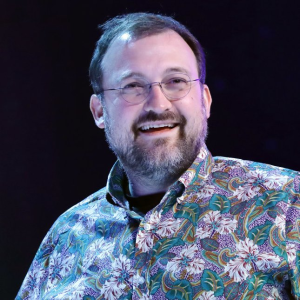
Early Life: Hawaiian Roots, Mathematical Passion, and Libertarian Awakening
Charles Hoskinson was born on November 5, 1987, on Maui, Hawaii, into a family of physicians. His father and brother pursued medicine, and for a time, young Charles considered becoming a surgeon. But computers and numbers captivated him more than biology. He spent hours exploring technology, developing an early fascination with how systems worked — and how they could be improved.
The family moved to Colorado, where Hoskinson grew up. He developed strong interests in mathematics, cryptography, and monetary theory. The 2008 financial crisis hit during his college years and reinforced his skepticism of traditional finance and central banks. He was drawn to the Austrian School of Economics and the ideas of sound money, limited government, and individual liberty.
In 2008, Hoskinson volunteered for Ron Paul’s presidential campaign, an experience that deepened his libertarian worldview. He saw fiat currencies as inherently unstable and believed decentralized systems could offer a better alternative. These early influences — math as a tool for truth, economics as a battleground of incentives, and a distrust of concentrated power — would shape every major decision in his career.
Education: University Studies Without a Completed Degree
Hoskinson attended Metropolitan State University of Denver and later the University of Colorado Boulder, where he studied mathematics with a focus on analytic number theory. He immersed himself in lectures on cryptography and related fields but did not complete a formal degree at either institution. Some reports mention he started but dropped a PhD program early.
This lack of a finished credential has sparked occasional debate, yet Hoskinson’s practical expertise in mathematics and formal methods became evident through his work. He supplemented academic study with self-directed learning in programming, game theory, and economics. His functional programming interests and rigorous approach to systems design set him apart in an industry often driven more by speed than soundness.
He has never leaned heavily on formal titles. Instead, Hoskinson emphasizes results, peer-reviewed research, and real-world application — a philosophy that would define Cardano’s development model.
Career Journey: From Bitcoin Evangelist to Ethereum Co-Founder to Cardano Architect

Hoskinson’s entry into cryptocurrency began around 2013 after he quit a consulting job to go all-in on digital assets. He was an early Bitcoin advocate and helped vet ideas like decentralized stable currencies. He co-founded Invictus Innovations and worked on related projects.
In 2013, he connected with Vitalik Buterin and joined the small team shaping Ethereum. As one of the eight co-founders, Hoskinson played a key role in the project’s early vision, helped design the initial coin offering (ICO) model, and briefly served as CEO. He advocated for a more structured, potentially for-profit approach alongside nonprofit elements, but philosophical differences emerged — particularly around governance, development speed, and organizational structure.
Hoskinson left Ethereum in mid-2014, before the mainnet launch. He has described the departure as stemming from disagreements over whether Ethereum should remain purely nonprofit and open-source or incorporate more commercial elements. Other accounts from co-founders highlight deeper interpersonal and directional clashes.
Undeterred, Hoskinson co-founded Input Output Global (IOG, formerly IOHK) in late 2014 with Jeremy Wood. The company focused on high-assurance blockchain engineering using peer-reviewed research. In 2015–2017, IOG developed Cardano, launching the network in 2017 with a deliberate, layered rollout: settlement layer first, then computation layer, followed by governance upgrades.
Hoskinson has led IOG as CEO while remaining the public face of Cardano. He has also been involved in philanthropy, medical initiatives (including a health and wellness clinic), ranching on a large property, and support for various research efforts. His style — long, detailed livestreams and direct community engagement — has built a loyal following while attracting sharp criticism.
Major Achievements: Peer-Reviewed Blockchain, Ouroboros, and On-Chain Governance
Hoskinson’s contributions include:
- Co-founding Ethereum and helping pioneer the ICO model that funded much of the early smart contract ecosystem.
- Founding IOG and creating Cardano, one of the first major blockchains developed with extensive academic collaboration. Its Ouroboros proof-of-stake protocol was among the first to receive peer-reviewed security analysis.
- Advancing formal methods and high-assurance engineering in blockchain, emphasizing security, sustainability, and scalability over rapid feature addition.
- Implementing progressive governance upgrades on Cardano, culminating in the Voltaire era and on-chain treasury mechanisms — one of the largest decentralized funding systems in crypto.
- Driving real-world adoption initiatives in Africa and elsewhere through partnerships focused on identity, finance, and education.
- Launching experimental projects like Midnight, a privacy-focused sidechain/partner chain designed to bring confidential computing to the Cardano ecosystem.
Hoskinson has repeatedly called Cardano “one of the greatest technical achievements in human history” due to its research-driven foundation and formal verification efforts. While adoption metrics (TVL, daily active users) have lagged behind faster-moving competitors like Solana or Ethereum at times, Cardano has maintained a reputation for resilience, low energy use, and deliberate design.
Charles Hoskinson Net Worth: Volatile Fortune Tied to ADA and Broader Crypto Holdings

As of early 2026, Charles Hoskinson’s net worth is estimated between $500 million and $600 million in more conservative analyses, though some sources and his own public statements suggest far higher unrealized peaks and significant paper losses. Forbes estimated $500–600 million as far back as 2018, largely from ADA holdings and early crypto investments.
Hoskinson’s wealth is heavily correlated with Cardano’s native token, ADA. He has disclosed massive paper losses — including over $2.5 billion to $3 billion in recent years — attributing them not to technological failure but to regulatory uncertainty, government actions, and missed bull market momentum. His personal holdings fluctuate dramatically with ADA’s price, which has seen sharp volatility.
Beyond ADA, Hoskinson has invested in other early-stage projects and maintains interests in Bitcoin-related ventures (including participation in funding rounds). He has emphasized “skin in the game” and long-term alignment rather than frequent cash-outs. He lives relatively diversely — running a ranch, supporting medical research, and engaging in varied pursuits — rather than flashy displays of wealth.
His transparency about losses and market frustrations resonates with many retail holders but also highlights the high-risk nature of founder-level crypto exposure.
Companies & Projects: IOG, Cardano, Midnight, and Beyond
Hoskinson’s primary vehicle is Input Output Global (IOG), the blockchain research and engineering firm behind Cardano’s core development. IOG collaborates with universities and focuses on formal methods, cryptography, and scalable infrastructure.
Cardano itself is governed by a triad: IOG (development), Emurgo (commercial ventures), and the Cardano Foundation (standards and ecosystem support). Hoskinson has frequently clashed with the Foundation over transparency, spending, and direction.
Key projects include:
- Midnight: A privacy-preserving partner chain using zero-knowledge proofs and confidential computing. Unveiled with growing emphasis in 2025–2026, it aims to enable secure, private applications while leveraging Cardano’s security.
- RealFi initiatives bridging decentralized finance with real-world assets and services.
- On-chain treasury and governance tools that let ADA holders vote on funding and upgrades.
- Broader ecosystem efforts in identity solutions, stablecoins, and interoperability.
Hoskinson has avoided heavy reliance on traditional venture capital, preferring community-driven or research-backed models.
Controversies: Departures, Governance Fights, and Public Feuds
Hoskinson’s career has been marked by high-profile conflicts. His exit from Ethereum remains contentious, with differing narratives: philosophical differences on one side, accusations of overreach or interpersonal issues on the other. He has publicly sparred with Vitalik Buterin and other figures over technical direction, adoption metrics, and vision.
Within Cardano, tensions with the Cardano Foundation have flared repeatedly. In 2025, allegations surfaced that Hoskinson misused a “genesis key” to divert hundreds of millions in ADA during a 2021 hard fork — claims he strongly denied, calling them deeply hurtful. Audits were referenced, but public distrust lingered. He has criticized the Foundation’s handling of funds and transparency.
Other incidents include a 2025 chain split caused by a developer’s experimental transaction, after which Hoskinson involved the FBI — prompting backlash and even a resignation over fears of legal repercussions for future bugs. He has also faced criticism for Cardano’s slower development pace, lower DeFi activity compared to rivals, and occasional bold claims (such as predicting Ethereum’s eventual decline).
Hoskinson addresses controversies head-on in livestreams, often framing them as necessary friction in building truly decentralized systems. He attributes much of crypto’s challenges to external regulatory pressure rather than internal shortcomings. While his direct style energizes supporters, it has fueled perceptions of defensiveness or divisiveness.
Web3/AI Impact: Privacy at Scale and the Role of Decentralized Compute
Hoskinson has long positioned Cardano as infrastructure for a more equitable, research-backed Web3. In 2025–2026, privacy emerged as a central theme through Midnight, designed to bring confidential transactions and data protection without sacrificing verifiability.
He argues that as AI proliferates, decentralized systems must provide counterbalances — verifiable computation, privacy tools, and resistance to centralized control. Hoskinson has discussed AI absorbing Bitcoin mining infrastructure for energy demands and the need for blockchain to support secure, private AI applications. He envisions hyperscalers playing a role in decentralized compute (with safeguards like multi-party computation) but stresses maintaining sovereignty.
For 2026, his roadmap emphasizes shifting Cardano toward greater utility, better user experience, DeFi growth, and commercial adoption while advancing governance and treasury efficiency. He advocates funding “experience” and “utility” layers to close the gap with faster competitors, including stablecoin integrations and real-world asset use cases. Midnight is positioned as a key differentiator for privacy-sensitive applications in finance, healthcare, and identity.
Hoskinson warns against unchecked centralization in AI and crypto, pushing instead for systems that empower individuals and communities — aligning with his long-standing libertarian roots.
Lessons & Quotes: Wisdom from a Research-Driven Builder
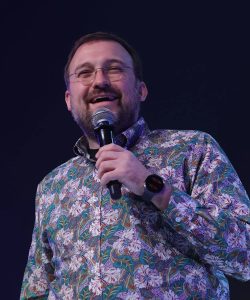
Hoskinson’s public statements offer sharp, often provocative insights:
- On building: “We’re here to change the world… Cardano is one of the greatest technical achievements in human history.”
- On decentralization: He stresses formal methods, peer review, and sustainable incentives over short-term hype.
- On setbacks: He has spoken candidly about personal losses and industry challenges, blaming regulatory chaos more than technology while calling for resilience.
- On privacy and future: “Privacy is going to play a much bigger role in crypto over the next few years.”
- A favorite Greek proverb he has quoted: “A society grows great when old men plant trees in whose shade they know they shall never sit.”
Actionable lessons:
- Prioritize rigor over speed — peer-reviewed foundations can create more durable systems.
- Align incentives transparently — on-chain governance and treasuries can democratize decision-making.
- Embrace privacy as a feature — especially as surveillance and AI risks grow.
- Engage communities directly — even when messy, long-form communication builds loyalty.
- Think in decades — plant seeds (research, infrastructure) whose full benefits may arrive later.
- Maintain skin in the game — but prepare for volatility and external pressures.
Hoskinson models intellectual confidence mixed with adaptability, urging builders to question centralized assumptions while delivering practical value.
The Road Ahead: Utility, Privacy, and a More Mature Cardano in 2026 and Beyond
Heading into 2026 and beyond, Hoskinson is focused on execution. He has outlined plans to boost DeFi, improve user onboarding, replenish ecosystem treasuries sustainably, and accelerate Midnight’s rollout for privacy use cases. He continues advocating for Cardano as a reliable, decentralized system capable of supporting real-world finance (RealFi), identity, and global impact — particularly in emerging markets.
For audiences in the United States (his home base), Asia’s tech-forward economies, the Middle East’s growing blockchain interest, and South Africa’s vibrant crypto communities, Hoskinson’s emphasis on research, sustainability, and privacy offers a compelling alternative narrative to pure speed or speculation.
Whether Cardano achieves the mass adoption he envisions depends on closing the utility gap, navigating governance tensions, and delivering on privacy promises. Yet his unwavering commitment to first-principles design ensures Cardano will remain a unique experiment in what blockchain can achieve when built deliberately.
In an industry prone to boom-and-bust cycles and centralizing forces, Charles Hoskinson continues betting on math, transparency, and long-term thinking — planting trees whose shade future generations might one day enjoy.