
Few names carry as much weight in the blockchain space as Joseph Lubin. As a co-founder of Ethereum and the CEO of ConsenSys, Lubin has been instrumental in transitioning decentralized technology from a niche experiment to an institutional powerhouse. By overseeing the development of MetaMask, the world’s most popular self-custodial wallet, and Linea, a leading zkEVM Layer 2, Lubin has secured his legacy as the ultimate infrastructure architect. This comprehensive Joseph Lubin biography tracks his journey from Princeton and Goldman Sachs to the vanguard of the Web3 revolution.
In the frenzied early days of Ethereum, when a brilliant 19-year-old Russian-Canadian wrote a white paper that promised a “world computer,” most eyes turned to Vitalik Buterin. But behind the technical vision stood a seasoned software engineer, former Goldman Sachs executive, and robotics enthusiast who put up significant personal capital, helped organize the 2014 crowdsale, and then channeled his resources into building the commercial infrastructure that would make Ethereum usable for the real world.
CHECK: Gavin Wood Biography: The British Genius Who Coined Web3 and Built Polkadot & Kusama
That man is Joseph Lubin. At 62 in 2026, the Toronto-born co-founder of Ethereum remains one of crypto’s most influential yet least flashy figures. While others chase headlines, Lubin has spent over a decade turning ConsenSys into what many call the “crypto Google” — the company behind MetaMask (the wallet used by tens of millions), Infura (the invisible backbone powering most dApps), Linea (its high-performance zkEVM Layer-2), and a suite of enterprise tools that bridge blockchain with traditional finance.
Lubin’s story is one of contrasts: a Princeton-trained electrical engineer and computer scientist who once built autonomous robots and neural nets, worked in high finance, dabbled in music management in Jamaica, and then bet big on a radical idea that decentralized trust could reshape global systems. He is the quiet force who helped Ethereum survive its infancy and who continues pushing it toward institutional relevance, all while advocating for decentralization as the antidote to concentrated power in an AI-driven future.
His journey reveals how patient capital, systems thinking, and a long-term view can create outsized impact — even when the builder prefers the background.
Joseph Lubin Biography: Ethereum Co-Founder, ConsenSys CEO & Web3 Pioneer

Early Life: Toronto Roots, Curiosity, and a Love for How Things Work
Joseph Lubin was born in 1964 in Toronto, Ontario, Canada, to a dentist father and a real estate agent mother. Growing up in a stable, middle-class household, he developed an early fascination with technology and systems. From a young age, Lubin showed aptitude for understanding complex mechanisms — whether mechanical, electronic, or computational.
Toronto in the 1970s and 80s offered a multicultural environment that encouraged exploration. Lubin’s interests spanned science, engineering, and creative problem-solving. He wasn’t the stereotypical teenage hacker; instead, he approached technology with a broader lens, blending hardware, software, and real-world applications. This holistic mindset would later prove invaluable in blockchain, where success requires bridging code, economics, incentives, and human behavior.
Family emphasis on education and practical achievement shaped his path. Lubin’s early exposure to computing came during an era when personal computers were just becoming accessible, fueling his desire to build rather than merely consume technology.
Education: Princeton and a Foundation in Electrical Engineering and Computer Science
Lubin attended Princeton University, graduating with a degree in Electrical Engineering and Computer Science. The rigorous program at one of America’s most prestigious institutions gave him deep technical grounding in algorithms, systems architecture, robotics, and emerging fields like artificial intelligence and neural networks.
While at Princeton, he worked in the Robotics Lab, contributing to projects involving autonomous systems and machine vision. He also explored creative applications, including work on an autonomous music composition tool during a stint with tomandandy music. These experiences highlighted his interdisciplinary bent — comfortable moving between hardware, software, AI, and even artistic expression.
The Princeton years instilled in Lubin a systems-level thinking: understanding not just how individual components function, but how they interact at scale. He also gained exposure to formal methods and rigorous engineering practices that would inform his later approach to building reliable blockchain infrastructure.
No advanced degrees followed; Lubin chose real-world application over academia, a pattern that defined his career.
Career Journey: From Robotics and Finance to Bitcoin Awakening and Ethereum
After Princeton, Lubin’s path was eclectic. He worked as a research scientist and software engineer at Vision Applications Inc., building autonomous mobile robots. He consulted on projects involving cryptography and payments, including work with eMagine on the Identrus network for secure trade finance.
He transitioned into finance, serving as Vice President of Technology in the Private Wealth Management Division at Goldman Sachs, where he built trading systems and handled complex technological challenges for high-net-worth clients. He also directed the New York office of Blacksmith Software Consulting and co-founded/operated a hedge fund.
A notable detour took him to Jamaica for music management, reflecting a creative side beyond pure engineering.
The pivotal moment came around 2013–2014 after reading the Bitcoin white paper. Lubin saw blockchain not merely as digital money but as “an organizing principle for Earth” — a shared infrastructure that could reduce reliance on trusted intermediaries and enable new forms of coordination.
In early 2014, he connected with Vitalik Buterin and other early collaborators (including Anthony Di Iorio and Charles Hoskinson). Lubin provided crucial early funding and organizational support for Ethereum. He helped structure the crowdsale that raised funds for development and co-founded the project as one of its key backers.
After Ethereum’s launch in 2015, Lubin founded ConsenSys in late 2014 as a “venture production studio” and software company dedicated to building the Ethereum ecosystem. Starting in Brooklyn, ConsenSys grew rapidly, hiring talent, spinning out projects, and creating essential tools. Lubin has remained its Founder and CEO, steering it through multiple market cycles while keeping a relatively low public profile compared to more vocal founders.
Major Achievements: Powering Ethereum’s Infrastructure and Mainstreaming Web3
Lubin’s impact extends far beyond co-founding Ethereum:
- Ethereum Co-Founder: Provided early capital, helped organize the 2014 crowdsale, and supported protocol development during critical early stages.
- ConsenSys Builder: Transformed a small studio into a global leader with products used by millions. Key contributions include MetaMask (the most popular Ethereum wallet, onboarding tens of millions of users), Infura (the leading blockchain API infrastructure), Truffle (a leading development suite), and Diligence (security auditing tools).
- Linea Launch: ConsenSys developed Linea, a zkEVM Layer-2 rollup designed for high throughput and Ethereum compatibility. In 2025, Linea launched its native token with community-focused distribution, achieving significant TVL growth and positioning itself as a scalable, institution-friendly chain. Upgrades toward Type-1 zkEVM in 2026 aim to further enhance performance.
- Enterprise and Institutional Push: Through Quorum (enterprise Ethereum) and other initiatives, ConsenSys has worked with governments, banks, and corporations on blockchain pilots, including central bank digital currency explorations.
- MetaMask Evolution: Under Lubin’s leadership, MetaMask has expanded from a simple wallet into a self-sovereign “personal neobank,” offering broader financial services directly controlled by users.
- Broader Ecosystem Support: ConsenSys has incubated or supported numerous projects, educated developers via ConsenSys Academy, and contributed to standards through the Enterprise Ethereum Alliance.
These efforts helped move Ethereum from a niche experiment to the foundational layer for DeFi, NFTs, RWAs (real-world assets), and decentralized applications.
Joseph Lubin Net Worth: A Multi-Billion-Dollar Stake in Ethereum’s Success

As of early 2026, Joseph Lubin’s net worth is estimated between $4.5 billion and $5.5 billion, with some analyses placing it around $5 billion or higher depending on market conditions and private valuations.
The bulk comes from two sources:
- Substantial ETH holdings: Early involvement gave Lubin a significant allocation. Estimates suggest he has held hundreds of thousands to over 500,000 ETH at various points (with some sales over the years). At current prices, even conservative holdings contribute billions in value.
- Majority ownership in ConsenSys: The company was valued at $7 billion during its 2022 funding round. As founder and largest shareholder, Lubin’s stake represents a massive portion of his wealth. ConsenSys has raised hundreds of millions and continues to generate revenue through its product suite and services.
Additional assets include his role as Chairman of SharpLink (a Nasdaq-listed company building an Ethereum treasury, holding hundreds of millions in ETH) and other investments. Lubin has not engaged in flashy liquidations; his fortune remains closely tied to Ethereum’s performance and ConsenSys’s growth. He has described blockchain as a long-term bet on decentralized systems rather than short-term speculation.
This “skin in the game” aligns him with Ethereum’s ethos while exposing him to volatility — a trade-off he appears willing to accept.
Companies & Projects: ConsenSys as the Ethereum Ecosystem’s Backbone
Lubin’s primary vehicle is ConsenSys, headquartered in Fort Worth, Texas (with major presence in New York, London, and globally). It operates as a software company, venture studio, and infrastructure provider. Key products include:
- MetaMask: Wallet and gateway for Web3, evolving into a broader self-sovereign finance platform.
- Infura: Critical RPC infrastructure that powers most Ethereum dApps.
- Linea: zkEVM Layer-2 for scalable, low-cost transactions with strong Ethereum compatibility.
- Other tools: Truffle, Diligence, Phosphor (NFT toolkit), and enterprise solutions like Quorum.
ConsenSys has employed hundreds and incubated numerous projects while contributing directly to Ethereum protocol upgrades (such as the Merge). Lubin also chairs SharpLink, which is building large ETH treasury strategies and deploying capital onto Linea and other Ethereum infrastructure.
Unlike pure protocol founders, Lubin focused on the “application and infrastructure layer” — making Ethereum practical for developers, users, and institutions.
Controversies: Equity Disputes, Regulatory Battles, and Leadership Scrutiny
Lubin and ConsenSys have faced notable challenges:
- Equity Lawsuits: In 2023, over two dozen former early employees sued Lubin and ConsenSys, alleging they were promised generous equity in exchange for lower salaries but were later disadvantaged through corporate restructuring (including asset transfers between entities). The disputes involved claims of manipulation and conflict of interest. Some legal battles continued into later years, highlighting tensions common in fast-growing startups.
- SEC Conflicts: ConsenSys has been at the forefront of regulatory pushback. In 2024, it received a Wells Notice and sued the SEC over attempts to regulate ETH and MetaMask (accused of operating as an unregistered broker). Lubin publicly criticized the agency for “gaslighting” the industry. By early 2025–2026, the SEC reportedly agreed to drop its enforcement action against MetaMask, seen as a partial victory for the industry. Lubin has framed these fights as defense of innovation against overreach.
- Layoffs and Criticism: ConsenSys underwent workforce reductions (around 20% in 2024), which Lubin attributed partly to regulatory uncertainty created by the SEC. Critics have occasionally questioned the company’s sprawling structure or pace of certain initiatives.
- Other Disputes: Earlier clashes included a $50 million lawsuit with a former executive over alleged profits and contributions.
Lubin has generally addressed issues through legal channels and public statements emphasizing the need for clear rules that support decentralized technology. He maintains that fighting for developer freedom and Ethereum’s neutrality serves the broader ecosystem.
Web3/AI Impact: Decentralized Trust as the Foundation for an AI-Driven World

Lubin has long viewed Ethereum and Web3 as more than financial tools — they represent a new layer of decentralized trust essential for the next era of technology.
In recent years, he has emphasized blockchain’s role alongside AI. Centralized AI systems risk concentrating power, bias, and surveillance. Ethereum, with its programmable, verifiable, and decentralized nature, can provide the “trustware” layer: secure data provenance, verifiable computation, fair compensation mechanisms, and resistance to single points of failure.
Lubin has spoken about Ethereum becoming the programmable foundation for hybrid human-machine intelligence and a new global economy. He predicts significant growth — potentially 100x from broader institutional adoption — as corporations treat ETH as a treasury asset and integrate staking, DeFi, and RWAs.
Through Linea and other efforts, ConsenSys is building scalable infrastructure that can support AI-related use cases, such as confidential computing, decentralized data markets, and verifiable AI outputs. In 2025–2026 interviews, Lubin highlighted Ethereum’s upgrades (scaling, account abstraction, etc.) and its potential to underpin everything from financial markets to collaborative AI systems.
He advocates for privacy-enhancing technologies, interoperability, and open standards — ensuring Web3 remains permissionless while becoming usable for mainstream and enterprise audiences. For regions like the US (regulatory battles), Asia (tech adoption), the Middle East (sovereign blockchain interest), and South Africa (emerging crypto economies), Lubin’s vision offers a pathway to inclusive, resilient digital infrastructure.
Lessons & Quotes: Insights from a Systems Thinker and Builder
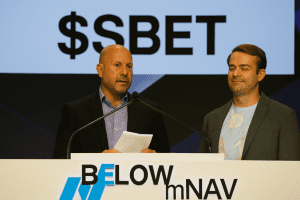
Lubin’s public remarks and writings emphasize long-term thinking, decentralization, and human empowerment:
- On Ethereum’s strength: “Ethereum’s superpower is decentralization, its open source bazaar approach. Problems pop up and people show up from all over to address them.”
- On blockchain’s potential: He has described it as “an organizing principle for Earth,” enabling shared infrastructure that reduces harmful concentrations of power.
- On AI and decentralization: Lubin sees blockchain as the necessary counterbalance to centralized AI, providing verifiable trust in an era of hybrid intelligence. “Nobody on the planet can currently fathom how large and fast a rigorously decentralized economy, saturated with hybrid human-machine intelligence, operating on decentralized Ethereum Trustware, can grow.”
- On regulation: He has criticized overreach while calling for clarity that allows innovation to flourish.
- On building: Emphasis on infrastructure, developer tools, and making technology accessible without compromising core principles of sovereignty and openness.
Key lessons:
- Invest in infrastructure first — tools like wallets and APIs enable entire ecosystems.
- Think in decades — patient capital and systems design outlast hype cycles.
- Decentralization as a feature — it provides resilience and reduces single points of failure, especially important with AI risks.
- Bridge worlds — combine deep technical knowledge with finance, enterprise, and real-world needs.
- Defend principles — stand up for permissionless innovation even when facing regulatory pressure.
- Stay mission-focused — build for long-term societal benefit rather than short-term attention.
One recurring theme: Technology should empower individuals and organizations by minimizing unnecessary trust in intermediaries while maximizing verifiable coordination.
The Road Ahead: Institutional Ethereum, Scalable Infrastructure, and a Decentralized Future
In 2026, Lubin continues leading ConsenSys toward greater maturity, with Linea advancing zkEVM capabilities, MetaMask expanding user-controlled finance features, and broader pushes for corporate ETH treasuries and staking. He envisions Ethereum flipping aspects of Bitcoin’s dominance through superior utility and programmability, while supporting real-world applications in finance, supply chains, identity, and beyond.
For a global audience — from Wall Street executives in the US to tech builders in Asia, sovereign funds in the Middle East, and growing communities in South Africa — Lubin’s work demonstrates how quiet, methodical building can create foundational platforms that outlive cycles.
Joseph Lubin may not seek the spotlight, but his contributions have helped turn Ethereum from an idea into the most widely used smart contract platform on the planet. In an age of rapid AI advancement and centralized tech power, his steady advocacy for decentralized trust offers a compelling vision: a future where technology serves broader human coordination rather than narrowing control.
The quiet force behind Ethereum continues shaping the infrastructure most people use without ever noticing — and that may be his greatest achievement yet.