
Juan Benet is the founder and CEO of Protocol Labs, the R&D powerhouse responsible for the most critical infrastructure in the decentralized world. By inventing the InterPlanetary File System (IPFS) and the incentivized storage layer Filecoin, Benet has provided the “hard drive” for the Web3 revolution. His work represents a fundamental shift in how data is stored and retrieved globally, replacing centralized servers with peer-to-peer resilience. This comprehensive Juan Benet biography tracks his journey from computer science researcher to the vanguard of the “Agentic Future” and decentralized innovation.
What if the internet’s biggest problem wasn’t speed, censorship, or centralization alone — but the fact that the very way we store and retrieve humanity’s knowledge was designed for a pre-mobile, pre-AI world? What if one quiet Stanford graduate decided to fix that at the protocol level, creating a content-addressed system that could make the web faster, more resilient, and truly decentralized — then incentivized it with a cryptocurrency that turned unused hard drives worldwide into the planet’s largest decentralized storage network?
That thinker is Juan Benet. At 38 in 2026, the founder and CEO of Protocol Labs remains one of Web3’s most thoughtful architects. He invented the InterPlanetary File System (IPFS), co-created Filecoin, and built an innovation network that has influenced everything from NFT metadata storage to decentralized AI data layers. While flashier founders chase headlines, Benet obsesses over long-term “info-structure” — the underlying systems that will determine whether humanity’s knowledge stays open, verifiable, and accessible for centuries.
CHECK: Charles Hoskinson Biography: Best Privacy Pioneer, Cardano & Ethereum Founder
His story blends immigrant curiosity, rigorous systems engineering, and a Bell Labs-inspired ambition to advance collective intelligence. In an era when centralized cloud giants control vast swaths of data and AI risks concentrating even more power, Benet’s work offers a different path: one where storage, retrieval, and computation can operate across planets — or at least across borders and crises — without single points of failure.
Juan Benet Biography: Age, Early Life & Vision for Filecoin’s Onchain Cloud
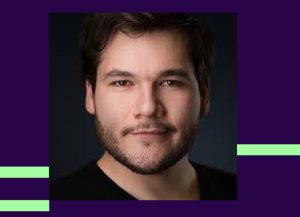
Early Life: From Cuernavaca to San Diego — A Mind Shaped by Knowledge and Displacement
Juan Benet was born on March 16, 1988, in Cuernavaca, Mexico. His early years unfolded in a culturally rich environment where curiosity was encouraged. As a teenager, he moved with his family to San Diego, California, navigating the immigrant experience of adapting to a new country while retaining deep roots in Mexican heritage.
Benet stood out as both an artist and a tech enthusiast. He participated in school theater programs and devoured books, including classics like The Lord of the Rings. This blend of creative storytelling and technical inclination foreshadowed his later work on systems that make knowledge more accessible and preservable.
The move to the United States exposed him to advanced computing resources and a culture that rewarded innovation. Benet immersed himself in distributed systems and data management concepts early on. Family members already in the U.S. provided support, but the transition sharpened his independent streak and appreciation for resilient, borderless networks — themes that would define his career.
By his late teens, Benet’s passion for how information flows, persists, and scales had crystallized. He wasn’t just interested in building apps; he wanted to reshape the foundational protocols that underpin the entire internet.
Education: Stanford and a Deep Dive into Computer Science
Benet attended Stanford University, earning a Bachelor of Science (BS) in Computer Science in 2010 and a Master of Science (MS) in Computer Science in 2012. At one of the world’s premier institutions for technology and systems research, he focused on distributed systems, data management, networks, and cryptography.
Stanford provided rigorous training in the very challenges Benet would later tackle: how to handle massive datasets, ensure reliability across unreliable nodes, and design protocols that scale globally. He served as a teaching assistant and researcher, honing skills in building robust, fault-tolerant systems.
During his time there, Benet also explored entrepreneurial paths. He co-founded Loki Studios in 2010, serving as CTO, and later acted as an Entrepreneur in Residence at StartX, Stanford’s startup accelerator. These experiences bridged academic theory with practical building, teaching him the importance of turning research into deployable infrastructure.
His education emphasized not just coding, but systems thinking — understanding incentives, economics, and long-term sustainability. This foundation proved critical when he later designed protocols meant to outlast individual companies or even nations.
Career Journey: From Y Combinator to Building the Decentralized Web
After Stanford, Benet’s path quickly turned toward solving the internet’s structural weaknesses. In 2014, he founded Protocol Labs as a research, development, and deployment lab for new internet protocols. Backed by Y Combinator (YC S14), the organization started with a clear mission: create open-source tools and networks that improve how humanity stores, shares, and verifies information.
The first major output was IPFS, which Benet proposed in a 2014 whitepaper. Unlike the traditional HTTP model that relies on location-based addressing (pointing to specific servers that can go down or be censored), IPFS uses content addressing — files are identified by what they contain, not where they are hosted. This makes duplication, caching, and retrieval more efficient and resilient.
IPFS launched in 2015 and quickly gained traction. It powers parts of the decentralized web, NFT metadata, and even some traditional web applications seeking better performance or censorship resistance. But Benet recognized a missing piece: economic incentives for persistent storage. That led to Filecoin, a decentralized storage marketplace where users pay in FIL tokens for reliable, verifiable storage provided by a global network of miners contributing hard drive space.
Protocol Labs also developed supporting technologies like libp2p (a modular networking stack), IPLD (InterPlanetary Linked Data), and Multiformats. The team even created CoinList as a detour to facilitate compliant token sales, which became vital for the broader ecosystem.
Benet has led Protocol Labs as CEO since its founding, evolving it from a focused protocol builder into an innovation network connecting hundreds of startups, researchers, and projects. In recent years, he has emphasized “thinking in decades,” drawing inspiration from historical R&D powerhouses like Bell Labs while integrating crypto-economic mechanisms for sustainability.
Major Achievements: IPFS, Filecoin, and Foundational Web3 Infrastructure
Benet’s contributions rank among the most impactful in decentralized technology:
- Inventing IPFS, now used by millions for peer-to-peer file sharing. It underpins a significant portion of Web3 applications, with over 60% of decentralized apps relying on IPFS or Filecoin for metadata and assets in recent analyses.
- Creating Filecoin, which has grown into the world’s largest decentralized storage network, offering exabytes of capacity through a global provider ecosystem. It turns cloud storage economics into an open market, rewarding reliable storage with FIL.
- Developing core protocols like libp2p, IPLD, and Multiformats that enhance interoperability and performance across decentralized systems.
- Founding Protocol Labs as a model for long-term public-goods R&D funded through crypto mechanisms rather than traditional venture extraction.
- Advancing ideas around verifiable computation, decentralized indexing (such as IPNI), and tools like Webrecorder for resilient web archiving.
Filecoin’s 2017 ICO raised approximately $205–257 million, one of the largest at the time, providing resources to build out the network. By 2026, Filecoin has demonstrated real revenue from storage deals, with ongoing upgrades focusing on scalability, subnets, and integration with on-chain cloud solutions like Storacha.
Benet’s work has influenced Ethereum (Protocol Labs contributed early on), NFT ecosystems, and broader efforts to make data more portable and censorship-resistant.
Juan Benet Net Worth: Substantial Wealth Anchored in Protocol Labs and Filecoin Holdings

As of early 2026, Juan Benet’s net worth is estimated around $450 million, according to multiple analyses. The figure derives primarily from his leadership and ownership stake in Protocol Labs, significant personal holdings in Filecoin (FIL) tokens, and the value created through early token distributions and ecosystem growth.
Filecoin’s market performance directly impacts valuations, with the network’s utility-driven demand (real storage deals rather than pure speculation) providing a more grounded foundation than many altcoins. Benet has maintained strong alignment with the projects, though exact on-chain holdings are not always fully public for security reasons.
Unlike some founders who cashed out heavily, Benet’s approach emphasizes reinvestment into R&D and public goods. Protocol Labs has raised additional funding over the years, including from top-tier investors, further bolstering the organization’s — and by extension Benet’s — position. His wealth reflects the long-term bet on decentralized infrastructure rather than short-term hype.
Companies & Projects: Protocol Labs as an Innovation Network

Protocol Labs serves as Benet’s central vehicle: an open-source R&D lab and innovation network that incubates and supports projects improving computing and the internet. It connects over 600 tech startups and focuses on breakthroughs in distributed systems, storage, networking, and knowledge infrastructure.
Key projects include:
- IPFS and its ecosystem tools.
- Filecoin and related storage innovations, including subnets and on-chain cloud offerings.
- Supporting protocols like libp2p, IPLD, and indexing services (IPNI).
- Initiatives in neurotechnology, public goods funding, and AI-related infrastructure.
- Broader efforts like Bacalhau (decentralized compute) and governance upgrades.
Benet has positioned Protocol Labs as more than a company — an “innovation network” inspired by historical models but powered by crypto incentives. It funds research, deploys networks, and fosters an ecosystem where value from successful projects (like Filecoin) can sustain open-source work indefinitely.
Controversies: Investor Disputes, Development Delays, and Public Criticism
Like many ambitious crypto projects, Protocol Labs and Filecoin have faced scrutiny.
In 2020, reports emerged of tensions between Protocol Labs and some early equity investors regarding the distribution of Filecoin tokens. Allegations suggested that a portion of retained tokens was distributed to Benet and early employees at low prices, prompting mediation. Benet and the team maintained that decisions supported long-term development and rewarded contributors who believed in the vision early. The episode highlighted classic startup growing pains around alignment between equity holders and token economics.
Filecoin’s mainnet launch faced delays from the original roadmap, drawing criticism that the project moved too slowly compared to faster-moving competitors. Benet has addressed this by emphasizing rigorous engineering and real utility over rushed features.
Public spats, such as a 2020 Twitter exchange with Justin Sun (who questioned whether Filecoin was an “exit scam”), tested the project’s narrative. Benet responded factually, focusing on technical progress and network growth.
In 2023, Protocol Labs conducted layoffs (around 21% of staff) amid broader crypto winter pressures, high inflation, and elevated interest rates. Benet framed the moves as necessary adjustments while reaffirming commitment to the mission.
Throughout, Benet has responded with transparency via blog posts, talks, and community updates, stressing that building durable infrastructure requires patience and course corrections. Critics sometimes label the projects “over-engineered,” but supporters point to Filecoin’s growing real-world storage usage and resilience as validation.
Web3/AI Impact: Decentralized Storage as the Backbone for Verifiable AI and Knowledge Systems
Benet has consistently framed IPFS and Filecoin as foundational “info-structure” for a better internet. In Web3, they provide censorship-resistant, verifiable storage that powers NFTs, dApps, and decentralized social platforms.
Looking toward AI, Benet sees enormous synergy. Centralized AI depends on vast, controlled datasets and compute — risks that include bias, surveillance, and monopolistic control. Decentralized storage and compute can offer:
- Verifiable data provenance.
- Distributed datasets resistant to single-point tampering.
- Economic incentives for contributors to provide storage and bandwidth.
- Infrastructure for AI agents to transact and collaborate at scale without relying on big tech gatekeepers.
In 2025–2026 talks, Benet discussed how crypto’s rails (trustless coordination, tokens as incentives) could accelerate AI deployment. He has explored neurotechnology, brain-computer interfaces, and “digital minds,” viewing decentralized systems as essential for aligning advanced intelligence with human values. Protocol Labs supports projects advancing public goods funding, verifiable computation, and long-term knowledge preservation — crucial as AI generates ever-more content that must remain accessible and authentic.
For 2026 and beyond, Benet emphasizes usability improvements, real-world adoption (enterprise storage, web archiving), and preparing for AI-driven demand. He believes the crypto community built strong underground layers; AI agents may now help surface them for mass use. In regions like the US (regulatory focus), Asia (massive data needs), the Middle East (sovereign tech ambitions), and South Africa (growing digital inclusion efforts), Benet’s protocols offer tools for resilient, inclusive information infrastructure.
Lessons & Quotes: Wisdom from a Long-Term Systems Builder
Benet’s writings, talks, and interviews reveal a philosophy centered on patience, verifiability, and collective advancement:
- “Filecoin is a token with fundamental value. Filecoin is like Bitcoin, but miners amass hard drives instead of hashing computers.”
- On the internet’s future: Protocols should operate at “intergalactic scale,” making knowledge accessible even in remote or disrupted environments.
- On building: Think in decades, not hype cycles. Create innovation networks that sustain public goods beyond traditional company lifespans.
- On knowledge systems: Humanity has genetic, neural, and now digital systems — decentralized tech can make the digital layer as robust and open as possible.
- On AI and crypto: The rails built in Web3 are exactly what AI needs to transact and verify at scale. Decentralization provides the verifiability essential for trustworthy intelligence.
Actionable lessons:
- Design for verifiability — content addressing and proofs create trust without intermediaries.
- Align incentives sustainably — use tokens to fund long-term R&D rather than short-term extraction.
- Build infrastructure first — protocols outlast applications and enable entire ecosystems.
- Embrace interdisciplinary thinking — blend computer science with economics, cognition, and long-term societal needs.
- Prioritize resilience over speed — durable systems withstand crises, censorship, and technological shifts.
- Fund public goods creatively — crypto mechanisms can solve the historical underfunding of foundational research.
A recurring theme: Technology should expand humanity’s collective intelligence and freedom, not concentrate control.
The Road Ahead: Info-Structure for Centuries
In 2026, Juan Benet continues steering Protocol Labs toward deeper integration of storage, compute, and AI. Upgrades to Filecoin (subnets, faster retrieval, enterprise solutions), IPFS governance improvements, and new initiatives in verifiable systems signal ongoing evolution. He envisions an innovation network that rivals historical R&D giants while remaining open and community-driven.
For global readers — from Silicon Valley engineers to African developers building local solutions, Asian enterprises seeking data sovereignty, and Middle Eastern innovators exploring blockchain — Benet’s vision is compelling: an internet where information flows freely, persists reliably, and remains verifiable even as AI reshapes society.
Juan Benet didn’t set out to become a crypto celebrity. He set out to fix the internet’s foundations so that humanity’s most important knowledge — scientific discoveries, cultural artifacts, personal data — could survive and thrive across time and space. In doing so, he helped lay the groundwork for a more open, resilient digital future. As AI accelerates, that groundwork may prove more essential than ever.