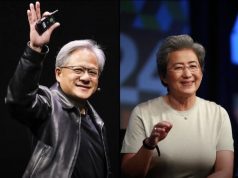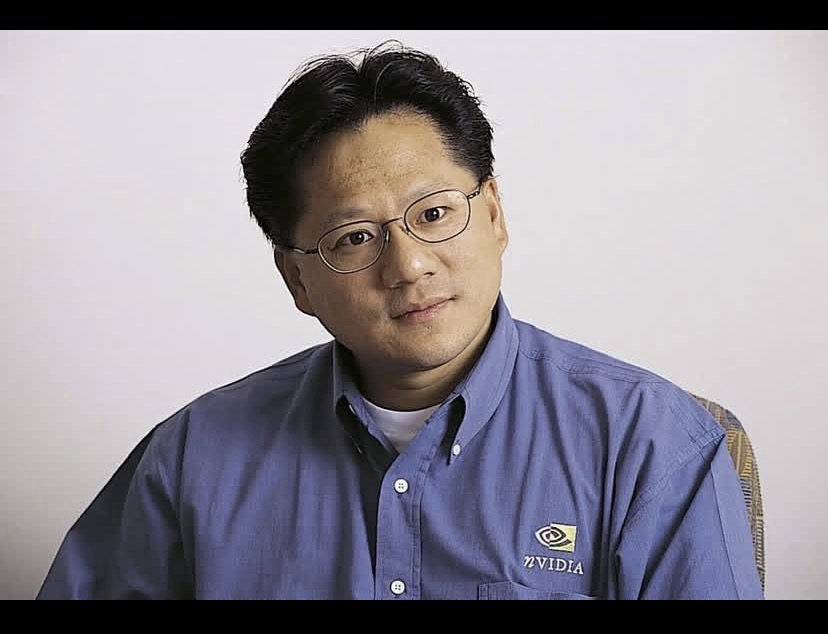
Jensen Huang, the co-founder and longtime chief executive of NVIDIA, has officially resigned from his position, marking a dramatic leadership change at one of the world’s most influential technology companies.
The announcement, made on November 12, 2026, comes amid intense media scrutiny surrounding allegations about Huang’s personal relationships and reports of a possible foreign intelligence operation involving a Chinese businesswoman. His departure has attracted global attention because NVIDIA sits at the centre of the artificial intelligence revolution, supplying the advanced processors and computing infrastructure used by leading technology companies worldwide.
But what actually happened? Did Jensen Huang resign because of the allegations, was he forced out by NVIDIA’s board, and how much of the information circulating online has been independently established?
CHECK: US vs Europe vs Asia Startup Funding 2026: Q3 Compared
According to NVIDIA’s official announcement, Huang resigned as president, chief executive officer and a member of the company’s board, effective immediately. The company appointed its chief financial officer, Colette Kress, as interim CEO while its board begins searching for a permanent successor. NVIDIA also appointed Harvey C. Jones as its first-ever board chair. The leadership transition was subsequently documented in a regulatory filing with the US Securities and Exchange Commission (SEC).
Last updated: November 13, 2026. This is a developing story and details may change. We will update this page as verified information emerges.
On Thursday, November 12, 2026, NVIDIA announced that Jensen Huang has resigned as President, Chief Executive Officer and a member of its Board of Directors, effective immediately. He co-founded the company 33 years ago and led it to roughly a $4 trillion valuation, powering the AI boom with the chips and software that most AI developers use. NVIDIA’s chief financial officer, Colette Kress, is interim CEO while the board searches for a permanent successor.
The resignation followed a week of reporting about personal relationships and about national-security questions, including whether a woman Huang was reportedly involved with may have links to Chinese intelligence. Huang has denied compromising national security or NVIDIA’s secrets, the board said on November 8 that it had no reason to believe either was compromised, and the U.S. Attorney General said the Justice Department has not determined whether the woman is a spy. Those are very different things from what has been proven, and a lot of what is circulating online runs ahead of the evidence.
This guide separates what is confirmed from what is only reported or alleged, explains what the company’s leadership change does and does not change for people who build on, buy or invest in NVIDIA technology, and lists what to watch in the coming weeks.
How this article was researched
We prioritized NVIDIA’s own press releases (the November 8 and November 10 board statements and the November 12 CEO-transition release), which we opened and read. For everything else, we used news reporting from outlets including CNBC, CNN, The Washington Post, Al Jazeera, CBC, Newsweek and Investing.com, as available to us through search excerpts. Several of those pages were behind bot protection, so we saw summaries and live-blog excerpts, not full articles.
Three limits matter. This story is moving, and details differ between outlets, for example on the date of a congressional briefing. Allegations are not findings, and we attribute them. We did not verify claims on social media or from anonymous sources, and we did not include the names of private individuals who are named in some reports, because they are not needed to explain the consequences. Market figures come from news reports and change by the minute.
Timeline: seven days that changed NVIDIA
Dates and details are as reported by the sources listed. Where outlets disagree, we say so.
| Date (2026) | What happened | Source |
|---|---|---|
| Wednesday, November 4 | Three House committee chairs sent a letter asking Huang for a closed-door briefing about his contacts with the woman, per later reports (scheduled for November 18 in the initial request) | Investing.com; BigGo (secondary) |
| Sunday, November 8 | NVIDIA’s Board announced an independent investigation “in light of recent reporting that founder and CEO Jensen Huang has been the target of a foreign intelligence effort,” overseen by a committee of independent directors with outside counsel. The board said it had “no reason to believe that either national security or NVIDIA secrets were compromised,” that Huang supported the review and that it had confidence in him | NVIDIA press release |
| Sunday, November 8 | Huang reportedly addressed employees about the matter; NVIDIA published “A Message to Our Company” (we did not open it) | BigGo (secondary); NVIDIA newsroom listing |
| Monday, November 9 | NVIDIA shares fell about 5%, and shareholders filed a proposed class action | Investing.com; Al Jazeera |
| Tuesday, November 10 | The independent directors retained former acting U.S. Attorney Joon H. Kim and his firm, Wachtell, Lipton, Rosen & Katz, for the investigation | NVIDIA press release |
| Wednesday, November 11 | The New York Times reported a second relationship, with a company employee; the board met that evening | Al Jazeera; Washington Post |
| Thursday, November 12 | NVIDIA announced Huang’s resignation as President, CEO and director, effective immediately; Colette Kress named interim CEO; Harvey C. Jones named the board’s first-ever Chair. The Washington Post said shares were down 4%. | NVIDIA press release; Washington Post |
| Thursday, November 12 | Three House committees sent a joint letter asking Huang for a closed-door interview on December 1; the Attorney General said the Justice Department has not determined whether the woman is a Chinese spy | CNN |
| Tuesday, November 17 | NVIDIA is scheduled to report third-quarter fiscal 2027 results at about 1:20 p.m. Pacific, with a call at 2 p.m. | NVIDIA press release |
Note on the briefing date: early reports gave November 18 for a congressional briefing, and CNN’s post-resignation report cites a December 1 closed-door interview. Check the latest.
Confirmed, reported, alleged, unknown
This table is the core of the article. Use it as a filter when you read other coverage.
| Category | What it includes |
|---|---|
| Confirmed by NVIDIA’s own statements | Huang resigned as President, CEO and director on November 12, effective immediately. Colette Kress is interim CEO and remains CFO. Harvey C. Jones is the first-ever board Chair. The board started an independent investigation on November 8, run by independent directors, and retained Joon H. Kim and Wachtell Lipton on November 10. The board said it expects operations, customer commitments and the product roadmap to continue without interruption. Third-quarter results are still scheduled for November 17. |
| Reported by multiple major outlets | The resignation followed reports of personal relationships, one with a woman who is suspected by some officials or reports of ties to Chinese intelligence. Three House committees sought a closed-door interview. Shareholders filed a proposed class action. NVIDIA’s market value fell below $4 trillion for the first time since July 2025, per Al Jazeera. |
| Alleged or contested | That NVIDIA, or Huang, knew of or enabled evasion of U.S. export controls; that a Singapore-based company linked to the woman offered access to NVIDIA chips; that a major Chinese technology company was a customer of that company. Reports exist, but we found no confirmed finding of wrongdoing. One finance outlet notes that the allegations have not established that Huang knowingly disclosed confidential information or violated export rules. |
| Stated in denials or official assessments | Huang denied compromising national security or NVIDIA secrets (as reported by CNBC). The board said it had no reason to believe either was compromised. The Attorney General said the Justice Department has not determined whether the woman is a spy. |
| Unknown | Who will be permanent CEO; what the independent investigation will find; whether any government agency will bring export-control or other charges; the earnings result and guidance; the long-term effect on customers and policy. |
The company behind the headline
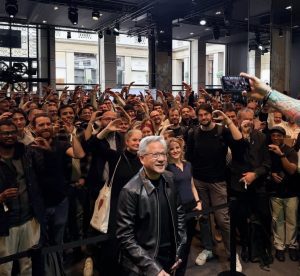
To see why this matters beyond one executive, it helps to know what NVIDIA is.
NVIDIA designs the graphics processors and AI accelerators that power most AI training and a large share of AI inference worldwide, along with the software that makes them useful. CNBC describes Huang as having built the company, which he co-founded 33 years ago, into a $4 trillion firm that “powered the artificial intelligence boom.”
A long-standing explanation of its position is that, around the mid-2000s, the company released CUDA, a platform that lets software developers program NVIDIA’s chips for general computing problems, as a profile in the Gulf News (via AFP) recounts. That software ecosystem is why so many AI frameworks and tools are written for NVIDIA hardware, a point we explain in our guide to computers for AI engineers.
In 2026 alone, the company introduced a new line of unified-memory machines: Al Jazeera’s photo caption shows Huang introducing the RTX Spark at Computex in Taipei on June 1, and NVIDIA’s own release says RTX Spark laptops began shipping on October 16. These products continue to be built and sold. The question is not whether the chips work, but who steers the company that makes them.
Why a CEO’s exit matters: key-person risk and governance

CZ Binance Argued That it is a Mistake To allow Him Resign, But The question is Why ?
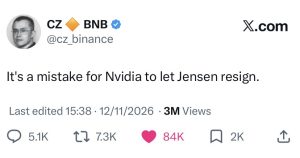
Key-person risk is the danger that a company depends so heavily on one individual that losing them creates strategic and market uncertainty. At NVIDIA, Huang was founder, chief executive, public face and, until this week, a director. He appeared at product launches, set the pace of the roadmap and, as the Newsweek and CNBC coverage suggests, had personal relationships with customers and governments.
Governance is how a company is overseen. Three things stand out in the NVIDIA statements:
• The board moved in stages. First came an independent investigation with Huang’s cooperation and a statement of confidence (November 8). Then outside counsel was retained (November 10). Then the resignation (November 12). Reports say the board’s decision followed new reporting on November 11.
• A first-ever independent Chair. The board appointed Harvey C. Jones as its first-ever Chair. NVIDIA describes him as an entrepreneur, technology executive and venture investor for more than 30 years, including as CEO and executive chairman of Synopsys. Creating a Chair role separates oversight of management from management.
• Continuity messaging. The board says it expects operations, customer commitments and the product roadmap to continue without interruption, and has kept the November 17 earnings date.
Who is running NVIDIA now
Colette Kress, interim CEO. NVIDIA says she has been Executive Vice President and CFO since September 2013, previously spent nearly 25 years in finance roles at Cisco and Microsoft, and will continue as CFO while serving as interim CEO until a permanent successor is named. The board says it will consider internal and external candidates.
Harvey C. Jones, Chair. The first person to hold the title, according to NVIDIA.
What is not known. We found no announcement of a timetable for a permanent CEO, and no reporting we could verify on who is under consideration.
The market reaction
Market reports are secondary and change quickly, so treat these as snapshots:
• NVIDIA. The Washington Post reported shares down 4% on the day of the resignation, and CBC reported that the stock sank about 14% early Thursday before paring losses to about 5%. Al Jazeera reported the company’s market value fell below $4 trillion for the first time since July 2025. One finance outlet says shares were down about 18% in November by that point, which we could not verify.
• Rivals and partners. CBC reported that AMD rose 7% and Broadcom 5.4% on the day. CNBC’s live coverage reported that Super Micro Computer fell 12% after a Semafor report, CoreWeave fell about 9% and Nebius fell more than 19% after its earnings. It also reported that Alibaba shares fell about 7% in Hong Kong on reports linking it to a Singapore company at the center of the allegations.
• The next test. Analysts quoted by Reuters and others describe the November 17 earnings report as the next real test.
Share moves reflect investor worry about leadership, policy and demand. They are not evidence about what happened.
The export-control question
The part of this story with the largest policy consequences is not personal. It is about U.S. export controls: rules that restrict the sale of advanced AI chips to certain countries and companies. Here is what the sources say, carefully separated.
What was reported this week. According to CNBC’s live coverage, the news “sparked concerns that Nvidia knew companies based in Singapore and Malaysia had been evading U.S. export controls in accessing its technology.”
CNBC also reported that shares of Chinese AI companies slid on worries about U.S. action, that Alibaba’s Hong Kong shares fell about 7% on reports that it was a customer of Megaspeed, a Singapore firm that allegedly offered access to NVIDIA chips, and that the House Foreign Affairs Committee chair said he wanted Congress to examine the role of the Commerce Department’s Bureau of Industry and Security, which enforces export controls. Senator Elizabeth Warren, who is poised to lead the Senate Banking Committee, said Huang and NVIDIA’s leadership still owe Congress an explanation about export-control compliance.
What was not established. One finance outlet’s summary notes plainly that the allegations have not established that Huang knowingly disclosed confidential information or violated export rules. NVIDIA’s board said on November 8 that it had no reason to believe national security or NVIDIA secrets were compromised. The Attorney General said the Justice Department has not determined whether the woman at the center of the reporting is a Chinese spy. We found no charge, finding or enforcement action against NVIDIA or Huang on export controls.
Background from 2025. This is not a brand-new topic. In April 2025, The Register reported that members of Congress asked NVIDIA to explain whether chips reached Chinese AI companies through Singapore. NVIDIA acknowledged in filings that “most shipments associated with Singapore revenue were to locations other than Singapore,” explained that Singapore revenue reflects billing addresses, often for subsidiaries of U.S. customers, and said this did not prove illegal acquisition. Singapore officials and NVIDIA denied wrongdoing.
In May 2025, Malay Mail reported that three men were charged in Singapore with fraud connected to servers from Dell and Supermicro exported to Malaysia, and that Singapore’s Home Affairs Minister said the servers most likely contained items subject to U.S. export controls.
Why it matters. Export policy is one of the biggest uncertainties for AI chip makers. Newsweek’s coverage quotes experts saying the scandal could undo progress NVIDIA had made in persuading Washington to relax some restrictions, and invite more federal scrutiny. We cannot verify that forecast.
Congress, courts and investigations
• The board’s independent investigation is overseen by independent directors, with former acting U.S. Attorney Joon H. Kim and Wachtell, Lipton, Rosen & Katz as outside counsel, according to NVIDIA.
• Congress. CNN reports that three House committees sent Huang a joint letter summoning him for a closed-door interview on December 1. CNBC reported that the House Foreign Affairs chair said Huang is open to testifying as soon as next week, and that House Democratic leader Hakeem Jeffries called for a classified briefing. Interest comes from both parties: the Senator who said NVIDIA still owes Congress answers is a Democrat, and the Republican chair of the House Foreign Affairs Committee wants an inquiry into the export-control agency’s role.
• Shareholder litigation. Al Jazeera reports that NVIDIA faces a shareholder class-action lawsuit. Newsweek describes it as alleging that the company artificially inflated its share price by concealing details of the reported relationship. These are claims in a lawsuit, not findings.
• Justice Department. The Attorney General said it has not determined whether the woman is a spy. We found no announced charges.
What it means for AI builders, developers and buyers

This section is analysis, not prediction.
• Products already shipping are unaffected by a headline. The board says it expects operations, customer commitments and the product roadmap to continue without interruption, and NVIDIA’s own newsroom shows normal business announcements, such as a November 8 collaboration with Rebellions and SK Telecom on sovereign AI infrastructure. We found no reporting of delays to any product.
• CUDA is a software ecosystem, not a person. The reason so many tools are built for NVIDIA hardware is a long accumulation of libraries, tools and developer habits. A leadership change does not erase that, though a long period of uncertainty could affect strategy and partnerships.
• Do not change a purchase plan because of a headline. Memory shortages and prices are bigger forces on what you pay for AI hardware right now. See our guides on computers for AI engineers and laptop prices and the memory shortage.
• Multi-vendor readiness is good practice anyway. Rivals rose on the news, and some teams will use the moment to test alternatives. We did not research how far any alternative platform matches NVIDIA’s software support.
• Watch export-control news if your business depends on cloud or hardware in affected regions. Rule changes can affect availability and pricing.
What it means for investors
This section is educational and not investment advice.
• Key-person risk is now visible in a very large company. Even where a business is strong, a sudden change of leader creates uncertainty about strategy, relationships and governance.
• Headlines and fundamentals are different things. The share price fell on leadership and policy uncertainty. Revenue, margins and demand are reported on November 17.
• Be careful with predictions. Analysts disagree, and some say the stock could rise or fall after earnings. Expectations quoted by a broker’s site (adjusted earnings per share of about $2.48 and revenue of about $108.8 billion) are third-party estimates.
• Understand your exposure. Many index funds and portfolios hold NVIDIA, so a large move affects more people than direct shareholders.
• Avoid rumor-driven decisions. Verify with NVIDIA’s own releases and its filings with the U.S. Securities and Exchange Commission.
What to watch next
| When | What | Why it matters |
|---|---|---|
| Tuesday, November 17 | NVIDIA’s third-quarter fiscal 2027 results and call (about 1:20 p.m. and 2 p.m. Pacific) | First time management addresses the situation and gives guidance |
| November 18 and December 1 | Congressional briefing request and the closed-door interview summons | Whether Huang appears, and what lawmakers say afterward |
| Coming weeks | The independent investigation led by Joon H. Kim | Findings could shape legal and governance outcomes. No timetable has been announced |
| Coming weeks to months | The search for a permanent CEO | Internal or external candidates, and the signal to customers |
| Ongoing | The shareholder class action | Court filings may add detail |
| Ongoing | Export-control agencies and the Justice Department | Whether any formal reviews or charges follow |
| Ongoing | Customer and partner statements | Signals about commitments and contracts |
How to read a breaking corporate scandal
Stories like this produce a flood of claims. A short method, which draws on our guide to verifying what you see online:
1. Start with the company’s own statements, and read exactly what they say and do not say.
2. Separate allegations from findings. “Reported,” “alleged” and “proven” mean different things.
3. Prefer named, accountable sources to anonymous or unlabeled ones, and check whether several independent outlets report the same fact.
4. Check dates and times. Details change quickly, and outlets update.
5. Be skeptical of numbers from unclear sources, including prices, losses and valuations.
6. Be careful with images and clips. Fakes spread fast around trending people.
7. Do not amplify private individuals’ details that are not needed to understand the story.
8. Wait for updates before concluding anything, and return to primary sources.
Myths and facts
| Claim you may see | What the evidence says |
|---|---|
| “Huang was fired.” | NVIDIA’s release says he resigned. CNBC cited a person familiar with the matter saying the board decided to oust him. The accounts differ, and the formal statement says resigned. |
| “He has been charged with a crime.” | We found no charges. The Justice Department has said it has not determined whether the woman is a spy. |
| “It is proven that national secrets were leaked.” | No. NVIDIA’s board said it had no reason to believe national security or company secrets were compromised, and Huang denied it. An investigation is ongoing. |
| “NVIDIA is shutting down or stopping chip production.” | No. The board expects operations, customer commitments and the roadmap to continue without interruption. |
| “CUDA and NVIDIA’s technology belong to Huang.” | They are the company’s products. His departure does not change who owns them. |
| “The stock proves how bad it is.” | Share prices move on uncertainty and sentiment. They are not evidence of wrongdoing. |
| “Everyone agrees on the facts.” | Details such as the briefing date and some market figures differ between outlets. |
Frequently asked questions
Did Jensen Huang resign or get fired?
NVIDIA’s November 12 press release says he resigned as President, CEO and a member of the board, effective immediately. CNBC cited a person familiar with the matter saying the board decided to oust him the night before. Treat the official statement as the confirmed fact and the other as reported.
Why did he resign?
NVIDIA’s release does not give a reason. Major outlets link it to a week of reporting about personal relationships and national-security questions. The independent investigation was still under way.
Who is NVIDIA’s CEO now?
Colette Kress, the company’s CFO since September 2013, is interim CEO while the board searches for a permanent successor, considering internal and external candidates. Harvey C. Jones is the board’s first-ever Chair.
Is the woman at the center of the reports a Chinese spy?
That has not been established. The Attorney General said the Justice Department has not determined whether she is.
Did NVIDIA break export-control rules?
We found no finding or charge. Reports raise concerns about chips reaching Chinese companies through Singapore and Malaysia, lawmakers want answers, and NVIDIA’s board said it has no reason to believe national security or secrets were compromised.
Will NVIDIA’s products be affected?
The board says operations, customer commitments and the product roadmap are expected to continue without interruption. We found no reporting of product delays.
When does NVIDIA report earnings?
Tuesday, November 17, 2026, at about 1:20 p.m. Pacific, with a call at 2 p.m., according to NVIDIA.
Will Huang testify before Congress?
The House Foreign Affairs chair said he is open to testifying as soon as next week, and three House committees summoned him for a closed-door interview on December 1, according to CNN. Details may change.
Is NVIDIA stock a good investment now?
We cannot advise on that. The company’s earnings, leadership search and investigations are the next facts to watch.
What happens to CUDA and the AI ecosystem?
CUDA and NVIDIA’s products belong to the company. A leadership change creates uncertainty, but the ecosystem is a product of years of software and developer adoption.
The most useful thing to say about the Jensen Huang story is also the least dramatic: very little of what is circulating is proven. What is confirmed is that NVIDIA’s board began an independent investigation on November 8, hired outside counsel on November 10, accepted Huang’s resignation as CEO and director on November 12, installed CFO Colette Kress as interim CEO and created the role of Chair for Harvey C. Jones, and said the business will continue without interruption.
What is alleged includes questions about a foreign-intelligence effort and export controls, and those are being investigated by the board, Congress and others, with no finding yet.
For AI builders, the practical advice is to keep building and watch the facts, especially the November 17 earnings report and any news on export controls. For investors and readers, it is to separate headlines from fundamentals and allegations from findings. We will update this page as verified information emerges. Check the sources below, starting with NVIDIA’s own releases.
Sources
URLs below were opened or returned during our November 13, 2026 research. Several news pages were available to us only as search excerpts; read the full articles. Secondary sites are labeled.
1. NVIDIA Announces CEO Transition. NVIDIA Newsroom, November 12, 2026 (opened).
2. Statement From NVIDIA Board of Directors. NVIDIA Newsroom, November 8, 2026 (opened).