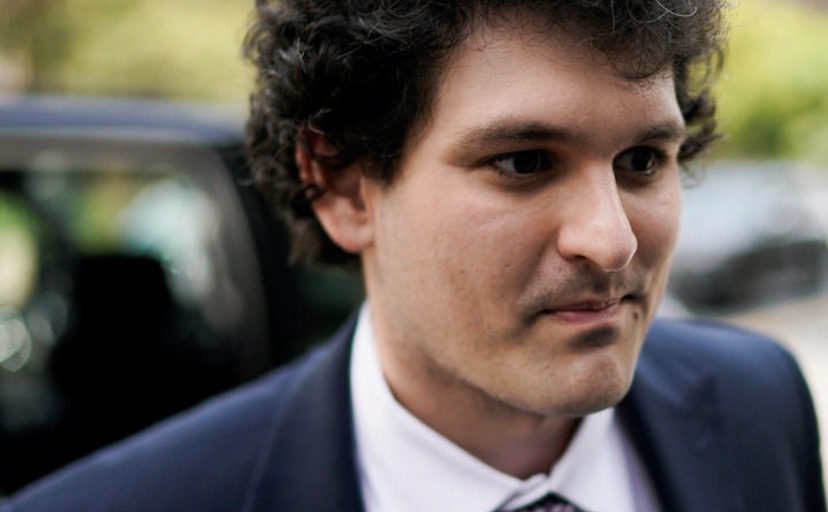
Sam Bankman-Fried Net Worth: Sam Bankman-Fried (commonly known as SBF) was once regarded as one of the brightest entrepreneurs in the cryptocurrency industry. As the founder and former CEO of FTX, he built one of the world’s fastest-growing cryptocurrency exchanges and briefly became one of the youngest billionaires in history. At his peak in 2021, Forbes estimated his fortune at $26.5 billion, fueled by FTX’s explosive growth and his ownership stake in the company.
Before launching FTX in 2019, Bankman-Fried founded Alameda Research, a quantitative cryptocurrency trading firm that generated substantial profits through digital asset arbitrage and market-making strategies. The rapid success of Alameda and FTX attracted billions of dollars in venture capital funding, major institutional investors, celebrity endorsements, and global partnerships, positioning SBF as one of the most influential figures in the crypto industry.
CHECK: Best Blockchain Scholarships for International Students
However, the collapse of FTX in November 2022 erased virtually all of his wealth. Following criminal investigations, Bankman-Fried was convicted on multiple fraud and conspiracy charges related to the misuse of customer funds. In March 2024, he was sentenced to 25 years in federal prison, and in 2026 a U.S. appeals court upheld both his conviction and sentence. According to Forbes, his estimated net worth in 2026 is $0.
This article explores Sam Bankman-Fried’s net worth in 2026, career journey, former income sources, business empire, lifestyle before the FTX collapse, and the lessons entrepreneurs can learn from one of the biggest corporate failures in modern financial history.
Who is Sam Bankman-Fried?
Sam Bankman-Fried, widely known as SBF, is the founder of the now-defunct cryptocurrency exchange FTX and the trading firm Alameda Research. Once celebrated as a prodigious young visionary and one of the richest people in crypto, he became the central figure in one of the largest financial frauds in recent history. His dramatic rise from quantitative trader to crypto billionaire, followed by the 2022 collapse of FTX and subsequent criminal conviction, has made his story a defining cautionary tale of the industry.
Born in 1992 in Stanford, California, to academic parents, Bankman-Fried leveraged mathematical talent, effective altruism ideology, and aggressive risk-taking to build an empire that briefly dominated crypto markets. By mid-2026, after a 25-year prison sentence (upheld on appeal) and massive forfeiture orders, his net worth stands at effectively zero. He remains incarcerated in a low-security federal prison in California.
This in-depth profile examines his full arc with historical detail, operational analysis of FTX and Alameda, global impact, comparisons, and forward-looking considerations. For audiences in the United States (where the legal and regulatory fallout continues), Asia (a major market for FTX users), the Middle East, and South Africa (regions affected by crypto volatility and inclusion challenges), the story offers critical lessons on risk, governance, custody, and the consequences of unchecked ambition.
| Key Milestones in Sam Bankman-Fried’s Career |
|---|
| 1992: Born in Stanford, California |
| 2014: Graduates MIT (Physics, Math minor) |
| 2017: Co-founds Alameda Research |
| 2019: Launches FTX |
| 2021–2022: Peak valuation and influence |
| Nov 2022: FTX collapses |
| Nov 2023: Convicted on seven counts |
| March 2024: Sentenced to 25 years |
| June 2026: Appeal denied |
Quick Snapshot of FTX CEO Net Worth
As of mid-2026, Sam Bankman-Fried’s net worth is effectively zero. Following the collapse of FTX, his criminal conviction, an $11 billion forfeiture order, and ongoing bankruptcy proceedings, virtually all personal and corporate assets have been seized or allocated to creditors.
At his peak in early 2022, estimates placed his fortune as high as $26 billion, driven by equity in FTX and Alameda. The rapid destruction of that wealth ranks among the most dramatic personal financial collapses on record. While FTX’s bankruptcy estate has recovered and distributed substantial sums to customers (approaching or exceeding $10 billion by mid-2026, with some creditors receiving over 100% of claims), none of this accrues to Bankman-Fried personally.
Career Journey
Early Life and Education
Samuel Benjamin Bankman-Fried was born on March 5, 1992, in Stanford, California, to Joseph Bankman and Barbara Fried, both professors at Stanford Law School. Raised in an intellectually rigorous academic household, he showed early aptitude for mathematics and science. He attended the elite Crystal Springs Uplands School and later enrolled at the Massachusetts Institute of Technology (MIT), graduating in 2014 with a bachelor’s degree in physics and a minor in mathematics.
During his time at MIT and shortly after, Bankman-Fried became involved with the effective altruism (EA) movement. This philosophical framework, which emphasizes using evidence and reason to maximize positive impact, shaped his stated motivation for entering high-earning fields: “earn to give.” The ideology influenced his public persona and later philanthropic and political activities.
Entry into Tech Industry
After MIT, Bankman-Fried worked at Jane Street Capital, a quantitative trading firm, where he gained experience in high-frequency and arbitrage trading. In 2017, he left to co-found Alameda Research, a crypto-focused quantitative trading firm that exploited price differences across exchanges, particularly between Asian and Western markets. Alameda quickly became highly profitable.
In 2019, he founded FTX, a cryptocurrency derivatives exchange designed to serve professional traders with advanced products. FTX grew rapidly through aggressive marketing, celebrity endorsements, sports sponsorships (including arena naming rights), and a reputation for innovation. By 2021–2022, it was valued in the tens of billions and positioned Bankman-Fried as a leading industry figure and major political donor.
Major Achievements & Milestones
FTX’s peak represented a high-water mark for crypto mainstreaming. The platform attracted retail and institutional users, while Bankman-Fried’s public advocacy for regulation and philanthropy enhanced his influence. However, the November 2022 collapse—triggered by revelations of intertwined finances between FTX and Alameda, misuse of customer funds, and a liquidity crisis—led to bankruptcy and criminal charges.
In November 2023, a jury convicted him on seven counts, including wire fraud and conspiracy. In March 2024, he was sentenced to 25 years in prison. An appeal was denied by the Second Circuit Court of Appeals in June 2026. Meanwhile, the FTX estate has achieved substantial recoveries for creditors through asset sales and litigation.
| FTX Timeline Highlights |
|---|
| 2019: Founded |
| 2021–2022: Peak growth and valuation |
| Nov 2022: Collapse and bankruptcy |
| 2023–2024: Trial, conviction, sentencing |
| 2025–2026: Creditor distributions; appeal denied |
SBF Net Worth Breakdown
Estimated Sam Bankman-Fried Net Worth in 2026
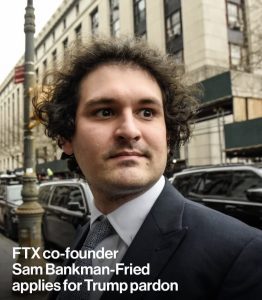
Sam Bankman-Fried’s net worth in 2026 is $0. The combination of criminal forfeiture, bankruptcy proceedings, and asset seizures has eliminated any personal claim to the former empire. Pre-collapse estimates of $16–26 billion were erased almost overnight in November 2022.
Sources of Income
Historically, income derived from Alameda’s trading profits and FTX equity and fees. Political donations, sponsorships, and investments were funded through these entities. Post-collapse, there is no ongoing personal income stream; any residual claims are subordinate to restitution and creditor recoveries. The bankruptcy process has prioritized customer and creditor repayments over founder interests.
Yearly Earnings Growth
Bankman-Fried’s wealth trajectory was extreme: rapid accumulation through 2021–early 2022, followed by total wipeout. The FTX estate’s successful recoveries (with cumulative distributions near or above $10 billion by mid-2026) have benefited creditors but not the founder. This contrast underscores the distinction between corporate recovery and personal liability in fraud cases.
| Approximate Wealth Trajectory |
|---|
| Pre-2017: Trading background |
| 2017–2021: Rapid accumulation via Alameda/FTX |
| Early 2022: Peak (~$26B estimates) |
| Nov 2022: Collapse to near-zero |
| 2024–2026: Formal $0 after forfeiture and conviction |
Lifestyle & Assets
Real Estate Holdings
Pre-collapse, Bankman-Fried and associates controlled luxury properties in the Bahamas and elsewhere, funded through corporate entities. These assets were seized or sold as part of bankruptcy and forfeiture proceedings. Post-conviction, he has no personal real estate holdings of significance.
Cars, Luxury Items & Collectibles
Public accounts of the FTX era described a relatively modest personal style (often noted for casual attire) alongside extravagant company spending. Any luxury assets linked to the companies were liquidated for creditor benefit.
Philanthropy & Donations
Bankman-Fried was a major proponent of effective altruism and directed substantial funds (often via FTX entities) toward political causes, pandemic prevention, and other EA-aligned efforts. Investigations later scrutinized the sources and nature of these donations. In 2026, philanthropic activity is limited by incarceration and legal constraints; the focus remains on restitution rather than new giving.
Comparison & Influence
Net Worth Compared to Other Tech Entrepreneurs
At effectively $0, Bankman-Fried’s current position stands in stark contrast to peers who built sustainable platforms or navigated cycles without catastrophic governance failures. The comparison highlights the difference between temporary paper wealth and durable, compliant value creation.
Influence in the Tech World
SBF’s influence was once outsized: he shaped narratives around crypto regulation, philanthropy, and industry growth. The collapse accelerated regulatory scrutiny worldwide and reinforced the importance of custody, transparency, and separation of customer funds. His case remains a reference point in discussions of crypto risk and accountability.
Future Outlook
Upcoming Projects
As of 2026, Bankman-Fried is serving his sentence at a low-security federal facility in California. He has engaged in writing from prison and pursued legal avenues, including a denied appeal and a pending pardon request. No commercial projects are active.
Potential Net Worth Growth
Any future recovery of personal wealth would depend on extraordinary legal outcomes (e.g., successful higher appeals or a presidential pardon) and resolution of remaining claims—both highly uncertain. Creditor recoveries continue independently of his personal situation.
Summary of Wealth & Legacy
Sam Bankman-Fried’s net worth in 2026 is effectively zero, a complete reversal from peak estimates exceeding $20 billion. His career—from MIT graduate and Jane Street trader to FTX founder—illustrates both the opportunities and profound risks of the crypto industry when governance fails.
The rise and fall of SBF offers enduring lessons for builders, investors, and regulators across the United States, Asia, the Middle East, and South Africa. Transparent custody, independent oversight, and ethical alignment between stated values and actions remain essential. As the FTX estate continues returning value to customers and the industry matures under greater scrutiny, the episode underscores that sustainable innovation requires both vision and integrity.
Sam Bankman-Fried’s financial journey is one of the most dramatic reversals in modern business history. Within a few years, he rose from a quantitative trader to one of the world’s richest cryptocurrency entrepreneurs, only to lose virtually everything following the collapse of FTX. His empire, once valued in the tens of billions of dollars, unraveled after investigators found that customer funds had been improperly diverted to support Alameda Research, investments, political donations, and luxury purchases.
As of 2026, Forbes estimates Sam Bankman-Fried’s net worth at $0. The collapse of FTX wiped out his equity, and subsequent criminal convictions, asset forfeitures, and legal judgments eliminated the fortune that once made him one of America’s wealthiest young entrepreneurs. His 25-year prison sentence was upheld on appeal in 2026, reinforcing the legal consequences of the fraud case.
Before FTX failed, Bankman-Fried’s wealth came primarily from his ownership of FTX, Alameda Research, venture investments, and cryptocurrency holdings. At his peak, he promoted a philosophy of “effective altruism,” pledging to earn vast sums of money in order to donate much of it. However, the company’s collapse fundamentally altered how regulators, investors, and the public viewed both his legacy and the cryptocurrency industry.
Today, Sam Bankman-Fried’s story serves as a powerful reminder that innovation alone cannot sustain long-term success. Sound corporate governance, financial transparency, ethical leadership, and responsible stewardship of customer assets are essential foundations for any financial institution. His rise and fall remain one of the most important case studies in the history of cryptocurrency and modern finance.