As the Executive Chairman of Polygon Labs, Sandeep Nailwal is the primary strategist behind the most widely adopted Layer 2 ecosystem in the world. Known for his relentless focus on Web3 scaling, Nailwal has guided Polygon through its evolution from a simple Sidechain to a sophisticated Zero-Knowledge (ZK) powerhouse. With 2026 being hailed as the “Year of POL Revival,” his leadership is currently centered on creating a deflationary, interoperable future for the POL token. This Sandeep Nailwal biography examines his technical milestones, his role in co-founding Symbolic Capital, and his mission to scale Ethereum to mass adoption.
What if a boy born in a remote Himalayan village with no electricity, raised in a Delhi slum by a father battling addiction, could one day lead a blockchain network that processes hundreds of millions of stablecoin transactions, partners with JPMorgan, Stripe, and Disney, and positions itself as the open infrastructure layer for the next internet?
That boy grew up to become Sandeep Nailwal, co-founder of Polygon (formerly Matic Network) and, since June 2025, the first CEO of the Polygon Foundation. At 38 in 2026, Nailwal stands as one of India’s most prominent Web3 figures — a self-made entrepreneur whose journey from extreme poverty to leading a multi-billion-dollar ecosystem embodies resilience, technical pragmatism, and an unyielding belief in decentralized systems that empower individuals rather than gatekeepers.
CHECK: Juan Benet Biography: Protocol Labs CEO, Filecoin & Inventor of IPFS
Polygon isn’t just another Layer-2. It has evolved into a full-stack payments and interoperability powerhouse, with billions in stablecoin supply, the AggLayer unifying fragmented chains, and ambitious plans to handle everyday global payments at massive scale. Nailwal’s story is one of improbable ascent, bold pivots, public clashes, and a growing focus on real-world utility — from healthcare philanthropy to decentralized intelligence.
Sandeep Nailwal Biography: Age, Early Life & Polygon’s AggLayer & Open Money Stack Vision

Early Life: Poverty, Responsibility, and an Early Drive to Build
Sandeep Nailwal was born on July 2, 1987, in Ramnagar, a small farming village in the Himalayan foothills of Uttar Pradesh (or Nainital region), India. His family faced severe hardship — no electricity, limited resources, and the challenges of rural life. His parents were illiterate, and his father struggled with addiction, forcing young Sandeep to step up early as a provider and protector for his family.
The family later moved to a modest settlement on the eastern banks of the Yamuna River in Delhi — an area known locally as Jamna-Paar, often perceived as a ghetto compared to the wealthier western side. Living conditions were tough; Nailwal has spoken of humble beginnings, including periods where survival meant resourcefulness and grit.
Despite these obstacles, Nailwal showed early determination. He failed to crack the intensely competitive IIT entrance exams but channeled that setback into focused studies. The experience instilled a deep work ethic and a refusal to accept mediocrity. Family responsibilities shaped his pragmatic worldview: technology wasn’t abstract — it was a tool for tangible improvement, stability, and opportunity.
These formative years in poverty and displacement fueled a lifelong drive for financial independence and systemic change. Nailwal later reflected that his background made him acutely aware of how centralized systems can exclude the many while benefiting the few — a perspective that would draw him powerfully to blockchain.
Education: MBA from NITIE and a Blend of Tech, Finance, and Supply Chain
Nailwal pursued higher education at the prestigious National Institute of Industrial Engineering (NITIE) in Mumbai (now part of the Indian Institute of Management system). He earned an MBA with a focus on Computer Systems Technology, Finance, and Supply Chain Management, graduating around 2014.
The program provided a strong foundation in business strategy, technology implementation, and operational efficiency — skills that would prove invaluable in building scalable blockchain infrastructure. Supply chain knowledge, in particular, informed his later thinking on interoperability, token economics, and global payments.
Unlike purely technical founders, Nailwal’s business-oriented education helped him bridge engineering with real-world adoption. He supplemented formal learning with self-driven exploration of emerging technologies, including early exposure to Bitcoin around 2013.
Career Journey: Corporate Roles to Blockchain Entrepreneurship
Nailwal’s professional path began in traditional tech and consulting. In 2010, he started as a software developer at Computer Sciences Corporation. By 2014, he joined Deloitte as a consultant, gaining experience in large-scale systems and enterprise solutions.
He then moved to Welspun Group, a major Indian multinational, serving as Chief Technology Officer and Supply Chain Manager for its e-commerce division between 2015 and 2016. These corporate roles honed his ability to manage complex operations, deliver results under pressure, and understand incentive structures — all critical for crypto protocol design.
In early 2016, encouraged by his wife Harshita Singh, Nailwal took the entrepreneurial leap. He resigned from Welspun and launched Scopeweaver, an early venture focused on blockchain services and workplace solutions. He became active in the crypto community as a moderator and builder, coding his first Ethereum dApp and recognizing the platform’s potential alongside its limitations — particularly scalability and high fees.
In late 2017, Nailwal teamed up with Jaynti Kanani and Anurag Arjun to found Matic Network (rebranded as Polygon in 2021). Mihailo Bjelic joined later. The project started as a sidechain solution to address Ethereum’s congestion, raising initial funds and rapidly gaining traction. By 2021, Polygon had exploded in popularity during the DeFi and NFT boom, with TVL peaking near $10 billion and market cap surging dramatically.
Nailwal served in key operational roles, including as COO and Chief Business Officer. In June 2025, with several co-founders stepping back, he assumed full control as CEO of the Polygon Foundation, the first to hold the title. He continues influencing Polygon Labs (led by CEO Marc Boiron) while driving strategic direction. He has also founded or co-founded initiatives like Blockchain for Impact (BFI) and Sentient (decentralized AI).
Major Achievements: Scaling Ethereum and Building Real-World Web3 Infrastructure
Nailwal’s contributions have been transformative:
- Co-founding Matic Network/Polygon, which evolved from a Plasma-based sidechain into a comprehensive Layer-2 ecosystem with Proof-of-Stake chain, zkEVM elements (later de-emphasized), and the AggLayer for unified liquidity and interoperability across thousands of chains.
- Driving massive adoption: Polygon has powered applications for Disney, Starbucks, Reddit, Robinhood, and more. It has achieved record stablecoin metrics — $3.6 billion supply (ATH), 35% of certain global shares in some periods, and hundreds of millions of transactions monthly.
- Gigagas roadmap and performance upgrades pushing throughput beyond 1,000 TPS in testnets, with a focus on payments and real-world assets (RWAs).
- Launching Blockchain for Impact (BFI), raising and deploying nearly $474 million (including converting Vitalik Buterin’s SHIB donation) for COVID relief and ongoing healthcare initiatives in India, funding medical research and public health.
- Co-founding Sentient, a decentralized AI research effort that raised $85 million (led by Founders Fund) to build open-source, verifiable AI models resistant to centralized control.
- Angel investing in over 100+ Web3 projects, with recent focus on AI, ZK, DID, and infrastructure.
Polygon’s rebranding and pivots — including acquisitions like Coinme (cash-to-crypto) and Sequence (wallet infrastructure) in 2026 for the Open Money Stack — reflect Nailwal’s emphasis on practical utility over pure speculation.
Sandeep Nailwal Net Worth: A Fortune Tied to POL, Ecosystem Growth, and Strategic Bets
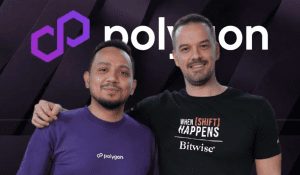
As of early 2026, Sandeep Nailwal’s net worth is estimated between $1 billion and $1.8 billion, with most analyses converging around the $1–1.5 billion range depending on POL (formerly MATIC) price and private valuations.
The majority stems from his substantial holdings in POL tokens as a co-founder and major stakeholder, plus equity and influence in Polygon Labs and the Foundation. Additional wealth comes from angel investments in projects like D3, Lava, Fraction AI, Talus, and others, as well as earlier ventures.
Nailwal has maintained strong skin in the game rather than heavy early exits, aligning his fortune with Polygon’s long-term success. He has spoken candidly about paper losses during bear markets but emphasizes strategic reinvestment. His philanthropy, including large-scale COVID relief efforts, demonstrates a commitment to impact beyond personal wealth. Like many crypto builders, his net worth remains volatile and correlated with broader market conditions and Polygon’s adoption metrics.
Companies & Projects: Polygon Ecosystem, BFI, Sentient, and More
Nailwal’s core focus is the Polygon Foundation, where he serves as CEO, overseeing governance, treasury, and ecosystem development. Polygon Labs (separate operational entity led by Marc Boiron) handles product and engineering, with Nailwal providing strategic oversight as co-founder and Executive Chairman.
Key initiatives include:
- Polygon PoS Chain and AggLayer: The unified interoperability layer designed to make thousands of chains feel seamless, targeting massive scale in payments and RWAs.
- Open Money Stack: Post-2026 acquisitions (Coinme, Sequence) building end-to-end compliant payments infrastructure, including stablecoins and cross-border rails.
- Blockchain for Impact (BFI): Philanthropic arm funding healthcare, medical research, and public goods in India and beyond.
- Sentient: Decentralized AI project creating open, verifiable intelligence to counter centralized AI risks.
- Earlier ventures like Scopeweaver and active angel portfolio spanning AI, ZK tech, and Web3 tools.
Nailwal has described Polygon’s ambition as becoming the “AWS of Web3” or the default global payments layer, prioritizing scale and infrastructure before aggressive revenue extraction.
Controversies: Ethereum Loyalty Debates, Leadership Shifts, and Market Warnings
Nailwal has not shied away from public friction. In October 2025, he posted critically about the Ethereum Foundation (EF) and community, stating he never received direct support despite Polygon scaling Ethereum significantly — and that this lack of backing had potentially cost Polygon billions in valuation. He openly questioned his “moral loyalty” to Ethereum, sparking debates with Vitalik Buterin and others. Some viewed it as constructive criticism; others saw it as divisive. The episode highlighted tensions in Layer-2 ecosystems around recognition, funding, and direction.
Other points of scrutiny include:
- Strategic pivots, such as deprecating Polygon zkEVM by 2026 to refocus on PoS and AggLayer, which drew mixed reactions from developers and users.
- Warnings about memecoin rug pulls and inexperienced Wall Street participants rushing into crypto treasuries (DATs), cautioning that hype could invite regulatory crackdowns.
- Broader industry critiques, including comments on regulatory uncertainty in India leading to talent brain drain, and his emphasis on execution over “imaginary use cases.”
Nailwal addresses controversies directly via long-form posts, AMAs, and interviews, framing them as necessary for healthy growth. He maintains that tough conversations and resets — like taking full Foundation control in 2025 — are essential for long-term success. His direct style energizes supporters but occasionally fuels online debates.
Web3/AI Impact: Payments Infrastructure, AggLayer Unity, and Decentralized Intelligence
Nailwal envisions Polygon as foundational “info-structure” for a more inclusive digital economy. In Web3, it has become a leader in stablecoin rails, RWAs, and everyday payments — especially relevant in emerging markets like India and South Africa, where low-cost, accessible finance can drive inclusion.
The AggLayer aims to solve fragmentation by unifying liquidity and user experience across chains, potentially connecting thousands of networks. Acquisitions and the Open Money Stack signal a shift toward full-stack B2B payments, competing with traditional rails while leveraging blockchain’s transparency and speed.
On AI, Nailwal is increasingly vocal. Through Sentient, he pushes for decentralized, open-source AI that individuals and enterprises can control — countering risks of bias, surveillance, and monopolistic power from big tech. He sees convergence: AI agents making decisions, blockchains verifying them on-chain, and instant payments settling them. In 2026 writings and talks, he predicts 2026 as a turning point where AI, crypto, and payments operate as one self-coordinating system.
For global audiences — US institutions exploring compliant crypto, Asian developers building at scale, Middle Eastern sovereign projects, and African communities seeking financial tools — Nailwal’s pragmatic approach offers accessible infrastructure without sacrificing decentralization principles. He emphasizes verifiable systems, public goods, and long-term thinking over short-term hype.
Lessons & Quotes: Resilience, Execution, and Building for Impact
Nailwal’s journey and statements offer grounded wisdom:
- On setbacks: “I refuse to play for mediocrity… either we’ll fight for that or we crash and run.”
- Explaining blockchain simply: “Polygon is a bank where nobody else owns your money.”
- On loyalty and ecosystems: He has stressed that scaling others should bring mutual support, not one-sided effort.
- On AI and crypto: “By 2026, the internet will think, verify and move money automatically… AI makes decisions, blockchains prove them and payments enforce them instantly.”
- On philanthropy and purpose: His COVID relief work and BFI highlight using success for societal good, converting even meme donations into real medicine and research.
- A recurring theme: Build durable infrastructure that solves real problems (payments, access, verifiability) rather than chasing imaginary use cases.
Actionable lessons:
- Turn adversity into fuel — early hardships can build unmatched resilience and empathy.
- Focus on execution and iteration — rapid shipping combined with strategic resets wins over perfect theory.
- Bridge worlds — combine technical scaling with business pragmatism and real-world needs like payments and healthcare.
- Prioritize public goods — reinvest in community, philanthropy, and open systems for sustainable impact.
- Question loyalty when necessary — healthy ecosystems require mutual support and honest feedback.
- Align incentives long-term — skin in the game, deflationary mechanics, and utility drive enduring value.
- Think in convergence — prepare for AI + blockchain + payments as the next major wave.
Nailwal models grit, adaptability, and a refusal to settle — lessons especially resonant for aspiring builders in emerging economies.
The Road Ahead: Polygon as Global Payments Layer and Decentralized AI Enabler
In 2026, under Nailwal’s consolidated leadership, Polygon doubles down on PoS upgrades, AggLayer rollout, stablecoin dominance, and payments infrastructure. The “year of POL’s rebirth” features deflationary burns, staking rewards, and interoperability fees. zkEVM deprecation allows sharper focus, while acquisitions accelerate compliant, real-world adoption.
Nailwal continues balancing enterprise partnerships with decentralization, pushing Sentient for open AI, and expanding BFI’s impact. For users in the US navigating regulation, Asia’s massive digital economies, the Middle East’s innovation hubs, and South Africa’s growing crypto scene, Polygon offers low-friction entry to Web3 tools that feel like everyday finance.
Sandeep Nailwal didn’t plan to become a crypto billionaire or foundation CEO. He set out to solve immediate problems — scalability, access, and opportunity — while refusing to accept limited horizons. From selling pens or navigating slums to architecting infrastructure that could underpin global payments and verifiable intelligence, his trajectory proves that bold vision grounded in execution can reshape systems. As AI and decentralized networks converge, Nailwal’s Polygon bets on a future where technology serves freedom, inclusion, and collective progress — one verifiable transaction at a time.