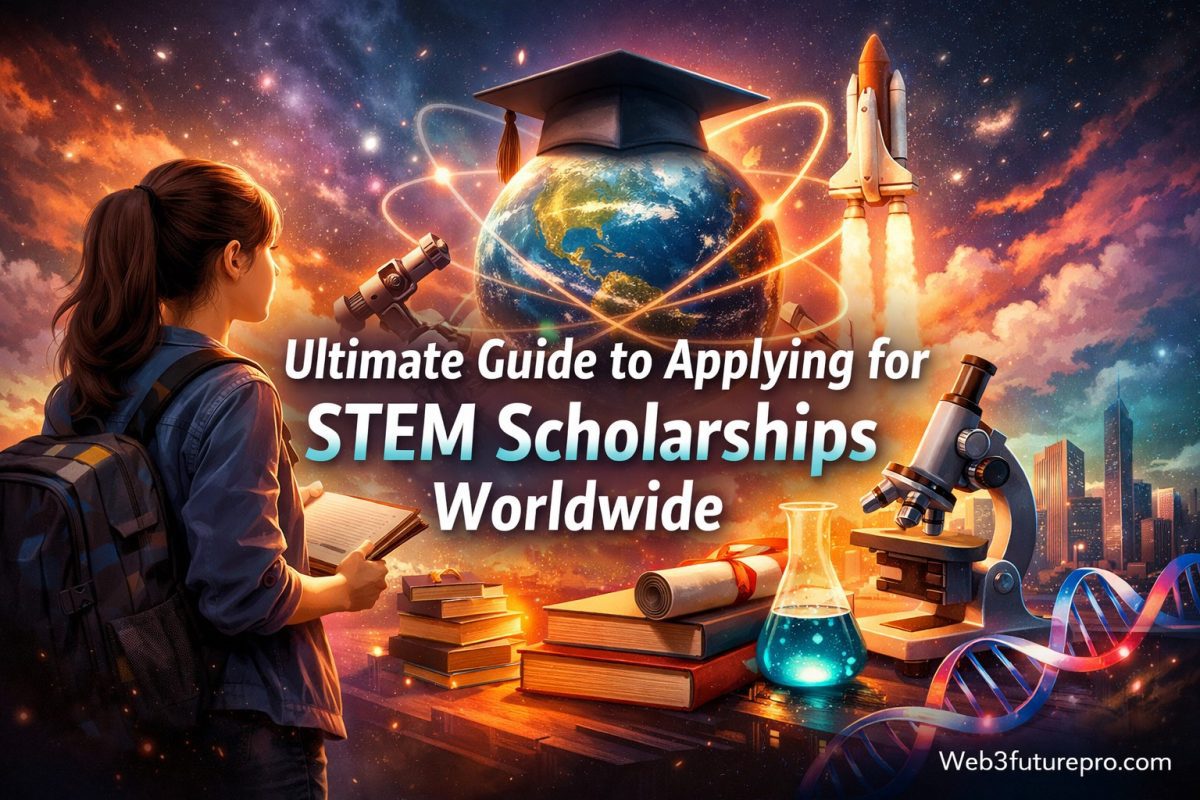
The ultimate guide to applying for STEM scholarships worldwide in 2026 equips ambitious students in science, technology, engineering, and mathematics with a proven roadmap to secure funding for undergraduate, master’s, PhD, or research programs abroad. STEM fields dominate global priorities—from AI and cybersecurity to renewable energy, biotechnology, and data science—creating unprecedented opportunities for fully funded or substantially supported study.
In 2026, governments, universities, foundations, and corporations are expanding scholarships to attract diverse talent, especially from high-potential regions like Africa (Nigeria, South Africa), Asia, the Middle East, and the United States. Many cover full tuition, living stipends, travel, health insurance, and research costs, often prioritizing merit, leadership, underrepresented groups (women, minorities), and impact-driven proposals.
CHECK: Best Coding Bootcamps with Scholarships and Funding in 2026
This comprehensive, step-by-step guide draws from active 2026 cycles of top programs like Fulbright, Chevening, DAAD, Erasmus Mundus, MEXT, and targeted STEM awards. Follow it to boost your chances—success often comes from early preparation, tailored applications, and persistence.
What Is a STEM Scholarship?
A STEM scholarship is financial support awarded to students studying science, technology, engineering, or mathematics-related fields.
Types of STEM Scholarships
- Fully funded (tuition + living expenses)
- Partial scholarships
- Research grants
- Fellowships
- Industry-sponsored programs
What Fully Funded Scholarships Typically Cover
- Tuition fees
- Monthly stipend
- Accommodation
- Health insurance
- Travel expenses
Some even include research funding and conference travel grants.
Why STEM Scholarships Worldwide Are More Attainable in 2026
Rising tuition (often $30,000–$80,000+/year for internationals) plus living expenses make advanced STEM education costly. Scholarships eliminate debt, provide elite networks, and accelerate careers at labs, tech firms, or startups.
Key trends:
- Increased focus on trustworthy AI, climate tech, health innovation, and digital inclusion.
- More options for women in STEM, underrepresented regions, and interdisciplinary work.
- Hybrid/online elements in some programs for flexibility.
- Post-study work visas (e.g., STEM OPT in U.S., post-study routes in UK/Germany) extend opportunities.
Average success rates: 5–20% for top awards, but strong, targeted applications win repeatedly.
Top Fully Funded or High-Value STEM Scholarships Worldwide for 2026
Here are standout options with strong international access (verify official sites for exact 2026–2027 cycles).
- Fulbright Foreign Student Program (USA) Fully funded master’s/PhD in STEM (priority for AI, engineering, data science). Covers tuition, stipend, airfare, insurance. Country-specific; strong for Africa, Asia, Middle East. Deadlines: Feb–June 2026 (country-varying).
- Chevening Scholarships (UK) One-year master’s in any STEM field. Full tuition, living allowance, travel. Requires 2+ years work experience, return commitment. Applications often Aug–Nov for Sept 2026 start.
- DAAD Scholarships (Germany) Master’s/PhD in STEM (many English-taught). Monthly stipend (€934+ master’s), tuition waivers (public unis free/low-cost), travel, insurance. Deadlines: Oct–Dec 2025 for Oct 2026; STEM-specific like SECAI AI calls.
- Erasmus Mundus Joint Masters (Europe) Fully funded multi-university master’s (many STEM-focused, e.g., AI, engineering, biotech). €1,400 monthly stipend, tuition, travel, insurance. Deadlines: Oct 2025–Feb 2026 for Sept 2026.
- MEXT Scholarship (Japan) Fully funded undergrad/master’s/PhD in STEM. Tuition, stipend, airfare. Embassy-recommended; strong for Asian applicants. Deadlines: Vary by country, often spring/summer.
- Australia Awards Scholarships Fully funded master’s/PhD for developing countries (Africa, Asia, Pacific). STEM priority in many. Covers all costs; return commitment.
- British Council Women in STEM Scholarships Fully funded master’s for women from select countries (e.g., South Asia, Africa). Up to 90 awards in 2026–27; applications open for 2026–27.
- Other High-Impact Options
- Mastercard Foundation Scholars — Africa-focused, tech/STEM tracks at partners (e.g., ASU, UCT).
- Google PhD Fellowship — AI/ML/CS; nomination-based, full tuition + stipend.
- MPOWER Women in STEM Scholarship — Up to $5,000 for international women in U.S./Canada.
- University-specific (e.g., Stanford, RWTH Aachen women in engineering).
- AFCEA STEM Majors Scholarships ($2,500–$5,000; deadlines May 2026).
Step-by-Step: How to Apply and Win STEM Scholarships in 2026
Step 1: Self-Assess & Set Goals (Now – 12 Months Before Start)
- Define focus: AI, engineering, biotech, etc.
- Choose level/destination: Master’s (most scholarships), PhD (research funding), undergrad (fewer full options).
- Honest profile check: GPA (3.5+/equiv), experience (projects, internships, research), leadership, English (IELTS/TOEFL 6.5–7.5+), financial need.
- Action: Spreadsheet of 8–12 scholarships matching your profile (mix government, university, corporate).
Step 2: Research & Shortlist (Ongoing)
- Use databases: scholarships360.org, bold.org, daad.de, fulbrightonline.org, chevening.org, scholarshiptab.com, mpowerfinancing.com.
- Filter: “STEM,” “international,” “fully funded,” “2026.”
- Prioritize: Full coverage + your region (e.g., Fulbright/Chevening for Nigerians, DAAD for Africans/Asians, Erasmus for Europeans/multi-country).
- Check deadlines: Many 9–12 months pre-start (e.g., Oct–Dec for fall 2026).
Step 3: Prepare Materials (3–9 Months Before Deadlines)
- Transcripts/diplomas (certified translations).
- CV: Quantify impact (e.g., “Led ML project improving accuracy 35%”).
- Essays/Statements:
- Motivation/Personal: Your STEM journey, challenges overcome.
- Study/Research Proposal: Specific program fit, original question, methodology, impact (e.g., AI for African agriculture).
- Leadership/Impact: How you’ll contribute home (key for Chevening, Fulbright, Australia Awards).
- Recommendations: 2–3 from professors/employers; brief them early.
- Tests: IELTS/TOEFL/GRE (if required); aim high.
- Pro tip: Tailor everything—no generics. Get feedback from mentors/alumni.
Step 4: Secure University Admission (Parallel Track)
- Apply to 3–6 strong STEM programs (many scholarships require/ prefer offers).
- Highlight scholarship pursuit where allowed.
- For Chevening: Scholarship first, then university offers.
Step 5: Submit & Follow Up
- Apply early (rolling or early phases Jan–March 2026 favor).
- Use official portals; track submissions.
- Prepare interviews: Discuss vision, impact, return plan.
- Monitor email/portals; respond fast.
Step 6: Post-Application & Backup
- If shortlisted: Visa prep, medicals.
- Rejections common—analyze, strengthen (more projects, certs like Coursera/Google), reapply.
- Backups: Partial awards + savings, assistantships (RA/TA in STEM), low-cost Germany/Netherlands.
Maximizing Your Chances: Pro Tips for 2026
- Start Early — Deadlines sneak up; prep 12+ months ahead.
- Show Impact — Tie STEM to real problems (climate, health, inclusion in your region).
- Build Evidence — GitHub, publications, open-source, volunteering.
- Diversity Edge — Highlight if woman, underrepresented, first-gen.
- Network — Connect with alumni on LinkedIn; attend webinars.
- Avoid Pitfalls — No typos, meet word limits, follow instructions exactly.
Common Mistakes That Kill Applications
Even strong students fail due to these mistakes:
1. Generic Essays
No uniqueness = rejection.
2. Late Applications
Deadlines are strict.
3. No Proof of Skills
Certificates alone aren’t enough.
4. Applying to Too Few Programs
Limits your chances.
Best Strategy for Students in Nigeria, Africa & Asia
Students from developing regions are increasingly winning global scholarships.
Why?
Because many programs are designed to support them.
Programs like Erasmus Mundus Programme actively encourage applicants from these regions.
Your Strategy
- Build skills
- Create projects
- Apply widely
- Stay consistent
Your STEM Future Awaits
In 2026, STEM scholarships worldwide are gateways to innovation and leadership. From Abuja to global labs, persistence and preparation turn talent into opportunity. Start your spreadsheet, refine your story, and apply boldly—the next breakthrough could be yours.
Verify every detail on official sites (cycles update). Begin today; your funded STEM journey starts now.