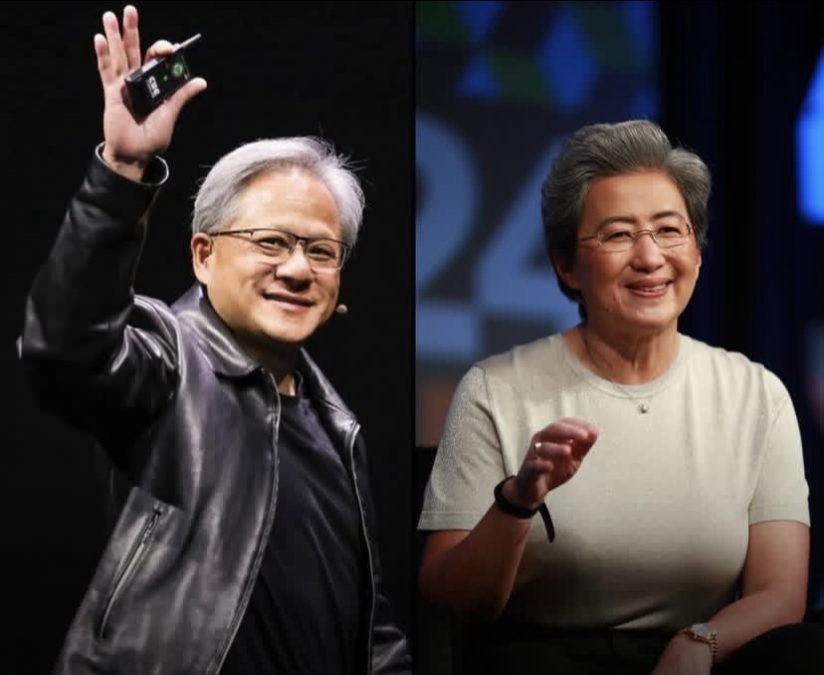
In the high-stakes world of artificial intelligence hardware, two of the most influential leaders share more than a professional battlefield. Lisa Su, Chair and CEO of Advanced Micro Devices (AMD), and Jensen Huang, co-founder and long-time CEO of NVIDIA, are blood relatives. They are first cousins once removed, linked through Huang’s mother’s side of a Taiwanese family.
This connection, confirmed by genealogical research and acknowledged by both sides in public statements and corporate responses, has become one of the most intriguing personal footnotes in the modern semiconductor industry.
The relationship does not appear to have shaped their childhoods or early careers. Both immigrated to the United States as young children, grew up far apart, and first encountered each other as established professionals at an industry event.
Yet their parallel trajectories—from Taiwanese roots to American engineering educations to the executive suites of rival GPU powerhouses—have made the family link a persistent point of fascination as AMD and NVIDIA compete for dominance in the AI accelerator market.
CHECK: Jensen Huang Resigns as NVIDIA CEO: Facts vs Allegations
This article examines the verified family connection, the personal and professional paths of both leaders, the competitive dynamics between AMD and NVIDIA in the AI era, and the broader context of Taiwanese talent in the global semiconductor industry. All key claims about the kinship are drawn from primary acknowledgments, genealogical reporting cited by major outlets, and consistent secondary coverage.
The Verified Family Connection
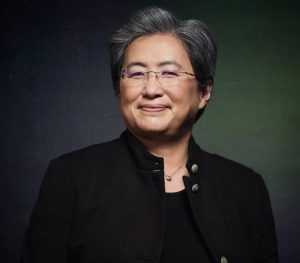
The precise relationship is that of first cousins once removed. According to research by Taiwanese genealogist Jean Wu (also referred to in coverage as Wu Jia Jin), Huang’s mother and Su’s maternal grandfather were siblings. This places Su one generation below Huang’s first cousins. In Mandarin kinship terms, Huang has been described as Su’s “biao jiu.”
An NVIDIA spokesperson confirmed to CNN that Su is a distant cousin of Huang through his mother’s side of the family. Lisa Su herself publicly acknowledged the connection in 2020, describing them as “distant relatives” and “some complex second cousin type of thing.” In a later interview she emphasized that they did not grow up together and only met well into their careers at an industry event.
The family is large. Reports note that Huang’s maternal grandfather (Su’s great-grandfather) had many children, resulting in a wide network of cousins scattered across countries. Both Su and Huang left Taiwan at very young ages, which helps explain why the connection remained distant in daily life despite the relatively close genealogical link.
No evidence suggests the family relationship has influenced corporate strategy, product decisions, or competitive behavior between AMD and NVIDIA. Both leaders have treated it as an interesting personal coincidence rather than a professional factor.
Early Lives and Immigration Paths
Lisa Tzwu-Fang Su was born in November 1969 in Tainan, Taiwan. Her family immigrated to the United States when she was about three years old. Her father, a statistician, pursued graduate studies, and the family settled in the New York area, where Su grew up in Queens. Her mother worked as an accountant and later became an entrepreneur. Su has described a household that encouraged mathematics and science from an early age.
Jensen Huang was born in 1963 in Taiwan (commonly cited as Tainan or Taipei depending on the account). His family also moved to the United States during his childhood. He has spoken publicly about being sent with his brother to live with relatives in the U.S. before the rest of the family joined them, including a period spent at a school in Kentucky. The family eventually settled in Oregon.
Both therefore belong to the wave of Taiwanese immigrants who arrived in the United States as children in the late 1960s and 1970s and went on to play outsized roles in American technology. Their shared origin in southern Taiwan and subsequent American upbringing form part of a broader pattern of talent that has shaped Silicon Valley and the global chip industry.
Education and Early Careers
Su attended the Bronx High School of Science before enrolling at the Massachusetts Institute of Technology. She earned a bachelor’s degree, a master’s degree, and a Ph.D. in electrical engineering from MIT, later stating that she chose the field because it appeared to be one of the most rigorous majors available. After MIT she worked at Texas Instruments, spent more than a decade at IBM in various engineering and technical leadership roles (including time as technical assistant to then-CEO Lou Gerstner), and later held senior positions at Freescale Semiconductor, including chief technology officer.
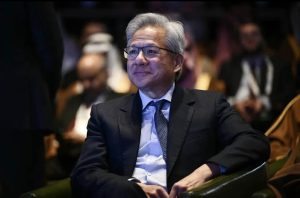
Huang studied electrical engineering at Oregon State University. He began his career as a microprocessor designer at AMD and also worked at LSI Logic before co-founding NVIDIA in 1993 with Chris Malachowsky and Curtis Priem. The early years of NVIDIA focused on graphics accelerators for PCs and gaming; the company’s later pivot into general-purpose GPU computing and AI accelerators would define its modern identity.
The fact that Huang once worked at AMD adds another layer of historical overlap to the later rivalry between the two companies under their respective leadership.
Lisa Su’s Turnaround of AMD
When Lisa Su joined AMD in 2012 and became CEO in 2014, the company faced significant challenges, including financial pressure, product competitiveness issues, and a market position that lagged behind Intel in CPUs and NVIDIA in discrete graphics. Under her leadership AMD executed a multi-year recovery centered on high-performance computing, improved CPU architectures (notably the Zen family), stronger discrete GPU offerings, and strategic partnerships.
Key elements of the turnaround included securing design wins in gaming consoles (PlayStation and Xbox generations), rebuilding the server and PC processor businesses, and later positioning AMD as a credible alternative in data-center and AI accelerators. By the mid-2020s AMD had substantially increased its market value and established itself as the primary independent challenger to NVIDIA in high-performance and AI-oriented silicon. Su’s background as a working engineer has frequently been cited as an advantage in technical decision-making and customer engagement.Her elevation to Chair of the Board in addition to the CEO role further consolidated her influence over AMD’s long-term direction.
Jensen Huang and NVIDIA’s Rise in AI
Jensen Huang has led NVIDIA since its founding. The company’s transformation from a specialist graphics chip supplier into the dominant provider of AI training and inference accelerators is one of the defining business stories of the 2010s and 2020s. CUDA, NVIDIA’s parallel computing platform, created a software ecosystem that became deeply embedded in machine-learning research and industry practice. Successive generations of data-center GPUs, combined with networking, software, and systems offerings, positioned NVIDIA at the center of the generative AI boom.
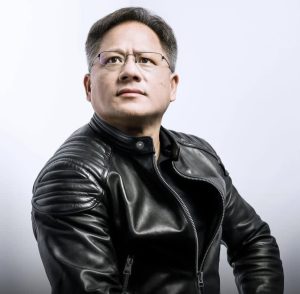
Huang’s public persona—often appearing in his signature leather jacket—and his long tenure as a founder-CEO have made him one of the most visible figures in the technology industry. NVIDIA’s market capitalization and influence in AI infrastructure grew dramatically as large language models and related workloads scaled.
(Note: As of mid-November 2026, reports indicated leadership transition discussions and Huang’s departure from the CEO role, with interim arrangements announced. The competitive and technological foundations built during his tenure remain central to the industry landscape described here.)
The Competitive Landscape in AI Chips
NVIDIA has held a commanding position in AI accelerators, particularly for large-scale training, thanks to its hardware performance, software stack, and ecosystem lock-in. AMD has pursued a strategy of offering competitive price-performance, open software alternatives (including ROCm), strong CPU-GPU combinations, and design wins across cloud providers and enterprises seeking alternatives or complementary capacity.
The rivalry is genuine and intense. Both companies invest heavily in process technology partnerships (primarily with TSMC), advanced packaging, high-bandwidth memory, and software tools. Customers, including major cloud hyperscalers, increasingly seek multi-vendor strategies to manage supply, pricing, and technical risk. Su has repeatedly framed AMD’s opportunity in terms of providing high-performance computing solutions that give customers more choice, while Huang has emphasized NVIDIA’s full-stack platform advantages.
The family connection between the two CEOs adds a human dimension to what is otherwise a purely commercial and technological contest, but available public statements indicate that neither treats the kinship as operationally relevant.
Public Comments on the Relationship
Lisa Su has been the more forthcoming of the two in addressing the connection. In addition to the 2020 remarks describing distant relatives, she later told Bloomberg that they “didn’t grow up together” and met only after both were established in their careers. She has characterized the situation as an “interesting coincidence” and noted the absence of family dinners between them.
Jensen Huang has acknowledged the relationship in lighter terms in at least one public appearance, referring to family in the industry context and noting that they did not know each other until Su’s time at IBM. An NVIDIA spokesperson’s confirmation to CNN remains one of the clearest corporate statements on the matter.These comments consistently portray the link as real but personally distant and professionally irrelevant to competitive dynamics.
Taiwanese Roots and the Semiconductor Ecosystem
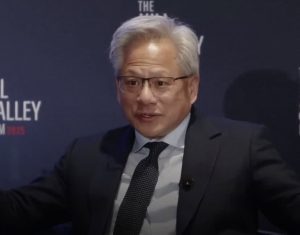
Both leaders’ origins in Taiwan place them within a remarkable concentration of talent that has shaped the modern semiconductor industry. Taiwan is home to TSMC, the world’s leading advanced logic foundry, and a dense network of design, packaging, and equipment capabilities. Many of the engineers and executives who built U.S. chip companies in recent decades have personal or educational ties to Taiwan.
The presence of two Taiwanese-American CEOs at the helm of the leading independent GPU and high-performance computing companies underscores the depth of that talent pipeline. It also highlights the strategic importance of Taiwan’s manufacturing ecosystem to the global AI supply chain—a reality that continues to influence geopolitics, export controls, and corporate investment decisions.
Leadership Styles and Industry Impact
Observers frequently contrast Su’s understated, engineer-driven style with Huang’s more flamboyant public presence. Su is often described as deeply technical, focused on execution and long-term architectural bets. Huang has been noted for visionary framing of GPU computing and AI platforms and for maintaining a founder’s intensity over three decades.
Together they represent two successful models of leadership in a capital-intensive, highly cyclical, and rapidly evolving industry. Their companies’ competition has accelerated innovation in AI hardware, expanded customer options, and contributed to the broader infrastructure supporting generative AI, scientific computing, and data-center growth.
Frequently Asked Questions
Are Lisa Su and Jensen Huang really related?
Yes. Genealogical research and corporate confirmation establish that they are first cousins once removed through Huang’s mother’s family. Su has publicly acknowledged them as distant relatives.
Did they grow up together?
No. Both immigrated to the United States as young children and lived in different parts of the country. They have stated that they first met as adults at an industry event.
Does the family relationship affect AMD-NVIDIA competition?
There is no public evidence that it does. Both leaders have treated the connection as a personal coincidence rather than a factor in business strategy.
What is the exact family relationship?
Huang’s mother and Su’s maternal grandfather were siblings, making Su and Huang first cousins once removed.
Why is this connection widely discussed?
It is rare for the chief executives of two major direct competitors in a critical technology sector to share a documented blood relationship, especially one rooted in the same region of Taiwan that has produced so much semiconductor talent.
Has either CEO spoken about it recently?
Su has addressed it in interviews into 2024, emphasizing the distance of the relationship and the fact that they met only later in their careers. Huang has made lighter public references to family in the industry.
The family connection between Lisa Su and Jensen Huang is a verified, well-documented element of their biographies. First cousins once removed through a Taiwanese lineage, they followed independent paths from childhood immigration to the United States, rigorous engineering educations, and ultimately the leadership of two of the most important companies in artificial intelligence hardware.
Their professional rivalry in AI chips is real, intense, and consequential for the industry. The kinship itself remains a personal footnote—an interesting coincidence that underscores both the depth of Taiwanese-American contribution to semiconductors and the small-world nature of elite technical leadership.
As AMD continues to challenge NVIDIA’s position in AI accelerators and both companies navigate supply-chain, geopolitical, and technological complexities, the story of these two relatives serves as a reminder that the people shaping the most advanced computing platforms of the era often share deeper historical and cultural roots than market competition alone would suggest.
The substance of their impact, however, rests on engineering execution, strategic choices, and the performance of the silicon their companies design—not on the family tree that happens to link them.
For further reading on semiconductor leadership, AI hardware competition, and the global talent networks that power advanced computing, explore related coverage on Web3FuturePro.com.
Sources and Citations
- CNN Business reporting on the Taiwanese-American CEOs and genealogical findings by Jean Wu, including NVIDIA spokesperson confirmation (2023).
- Lisa Su’s public comments in 2020 CTA interview and 2024 Bloomberg interview regarding the distant relative relationship and first meeting.
- Tom’s Hardware and Observer coverage of the family tree research and relationship terminology.
- Business Insider, Fortune, and Forbes profiles of Lisa Su’s biography, career, and AMD leadership.
- Consistent secondary reporting across major technology and business outlets confirming the first-cousins-once-removed relationship through Huang’s maternal line.