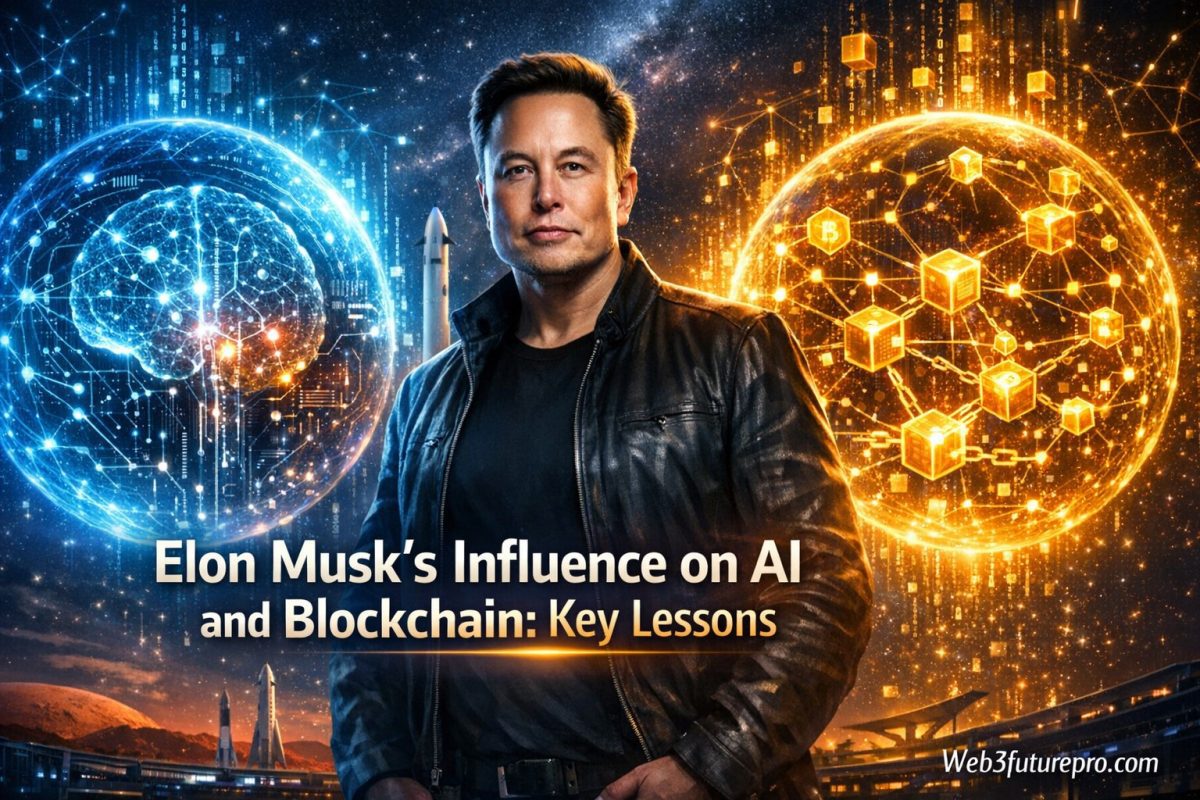
Elon Musk has shaped the trajectories of both artificial intelligence and blockchain more than almost any other individual. Through xAI and Grok, he has challenged the dominant narratives around AI safety, truth-seeking, and integration with real-world systems. In blockchain, his actions with Dogecoin, Tesla’s Bitcoin holdings, and hints at payments on X have repeatedly moved markets and spotlighted practical utility over pure speculation.
In 2026, Musk’s influence remains outsized: xAI secured a $20 billion Series E (exceeding its $15 billion target), pursued aggressive development of Grok models (including Grok 4.2 and video tools), and even merged with SpaceX in a landmark $1.25 trillion deal to create vertically integrated AI capabilities. Meanwhile, his long-standing affinity for Dogecoin continues to fuel speculation around X’s upcoming payments features, while Tesla and SpaceX maintain Bitcoin holdings.
These moves offer clear, actionable lessons for entrepreneurs, founders, and innovators in AI, Web3, and decentralized technologies—especially those operating from dynamic regions like Nigeria, South Africa, Asia, the Middle East, and the United States. Musk’s approach isn’t flawless, but it consistently demonstrates first-principles thinking, relentless execution, and ecosystem leverage.
The Contradiction That Defines Musk

At first glance, Musk’s relationship with AI and blockchain seems inconsistent.
- He has warned about the dangers of AI
- Yet he actively builds AI-driven companies
- He has criticized crypto speculation
- Yet his tweets have moved entire crypto markets
This contradiction isn’t confusion.
It’s strategy.
Musk operates on a principle:
Engage with transformative technologies—but remain skeptical of their risks.
Musk and Artificial Intelligence: Builder and Critic
Few figures have shaped AI conversations as much as Musk.
He co-founded OpenAI, one of the most influential AI organizations in the world. While he later distanced himself from its direction, his early involvement helped legitimize AI as a critical frontier.
He also founded xAI, positioning himself directly in the race to build advanced AI systems.
Elon Musk’s Influence on AI and Blockchain: Key Lessons for Founders in 2026

1. Pursue “Maximally Truth-Seeking” AI – Prioritize Honesty Over Safety Theater
Musk founded xAI explicitly to counter what he saw as overly censored or ideologically biased AI systems. Grok is positioned as a “maximally truth-seeking” model that aims for accuracy and curiosity, even when answers are uncomfortable.
Key Lesson: In an era of powerful generative tools, build AI that prioritizes verifiable truth and helpfulness rather than heavy-handed guardrails that can stifle creativity or introduce hidden biases. Musk has emphasized keeping “honest versions” of Grok while actively addressing problematic outputs (“killing decepticons”).
Application for Startups: When designing AI products—whether chatbots, agents, or vertical tools—stress-test for truthfulness and transparency. Document your safety philosophy clearly. For global teams, this approach can differentiate you in markets wary of “woke” or overly restrictive Western models, while still addressing real risks like deepfakes or misinformation.
In 2026, xAI’s focus on video understanding/generation (photons as high-bandwidth communication) and integration with Tesla’s Optimus robotics shows how truth-seeking AI can extend into physical and multimodal domains.
2. Integrate AI Deeply with Hardware and Real-World Systems
Musk doesn’t treat AI as standalone software. xAI’s merger with SpaceX aims to create “AI rockets” and vertically integrated innovation. Grok is being positioned to guide “Digital Optimus” for real-time computer actions, while Tesla leverages AI for autonomy and robotics.
Key Lesson: The highest-leverage AI isn’t isolated models—it’s systems that combine intelligence with hardware, data, and physical infrastructure. Pure software plays face commoditization as foundation models improve.
Application for Startups: Look for integration opportunities. In emerging markets, combine AI with mobile-first or low-cost hardware for agritech, healthcare diagnostics, or energy optimization. Founders in Africa or Asia can gain an edge by solving local physical-world problems (e.g., decentralized compute via DePIN) rather than competing directly on general chatbots.
3. Move Fast, Iterate Aggressively, and Rebuild When Necessary
Musk has publicly stated that xAI “was not built right the first time” and is being rebuilt from the foundations. This includes intense internal pressure, engineer reassignments, “war rooms,” and a willingness to let co-founders depart while accelerating development (e.g., Grok 4.2 releases and video tools).
Key Lesson: Speed and iteration trump perfection on the first attempt. Don’t be afraid to pivot structure, team, or approach when data shows the current path is suboptimal. Musk’s “study the blade” mindset (focusing on execution over conferences) emphasizes relentless progress.
Application for Startups: Adopt a high-intensity culture with clear milestones. For decentralized or AI projects, ship early versions, gather real usage data, and refactor aggressively. In resource-constrained environments (common in Nigeria or South Africa), this bias toward action helps bootstrap traction faster than over-planning.
4. Leverage Personal Brand and Distribution Channels Ruthlessly
Musk’s X platform serves as both a megaphone and distribution engine for Grok. Features like Grok analysis on posts and integration with X Premium drive adoption. His tweets alone have historically moved crypto markets and AI narratives.
Key Lesson: In crowded fields like AI and blockchain, distribution and narrative control are as important as the technology. Build or own channels that reach your audience directly.
Application for Startups: Use social platforms, communities, and content to educate and engage. For Web3 projects, transparent communication builds trust faster than traditional PR. Emerging-market founders can amplify local impact stories to attract global attention and capital.
5. Embrace Calculated Risk and Long-Term Thinking in Blockchain
Musk has been vocal on crypto: he holds Bitcoin, Ethereum, and favors Dogecoin for its humor and transaction efficiency. Tesla and SpaceX hold Bitcoin; Dogecoin has seen surges tied to Musk’s comments on X payments (set to debut in April 2026). He has warned against all-in speculation while highlighting practical use cases.
Key Lesson: In blockchain, treat crypto as a tool for payments, incentives, or value transfer rather than the sole focus. Avoid over-hyping; emphasize utility and sustainability. Musk’s “pump but not dump” ethos and long-term ecosystem view (e.g., potential Dogecoin integration for X Money) show the power of consistent, utility-focused advocacy.
Application for Startups: Design tokenomics or blockchain features with real utility first (remittances, RWAs, DePIN). Diversify holdings and narratives. For African or Asian teams, leverage blockchain for inclusion problems where traditional finance falls short, while maintaining regulatory awareness.
6. Build Ecosystems and Vertical Integration
From merging xAI with SpaceX for “AI rockets” to cross-pollinating Tesla autonomy with Grok, Musk creates synergies across companies. This vertical integration provides data advantages, talent pipelines, and defensibility.
Key Lesson: Isolated startups struggle. Build or join ecosystems that provide complementary strengths—compute, data, distribution, or hardware.
Application for Startups: In Web3, collaborate across chains or with AI layers. In AI, seek hardware or domain partnerships. Global founders can form regional alliances (e.g., African DeFi + Asian infrastructure) to compete with Silicon Valley giants.
7. Balance Ambition with Responsibility – Publicly Address Risks
Musk has called for AI pauses in the past, warned about existential risks, and faced backlash over Grok’s outputs (e.g., image generation controversies). He continues to push boundaries while iterating on safety.
Key Lesson: High-ambition tech requires visible stewardship. Acknowledge risks transparently; iterate openly. This builds long-term credibility even amid controversy.
Application for Startups: Document and communicate your approach to safety, ethics, and societal impact. In regulated or emerging markets, proactive compliance can become a competitive moat.
Bold Execution in an Uncertain World
Elon Musk‘s influence in 2026 demonstrates that breakthroughs come from first-principles reasoning, vertical integration, aggressive iteration, and narrative control—whether advancing truth-seeking AI via Grok and xAI or highlighting practical crypto utility through Dogecoin and payments.
For decentralized and AI builders worldwide, the core takeaways are timeless yet urgently relevant:
- Solve fundamental problems with integrated systems.
- Prioritize truth, utility, and long-term value over short-term hype.
- Execute at high intensity while remaining adaptable.
- Leverage ecosystems and distribution aggressively.
- Communicate transparently about risks and vision.
The future of AI and blockchain will reward those who combine Musk-like ambition with disciplined, user-focused execution. Whether you’re in Abuja developing inclusive fintech protocols, Cape Town exploring DePIN, or scaling AI agents globally, these lessons provide a powerful framework.
Study the fundamentals, ship relentlessly, and build for abundance rather than extraction. The tools and capital are more accessible than ever—the differentiator is how boldly and responsibly you wield them.