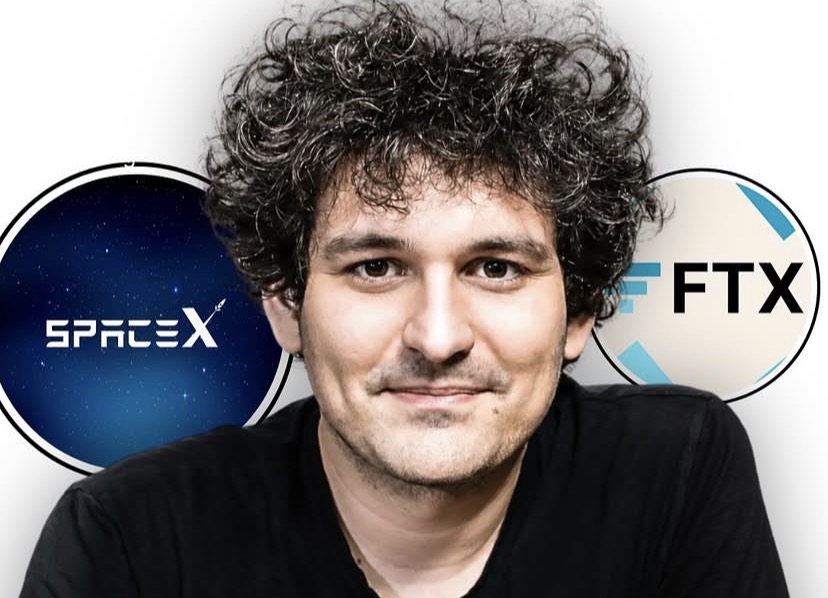
Sam Bankman-Fried Biography: Few figures in the history of cryptocurrency have experienced a rise and fall as dramatic as Sam Bankman-Fried, commonly known as SBF. Once celebrated as one of the industry’s brightest entrepreneurs and youngest billionaires, Bankman-Fried built the cryptocurrency exchange FTX into one of the world’s largest digital asset trading platforms in just a few years. His reputation as an innovative business leader, combined with his advocacy of effective altruism and high-profile political donations, made him one of the most recognizable faces in global finance and technology.
Before founding FTX, Bankman-Fried worked as a quantitative trader and later established Alameda Research, a quantitative cryptocurrency trading company that became closely intertwined with FTX. During the cryptocurrency boom of 2020 and 2021, FTX experienced extraordinary growth, attracting millions of customers, major institutional investors, celebrity endorsements, and global sponsorship deals. At the height of his success, Bankman-Fried’s personal fortune was estimated in the tens of billions of dollars, making him one of the wealthiest people in the cryptocurrency industry.
However, the rapid success of FTX came to a catastrophic end in late 2022. Following revelations about the financial relationship between FTX and Alameda Research, the exchange suffered a massive liquidity crisis that led to its collapse and bankruptcy. Subsequent investigations uncovered widespread misuse of customer funds and corporate governance failures, resulting in Bankman-Fried’s criminal conviction. In 2024, he was sentenced to 25 years in federal prison for fraud and related offenses, marking one of the most significant corporate scandals in financial history.
CHECK: Balaji Srinivasan Biography: Network State Author, Former Coinbase CTO & Tech Visionary
This biography explores Sam Bankman-Fried’s early life, education, career, the rise of FTX, the exchange’s collapse, legal proceedings, 25-year prison sentence, and the lasting lessons the cryptocurrency industry has learned from one of its biggest scandals.
What if a brilliant MIT physics graduate with effective altruism ideals built a cryptocurrency empire valued at tens of billions in just a few years, hobnobbed with celebrities and politicians, positioned himself as the face of responsible crypto innovation—only for it all to implode in one of the largest financial frauds in history, resulting in a 25-year prison sentence and billions in customer losses? Sam Bankman-Fried’s meteoric rise and catastrophic fall represent both the intoxicating promise and perilous risks of the cryptocurrency industry. Once hailed as the “King of Crypto” with a reported peak net worth of $26 billion, SBF’s story—from FTX’s glamorous Bahamas headquarters to federal prison—serves as a cautionary tale for investors, entrepreneurs, and regulators worldwide.
In mid-2026, with his appeal denied and sentence upheld, Bankman-Fried’s case continues to shape discussions on crypto regulation, governance, and ethics. This biography examines his trajectory, the FTX collapse, legal consequences, and enduring lessons for the global crypto ecosystem—from U.S. policy debates to adoption in Asia, the Middle East, and South Africa.
Sam Bankman-Fried Biography (SBF): FTX Founder, Rise and Fall of Crypto’s Poster Boy

Early Life: Privileged Intellect in Northern California
Sam Bankman-Fried was born on March 5/6, 1992, in Stanford, California, to prominent Stanford Law School professors Joseph Bankman and Barbara Fried. Raised in an academic, upper-middle-class Jewish household, he grew up immersed in intellectual discussions, utilitarianism, and moral philosophy. His parents’ influence instilled a drive to maximize positive impact, which later aligned with effective altruism principles.
Sam excelled academically from an early age, attending elite institutions like Crystal Springs Uplands School. He showed exceptional aptitude in math and puzzles, participating in programs like Canada/USA Mathcamp. This environment of high achievement and ethical reasoning shaped his worldview, emphasizing quantification of good and ambitious problem-solving. Growing up near Silicon Valley exposed him to technology and entrepreneurship, planting seeds for his future ventures.
Education: MIT Physics and Early Quantitative Thinking
Bankman-Fried attended the Massachusetts Institute of Technology (MIT), graduating in 2014 with a bachelor’s degree in physics. He was deeply involved in quantitative pursuits and lived in a co-ed group house. At MIT, he honed rigorous analytical skills, probability thinking, and a data-driven approach that later defined his trading and business strategies.
While his formal education was in physics, informal learning in economics, effective altruism, and technology complemented it. Post-graduation, he joined Jane Street Capital, a proprietary trading firm, where he traded ETFs and deepened his understanding of markets and risk. This period solidified his quantitative edge and interest in finance.
Career Journey: From Trading to FTX Empire and Collapse

After Jane Street, Bankman-Fried briefly worked at the Centre for Effective Altruism before founding Alameda Research in 2017, a quantitative crypto trading firm. Alameda focused on arbitrage and market-making, capitalizing on crypto inefficiencies. In 2019, he launched FTX, a derivatives exchange designed for professional traders, emphasizing speed, low fees, and innovative features like tokenized stocks.
FTX grew explosively, becoming the second- or third-largest crypto exchange. Bankman-Fried’s public persona—casual style, philanthropic pledges, and political donations—elevated his profile. FTX sponsored events, arenas (FTX Arena), and teams, while Alameda engaged in leveraged trading. By 2022, SBF was a billionaire with significant influence.
The empire collapsed dramatically in November 2022. A CoinDesk report revealed Alameda’s heavy reliance on FTT (FTX’s token) as collateral. Customer withdrawals surged, liquidity evaporated, and bankruptcy followed. Investigations revealed commingling of funds, with FTX customer assets allegedly used to prop up Alameda and fund personal/political expenditures. Bankman-Fried resigned, faced extradition from the Bahamas, and was arrested.
Major Achievements: Rapid Rise of FTX and Crypto Influence
Before the fall, Bankman-Fried achieved:
- Founding Alameda Research and FTX, scaling the latter to multi-billion daily volume.
- Innovating exchange features that attracted professional traders.
- High-profile philanthropy and political engagement, donating tens of millions.
- Positioning FTX as a “responsible” crypto player amid industry hype.
These feats temporarily legitimized crypto for mainstream audiences but highlighted governance failures.
Sam Bankman-Fried Career Timeline
| Year | Milestone | Outcome |
|---|---|---|
| 2014 | MIT Graduation | Quantitative foundation |
| 2017 | Founded Alameda Research | Crypto trading entry |
| 2019 | Launched FTX | Rapid exchange growth |
| 2021–2022 | Peak Influence & Sponsorships | Billions in valuation |
| Nov 2022 | FTX Collapse & Bankruptcy | Industry shock |
| 2023–2024 | Conviction & 25-Year Sentence | Legal accountability |
This arc shows explosive growth followed by swift downfall.
Companies & Projects: FTX, Alameda & Associated Ventures
- FTX: Derivatives exchange with advanced features; filed bankruptcy with massive shortfalls.
- Alameda Research: Trading firm central to the collapse due to alleged misuse of funds.
- Other: Political donations, philanthropic initiatives via FTX Foundation (later scrutinized), and personal investments.
The intertwined structure of FTX and Alameda lacked proper controls, contributing to the scandal.
FTX/Alameda Key Elements
| Entity | Role | Fate |
|---|---|---|
| FTX Exchange | Customer trading platform | Bankruptcy, customer losses |
| Alameda Research | Proprietary trading | Central to fraud allegations |
| FTX Foundation | Philanthropy | Scrutinized post-collapse |
These highlight risks of concentrated control.
Sam Bankman-Fried Net Worth: From $26 Billion Peak to Near Zero

At its height in 2022, SBF’s net worth reached approximately $26 billion, largely tied to FTX equity and token holdings. Post-collapse, it plummeted to near zero. Bankruptcy proceedings, forfeitures exceeding $11 billion, and legal penalties erased his fortune. As of 2026, with ongoing restitution, his personal wealth remains effectively depleted.
The case illustrates concentration risk and the fragility of paper wealth in crypto.
Net Worth Trajectory
| Period | Estimated Peak/Status | Key Factors |
|---|---|---|
| Pre-2022 | Rapid rise to $26B | FTX valuation & tokens |
| Nov 2022 | Collapse to near zero | Liquidity crisis & bankruptcy |
| 2024+ | Legal forfeitures & sentence | Restitution obligations |
A stark reminder of speculative bubbles.
Controversies: The FTX Collapse & 25-Year Sentence
The FTX saga represents crypto’s biggest scandal. Bankman-Fried was convicted in November 2023 on seven counts including wire fraud and money laundering. Prosecutors alleged he stole over $8 billion in customer funds, using them for Alameda losses, personal expenses, and political donations. In March 2024, he received a 25-year sentence, with the judge citing lack of remorse and massive harm. Appeals were denied in 2026.
Additional issues included lax risk management, political influence, and effective altruism ties. The collapse wiped out customer assets, shook confidence, and prompted regulatory crackdowns. Bankman-Fried maintains aspects of his defense, but courts upheld accountability.
Web3/AI Impact: Lessons from Failure & Industry Evolution
The FTX collapse accelerated calls for better regulation, transparency, and separation of customer funds—strengthening Web3 infrastructure long-term. It highlighted risks of centralized exchanges versus true decentralization.
While SBF’s direct AI involvement was limited, the scandal underscored needs for verifiable systems, which blockchain can support in AI data, compute, and governance. Broader lessons influence responsible innovation, emphasizing audits, custody standards, and ethical leadership in emerging tech.
FTX CEO Lessons & Quotes: Hard-Earned Insights from Crypto’s Cautionary Tale
The FTX downfall teaches critical principles:
- Prioritize transparency, controls, and separation of funds.
- Avoid over-leverage and commingling of assets.
- Ethical leadership and governance matter as much as innovation.
- Regulation and compliance are essential for sustainability.
Key takeaways from the case: “This kind of corruption is as old as time” (prosecutors); emphasis on robust risk management and customer protection.
Lessons from the FTX Scandal
| Lesson | Implication | Application |
|---|---|---|
| Customer Fund Segregation | Never commingle assets | Exchange operations |
| Risk Management | Implement strong controls | Trading firms |
| Transparency | Regular audits and disclosures | All Web3 projects |
| Leadership Accountability | Ethical decision-making critical | Founders & CEOs |
These remain vital for the industry.
Sam Bankman-Fried and the Enduring Impact of the FTX Scandal
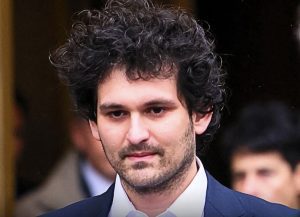
Sam Bankman-Fried’s biography traces a dramatic arc from promising quant trader to crypto titan to convicted felon serving 25 years. The FTX collapse exposed vulnerabilities in centralized crypto platforms, costing customers billions and eroding trust. Yet it also catalyzed improvements in regulation, custody practices, and governance across the sector.
For global audiences—from U.S. lawmakers to users in Asia, the Middle East, and South Africa—the saga underscores crypto’s dual nature: immense potential alongside severe risks. As the industry matures post-FTX, Bankman-Fried’s case serves as a powerful reminder of the need for integrity, robust systems, and accountability. His story warns that brilliance without ethics can lead to spectacular failure, while reinforcing the importance of building responsibly for crypto’s long-term legitimacy.
Sam Bankman-Fried’s story is one of the most remarkable cautionary tales in modern business. In less than a decade, he rose from a quantitative trader to the founder of one of the world’s largest cryptocurrency exchanges, earning widespread recognition as an innovator and philanthropist. Yet the same empire that made him a billionaire collapsed almost overnight after investigators uncovered extensive financial misconduct involving FTX and Alameda Research.
The downfall of FTX exposed serious weaknesses in corporate governance, risk management, transparency, and regulatory oversight within parts of the cryptocurrency industry. Bankman-Fried’s conviction on multiple fraud-related charges and his 25-year federal prison sentence underscored the legal consequences of misusing customer funds and misleading investors. His case became a defining moment that accelerated calls for stronger regulation and greater accountability across the global digital asset market.
Despite the damage caused by the collapse, the broader cryptocurrency industry has continued to evolve. Many exchanges and blockchain companies have responded by improving transparency, strengthening compliance practices, and adopting more rigorous proof-of-reserves and governance standards. The FTX scandal remains a critical lesson that innovation must be accompanied by integrity, responsible leadership, and effective oversight.
Sam Bankman-Fried‘s legacy is therefore deeply divided. He will be remembered both as the entrepreneur who rapidly built one of the fastest-growing crypto exchanges in history and as the central figure in one of the largest financial fraud cases the digital asset industry has ever seen. His story serves as a lasting reminder that trust is the foundation of every financial system—and that once lost, it can bring down even the most successful enterprises.
Editorial Transparency Note
This article is an original, independent editorial piece based on publicly available information from reputable sources including court records, official U.S. Department of Justice statements, credible news outlets (Forbes, Reuters, The New York Times, Bloomberg, AP), and verified biographical details as of mid-2026. All facts regarding Sam Bankman-Fried’s conviction, the FTX collapse, sentencing, and related events are drawn from official legal proceedings and established reporting.
The content aims for factual accuracy, balance, and educational value, presenting the rise, fall, and lessons from one of crypto’s most significant scandals without sensationalism. Opinions or analysis reflect broader industry implications and are clearly distinguished from verified events. No undisclosed conflicts of interest exist in the creation of this piece.
Sources are cited where appropriate for key claims, and readers are encouraged to review primary court documents and official statements for complete context. This biography is intended to inform, not endorse or speculate on ongoing legal matters. Updates may be made as new public information emerges.
Last Updated: July 2026. This note supports transparency standards for AdSense and reader trust.