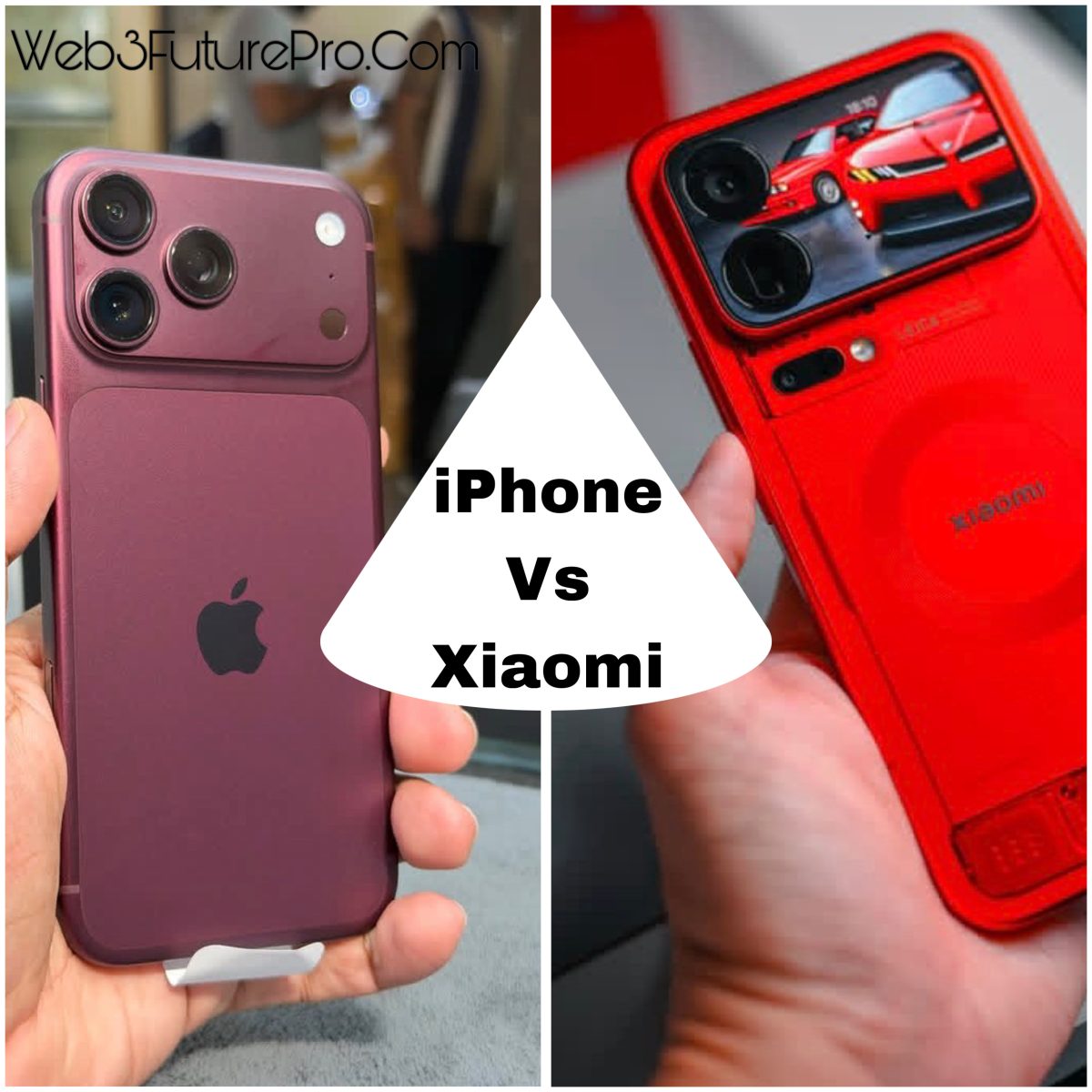
Choosing between the Xiaomi 18 Pro Max vs iPhone 18 Pro Max in 2026 involves more than comparing camera quality, display resolution or processing speed. For Web3 developers, blockchain engineers, AI researchers, software developers and technology entrepreneurs, a flagship smartphone must also support a productive development environment, secure digital transactions, reliable multitasking and access to the tools shaping the next generation of technology.
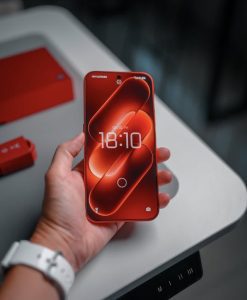
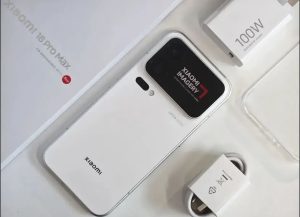
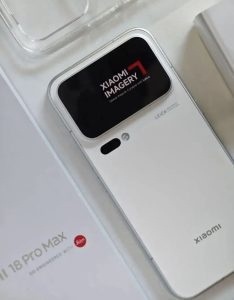
Both smartphones represent premium mobile computing, but they approach the experience differently. Xiaomi’s 18 Pro Max combines Android flexibility with powerful Snapdragon hardware, a large battery, high-speed charging and a customizable rear display. The global model features a 6.9-inch display, Snapdragon 8 Elite Extreme Gen 6, configurations of up to 16GB RAM and 1TB storage, and a 7,050mAh battery. It also introduces AI-powered customization features that make its secondary display more than a conventional notification panel.
Last researched: November 20, 2026. Prices and specifications change; confirm on the official pages.
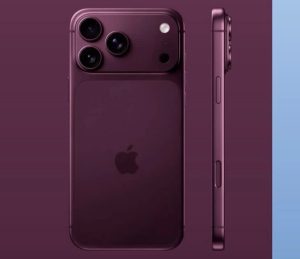
The two phones with almost the same name arrived two months apart. Apple announced the iPhone 18 Pro Max on September 9, 2026 and released it on September 18, with the A20 Pro chip and a starting price of $1,299 for 256GB. Xiaomi announced the Xiaomi 18 Pro Max in late September in China, and launched it globally in Paris on November 17, 2026, at €1,599 for 12GB and 256GB.
On paper, Xiaomi offers more of everything you can measure: a bigger battery, faster charging, a brighter screen and a second display on the back. But our readers are not shopping for a spec sheet. A Web3 user wants a phone that protects keys and runs the wallets and exchanges they use. A blockchain developer wants to test dApps on both major platforms. An AI developer wants to know what runs on-device. And the biggest fact of all may be the least exciting: the Xiaomi 18 Pro Max is not sold in the United States.
This guide compares the two the way a Web3, blockchain or AI reader should Know: what is different, what matters, what does not, and which phone fits which person.
How this guide was researched
We used launch coverage and spec databases from PhoneArena, Notebookcheck, 9to5Google, Gizmochina, Gizchina, Trusted Reviews, Memeburn, Channel Insider and others, plus coverage of Xiaomi’s November 17 global launch. We did not test either phone, run benchmarks or open Apple’s or Xiaomi’s own pages.
Three limits matter. Specs differ between sources, and Xiaomi’s phone differs between China and global markets, with a smaller battery and higher prices abroad. Spec databases can include unverified numbers, and we flag the ones that conflict. We cannot rank phones for security, because neither company’s security architecture was something we could verify beyond general, well-known features, which we label.
Xiaomi 18 Pro Max vs iPhone 18 Pro Max for Web3, Blockchain and AI Developers: The quick verdict
- If you live in the United States, the choice is simple: the Xiaomi 18 Pro Max is not sold there, according to Memeburn, so the iPhone 18 Pro Max is the practical option.
- If you live in Europe or elsewhere Xiaomi sells it, the Xiaomi offers more hardware per euro on some measures, but costs more than its predecessor and ships with a smaller battery than the Chinese version. Compare it against the iPhone’s price in your market, which we could not verify.
- For a Web3 user who holds meaningful value, neither phone should be your vault. Use a hardware wallet, and treat the phone as a hot wallet with limited funds.
- For AI and blockchain developers, the real answer is often “both platforms,” because your users are on both.
- For most people, the best phone for Web3 is the one that gets security updates for years, runs the apps you use and is not the one you sideload from unknown sources.
Specs side by side
Figures are from the sources named at the end. Where they conflict, we say so.
| Feature | iPhone 18 Pro Max | Xiaomi 18 Pro Max (global unless noted) |
|---|---|---|
| Announced and released | Announced Sept 9, 2026; released Sept 18 | Announced Sept 23 or 24 in China; global launch Nov 17, 2026 |
| Display | 6.9-inch LTPO Super Retina XDR OLED, 2868 x 1320, 1 to 120Hz, about 3,000 nits | 6.9-inch LTPO AMOLED, 2624 x 1208, 120Hz, Dolby Vision, up to 4,000 nits |
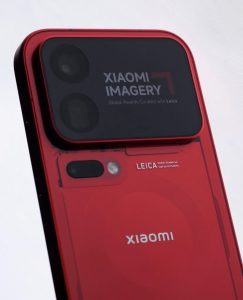
| Rear display | None | A 2.9-inch secondary AMOLED display on the back |
| Chip | Apple A20 Pro (2nm) | Snapdragon 8 Elite Extreme Gen 6 (2nm) |
| RAM | 12GB | 12GB or 16GB, per some sources |
| Storage | Up to 2TB in some listings | 256GB, 512GB or 1TB, per sources; not expandable |
| Rear cameras | Triple, 48MP each (48MP main with variable aperture) | Triple: 200MP main, 200MP periscope, 50MP ultrawide; Leica-developed |
| Battery | 5,391 mAh (nano-SIM) or 5,567 mAh (eSIM-only, such as the U.S. model) | About 7,000 mAh in the global version (one outlet says 7,050), versus 8,500 mAh in China |
| Wired charging | 60W | 100W |
| Wireless charging | 25W (Qi2 and MagSafe) | 50W |
| Software | iOS 27 | Android 17 with HyperOS 4 |
| Weight | About 249g | About 235g (China version) |
| Water and dust | IP68 | IP68 (some sources add IP66 and IP69) |
| Starting price | $1,299 (256GB) in the U.S.; £1,299 in the UK | €1,599 (256GB) and €1,799 (512GB) in Europe; CNY 6,999 (about $1,045) in China |
| Availability | Global, including the U.S. | Launched in Europe and other markets; not sold in the U.S. |
| Extras reported | Privacy display feature; a customizable AI button; three months of Google AI Pro and 5TB of cloud storage with the global launch; international warranty and free screen and battery replacement, per one outlet |
PhoneArena’s page lists a $1,599 manufacturer price for the base Xiaomi model, which matches the European euro price numerically but is not a verified U.S. price. Do not treat it as one.
What matters for Web3 users: security and key custody
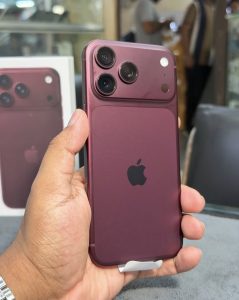
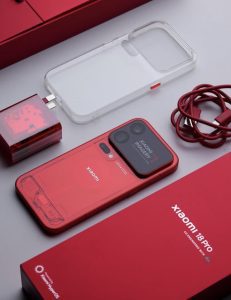
This section is general guidance and not a test of either phone.
A phone is a hot wallet. Any private key on a connected device is exposed to malware, phishing and device theft. Serious holders keep long-term funds on a hardware wallet and use the phone for small balances. Our crypto wallet security guide explains the main attacks, including approval and signature phishing and address poisoning, which no phone can stop on its own.
Hardware security. Both phones have dedicated secure hardware for biometrics and key storage. Apple calls its version the Secure Enclave, and Android phones generally use a trusted execution environment and, on some devices, a separate secure chip. We did not verify the exact secure hardware on the Xiaomi, so check Xiaomi’s documentation if this matters to you. The existence of a secure chip does not protect you from approving a malicious transaction yourself.
Built-in protections for high-risk users. Apple offers Lockdown Mode, which restricts features to reduce attack surface, and Android has introduced an Advanced Protection mode in recent versions. We did not verify whether the Xiaomi’s HyperOS 4 includes it, so check before relying on it.
A useful extra: privacy display. Xiaomi’s launch coverage says both new Xiaomi phones include a privacy display feature, which limits side-angle viewing. For anyone who reads a seed phrase or approves transactions in public, shoulder-surfing is a real risk, but a seed phrase should not be displayed on a phone at all.
The habits matter more than the phone:
• Never photograph, screenshot or type a seed phrase on any phone.
• Install wallets only from official stores and verify the publisher.
• Do not install apps from links in messages or social media.
• Keep the operating system updated.
• Use a separate, low-balance wallet for experiments.
Apps, app stores and wallet availability
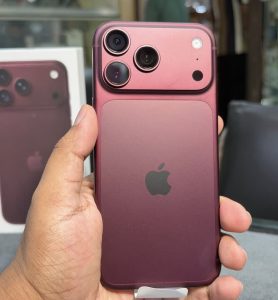
A phone is only useful if your wallets and exchanges run on it.
- • iPhone. Apple’s App Store is the main source of apps. Some crypto apps are unavailable in some countries’ stores, and policy changes can affect what is allowed. In the EU, Apple has allowed alternative app marketplaces under European law, which is general knowledge we did not re-verify.
- • Xiaomi. The global version runs HyperOS 4 on Android 17, and the launch bundle includes Google services such as Google AI Pro and Google cloud storage, which suggests Google Play is present. Android also allows installing apps from outside the store, which gives flexibility, and risk: fake wallet apps and malicious APKs are a leading route to stolen funds.
- • Check your own wallet list. Before buying, confirm that the wallets, exchanges and authenticator apps you use are available for your phone, in your country, from an official store.
- • Regional differences matter. Xiaomi’s Chinese version has a different software setup. Do not buy a Chinese-market phone if you need Google services and a global warranty.
Software updates and support
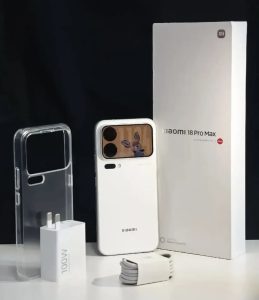
For a device that holds keys, years of security updates matter more than camera megapixels. Our research did not find verified update-length commitments for either phone, and we do not state them. Check Apple’s and Xiaomi’s official support pages for how many years of security updates each phone receives, and how quickly patches arrive in your country. According to WinFuture, Xiaomi was rolling HyperOS 4 out to older devices in waves through the end of 2026, which tells you the company is updating its range, not how long this phone will be supported.
For AI developers and on-device AI
Both phones are built for on-device AI. Apple’s A20 Pro and Qualcomm’s Snapdragon 8 Elite Extreme Gen 6 are both 2nm chips with dedicated AI hardware. We found no independent, verified benchmarks of on-device language-model performance on either phone, so we make no speed claims.
What matters for developers:
• Memory limits what you can run. 12GB is typical for both, and one source says the Xiaomi comes in 16GB variants. A small language model quantized to a few bits per weight can fit in several gigabytes, but the operating system and apps need memory too. Test the model you plan to ship.
• Tooling differs. On iOS, developers use Apple’s frameworks, and on Android, a mix of vendor and open frameworks. We did not verify the current tooling of either.
• Vendor AI bundles. Xiaomi’s global launch includes three months of Google AI Pro, and Xiaomi says its AI button can be customized. These are consumer features, not developer tools.
• Real devices beat spec sheets. On-device performance depends on thermals, memory pressure and the runtime. Treat any “AI score” with caution.
For blockchain developers: testing and tooling
If you build wallets, dApps or mobile clients, the question is not which phone you prefer but which your users have.
• Test on both platforms. Mobile wallets, in-app browsers and WalletConnect-style connections behave differently on iOS and Android.
• You do not need flagships to test. A mid-range Android and an older iPhone cover most cases. Buying a $1,300 to $1,800 phone for testing is rarely necessary.
• Use real devices for signing flows, deep links and biometrics. Emulators cannot fully reproduce them.
• Test on the regional variants your users hold. App availability and permissions can differ by region.
Battery, charging and day-to-day use
The Xiaomi’s advantage is large on paper: roughly 7,000 mAh in the global version, or 8,500 mAh in China, against 5,391 or 5,567 mAh for the iPhone. Memeburn describes the Chinese version’s battery as about 58% bigger than the iPhone’s. Xiaomi also charges faster, at 100W wired and 50W wireless, against 60W and 25W. Notebookcheck’s headline on the global launch notes smaller batteries and higher prices than in China, which matters if you read China-based reviews.
For Web3 use, battery matters if you trade actively, keep price alerts and run chat and wallet apps all day. It is rarely the deciding factor, because capacity does not tell you real endurance, which depends on software and use. We did not test battery life.
Price, availability and warranty
| iPhone 18 Pro Max | Xiaomi 18 Pro Max | |
|---|---|---|
| U.S. | $1,299 (256GB), per Trusted Reviews and Memeburn | Not sold, per Memeburn |
| UK | £1,299 (256GB), per Trusted Reviews | £1,599 for the 512GB model, per Tech Advisor |
| Europe | Not verified | €1,599 (256GB) and €1,799 (512GB), per Gizchina and Channel Insider |
| China | About CNY 10,999 (about $1,642), per Memeburn | CNY 6,999 (about $1,045) for 12GB and 256GB |
A few observations:
- The Xiaomi’s price gap exists mainly in China. Memeburn’s headline says it undercuts the iPhone by $254, but only until it leaves China. In Europe, the base Pro Max costs more than the iPhone’s U.S. price in raw euros, though currency and taxes differ.
- Prices rose. Gizchina notes the new Pro costs about 40% more than the Xiaomi 17 Pro did in Europe, and other outlets note memory costs and year-over-year price hikes across flagships.
- Warranty and service. One outlet reports Xiaomi’s global launch includes an international warranty and free screen and battery replacement services. We did not verify the terms or whether they apply in your country.
- Buy from authorized sellers. Grey-market imports may lack warranty and carrier support.
If you are in a market where one of the phones is not officially sold, the practical cost includes warranty, repair and software support, not just the sticker price.
Which phone for which person
This table is our editorial judgment, built from the specs and caveats above. It is not a test result, and your priorities may differ.
| You are… | Our suggestion | Why |
|---|---|---|
| A Web3 user in the United States | iPhone 18 Pro Max, or a cheaper iPhone | The Xiaomi 18 Pro Max is not sold in the U.S., per Memeburn. Spend the difference on a hardware wallet. |
| A Web3 user in Europe who wants the most hardware | Xiaomi 18 Pro Max, if the price and warranty suit you | Larger battery, faster charging, a brighter screen and a privacy display, but at €1,599 and with a smaller battery than the Chinese version |
| A Web3 user who values the simplest, most consistent app experience | iPhone 18 Pro Max | One vendor controls hardware, software and the store, which reduces some fake-app risk, though it does not eliminate it |
| A power trader who is on the phone all day | Xiaomi 18 Pro Max if you can buy it officially | Battery and charging speed are its clearest advantages, though real endurance is untested |
| An NFT collector or DeFi user with significant holdings | Either phone, plus a hardware wallet | The phone is not the safe. Approval hygiene matters more than the device. |
| A Web3 or blockchain developer | Test on both platforms, but do not buy both flagships | A mid-range Android plus an older iPhone covers most testing |
| An AI developer building on-device features | Whichever platform your users are on, tested on real devices | We found no verified on-device benchmarks, so test your own model |
| A privacy-focused user | Neither automatically | Look at update policies, lockdown or advanced-protection modes and your own habits. The Xiaomi’s privacy display helps in public. |
| Someone in a market where Xiaomi is not officially sold | The iPhone, or a phone with local service | Warranty, repair and software support matter more than specs |
| A budget-conscious reader | Neither | Both cost $1,300 or more. A mid-range phone with long update support plus a hardware wallet is a better security buy. |
Do not buy a flagship phone for security alone
This point deserves its own section because it is the most useful advice in the article.
Neither the iPhone 18 Pro Max nor the Xiaomi 18 Pro Max protects you from the main ways people lose crypto. Our guide on wallet security describes them: malicious approvals, signature phishing, address poisoning, fake apps, seed phrases handed to impostors and compromised developer machines. None of those is stopped by a faster chip or a brighter screen.
• A $1,300 to $1,800 phone does not make a hot wallet safe. If you hold meaningful value, a hardware wallet, kept separate from your phone, is the better first purchase.
• A cheaper phone with good, long security updates can be safer than a flagship that you stop updating.
• The weakest link is usually behavior, such as installing an unofficial app or signing something you cannot read.
Buy a flagship phone because you want the camera, the display, the battery or the ecosystem. Do not buy it because you think it makes your crypto secure.
Myths and facts
| Claim you may see | What the evidence says |
|---|---|
| “Xiaomi is much cheaper than the iPhone.” | In China it is about $254 cheaper, per Memeburn. In Europe the base Pro Max costs €1,599, and it is not sold in the U.S. |
| “The Xiaomi has an 8,500 mAh battery.” | That is the Chinese version. Global coverage reports a smaller battery of about 7,000 mAh. |
| “The iPhone is automatically safer for crypto.” | We did not verify either phone’s security in tests. Behavior and updates matter more than the brand. |
| “Android is unsafe for wallets because you can sideload.” | Sideloading is a risk if you install unofficial apps. Using official stores and verifying publishers reduces it. |
| “A better chip means a safer wallet.” | Chips affect speed and AI features, not whether you approve a malicious transaction. |
| “You need a flagship to test dApps.” | A mid-range Android and an older iPhone cover most testing. |
| “On-device AI performance is proven on these phones.” | We found no independent, verified benchmarks of on-device language models on either phone. |
| “Spec-sheet winners are real-world winners.” | Battery endurance, thermals and software behavior need hands-on testing. |
Frequently asked questions
Is the Xiaomi 18 Pro Max better than the iPhone 18 Pro Max?
On hardware measures such as battery, charging speed, screen brightness and camera resolution, the Xiaomi leads on paper, according to spec comparisons. The iPhone leads on availability in the U.S. and on ecosystem consistency. Which is “better” depends on where you live and what you value.
Is the Xiaomi 18 Pro Max sold in the United States?
According to Memeburn, no. Check Xiaomi’s official store for your country.
How much is the Xiaomi 18 Pro Max?
In Europe, €1,599 for 12GB and 256GB and €1,799 for 512GB, per Gizchina and Channel Insider. In China, CNY 6,999 (about $1,045). In the UK, £1,599 for the 512GB model, per Tech Advisor.
How much is the iPhone 18 Pro Max?
$1,299 for 256GB in the U.S. and £1,299 in the UK, per Trusted Reviews. We did not verify European prices.
Which phone is better for a crypto wallet?
Neither should be your main vault. Use a hardware wallet for significant funds, and keep only spending money in a phone wallet. Choose the phone that gets the longest security updates and runs your apps.
Is Android or iPhone safer for crypto?
We did not test either. Both have secure hardware and both are attacked through phishing, fake apps and bad approvals. Your habits matter more than the platform.
Does the Xiaomi 18 Pro Max have a bigger battery?
Yes. The Chinese version has 8,500 mAh, and the global version about 7,000 mAh, against 5,391 or 5,567 mAh for the iPhone.
Which phone is better for AI developers?
Both have 2nm chips with AI hardware. We found no verified on-device benchmarks, so test your model on the devices your users have.
Do I need both phones to test a dApp?
You need to test on both platforms, not both flagships. A mid-range Android and an older iPhone cover most cases.
Should I buy a Chinese-market Xiaomi?
We would not, if you need Google services, a global warranty and reliable updates. Buy the global version from an authorized seller.
The Xiaomi 18 Pro Max and the iPhone 18 Pro Max are two excellent, expensive phones, and the interesting thing for a Web3 or AI reader is how little of the choice depends on the spec sheet. Xiaomi offers more battery, faster charging and a brighter screen, but costs €1,599 in Europe with a smaller battery than the Chinese version, and is not sold in the United States. Apple offers a consistent ecosystem and global availability at $1,299, with less raw hardware.
For crypto holders, the safe answer is the same either way: keep serious funds on a hardware wallet, install apps only from official sources, update your phone and never approve what you cannot read. For developers, test on both platforms with real devices, not flagships. And for everyone, check the official pages for current prices, battery sizes and update policies before you buy, because this launch is days old and the details are still settling. This guide is general information, not security or financial advice.
Sources
URLs below were returned during our November 20, 2026 research. Spec databases and launch coverage are secondary and sometimes conflict; verify on the official Apple and Xiaomi pages before you publish or buy.
8. Xiaomi 18 Pro and Pro Max available starting today. 9to5Google (HyperOS 4 on Android 17; Google AI Pro and 5TB cloud bundle).
12. Xiaomi 18 Pro Max vs Apple iPhone 18 Pro Max. Nanoreview (spec database; ratings not used).
13. Compare Apple iPhone 18 Pro Max vs Xiaomi 18 Pro Max. Mobolist (spec database; storage options).