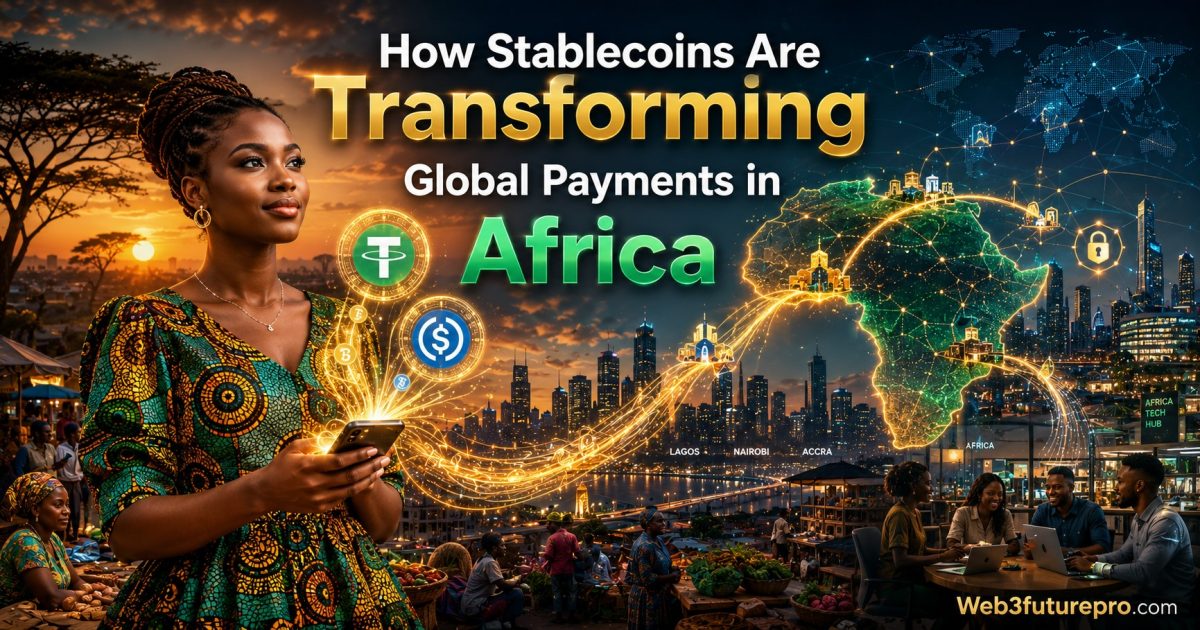
In 2026, the real story of stablecoins in Africa isn’t just about price stability—it’s about programmability. Small and Medium Enterprises (SMEs) across the continent are now using smart-contract-enabled stablecoins to automate supply chain payments, escrow services, and trade finance. This 2026 update on African blockchain adoption reveals how stablecoins are solving the “liquidity trap” for businesses that previously struggled to access foreign exchange.
By using on-chain assets like ZARU (the South African Rand stablecoin) and the digital dollar, African entrepreneurs are finally participating in global trade on a level playing field. We take a technical look at the 2026 RWA (Real World Asset) integration within the African ecosystem. With over $22 billion in stablecoin transactions recorded in Nigeria alone over the past year, the velocity of on-chain capital is staggering.
This report details the convergence of stablecoins with Decentralized Physical Infrastructure (DePIN) projects, where solar power and internet connectivity are being paid for in real-time via micro-stablecoin transactions. Whether you’re a developer building the next Pan-African payment gateway or an investor tracking the $200 billion on-chain economy, this is the definitive map of Africa’s digital financial future.
In a world where sending money across borders can still take days and cost 6–10% in fees, a quiet revolution is unfolding. Stablecoins — digital dollars pegged to stable assets like the US dollar — are reshaping how value moves across Africa faster than many regulators and traditional banks can keep up.
In 2026, stablecoins have evolved from speculative crypto tools into practical financial infrastructure. Sub-Saharan Africa alone recorded over $200 billion in stablecoin-linked value movement in the past year, representing explosive year-on-year growth. For millions of individuals, businesses, and governments, stablecoins now serve as a lifeline for remittances, cross-border trade, treasury management, and everyday payments.
This comprehensive guide explores how stablecoins are transforming payments across the continent, the key drivers behind their rapid adoption, the leading players and use cases, the measurable benefits, persistent challenges, regulatory developments, and what the future holds for this transformative technology.
Understanding Stablecoins: The Digital Dollar Revolution
Stablecoins are cryptocurrencies designed to maintain a stable value, most commonly pegged 1:1 to the US dollar. The two dominant players in Africa are Tether (USDT) and USD Coin (USDC), though others like cUSD and newer entrants are gaining traction.
Unlike volatile cryptocurrencies such as Bitcoin or Ethereum, stablecoins prioritize stability, usability, and predictability. They combine the speed and borderless nature of blockchain with the reliability of traditional fiat currencies. This makes them uniquely suited for regions where local currencies face inflation, capital controls, or limited access to foreign exchange.
Why Africa Has Become a Global Leader in Stablecoin Adoption
Africa’s embrace of stablecoins stems from structural economic realities:
- High Remittance Costs and Delays — Traditional remittance channels remain expensive and slow. Stablecoins cut fees dramatically and enable near-instant settlement.
- Currency Volatility and Inflation — In environments with volatile local currencies, stablecoins serve as a practical store of value and medium of exchange.
- Limited Banking Access — Millions remain unbanked or underbanked. Mobile money combined with stablecoins creates powerful new rails.
- Cross-Border Trade Needs — Businesses importing goods need reliable access to USD without bureaucratic hurdles.
- Youthful, Tech-Savvy Population — Africa’s young demographic is highly comfortable with mobile technology and digital payments.
Recent data shows Africa leading global stablecoin ownership rates in several key markets, with adoption rates significantly higher than in many developed economies.
The Scale of Transformation: Key Statistics in 2026
- Sub-Saharan Africa moved approximately $205 billion in stablecoin-linked value in the last measured period, up 52% year-on-year.
- Nigeria and South Africa lead demand, with extremely high ownership and intent to increase holdings.
- Stablecoins now account for a significant portion of on-chain activity across the continent.
- Global stablecoin transaction volumes have surpassed trillions annually, with Africa contributing a disproportionately influential share relative to traditional GDP metrics.
These numbers reflect a fundamental shift: stablecoins are no longer experimental — they are becoming core infrastructure for payments and commerce.
Major Use Cases Driving Adoption
1. Remittances and Person-to-Person Transfers Stablecoins have dramatically improved the remittance experience. What once took days and cost 7%+ now settles in minutes for pennies. Diaspora communities are increasingly sending stablecoins directly to mobile wallets.
2. Business and B2B Cross-Border Payments Companies use stablecoins for importing goods, paying suppliers, and managing treasury. This reduces FX risk and eliminates multi-day settlement delays associated with correspondent banking.
3. Merchant Payments and Everyday Commerce More merchants accept stablecoins directly or through fintech bridges. Integration with mobile money platforms creates seamless on-ramps and off-ramps.
4. Treasury Management and Hedging Businesses hold stablecoins to protect against local currency devaluation and ensure liquidity for international obligations.
5. Humanitarian Aid and NGO Disbursements Aid organizations use stablecoins for faster, more transparent, and lower-cost distribution of funds, reducing leakage and improving tracking.
6. Payroll for Remote and Gig Workers Freelancers and remote workers increasingly request payment in stablecoins for reliability and global usability.
Leading Stablecoins and Platforms Powering Africa’s Transformation
- USDT (Tether): The most widely held and used stablecoin across the continent due to deep liquidity.
- USDC (Circle): Gaining significant traction, especially among institutions and businesses seeking regulatory compliance and transparency.
- Fintech Enablers: Yellow Card, Chipper Cash, Bundle, and others provide critical on-ramps and off-ramps connecting stablecoins with mobile money and local banking systems.
- Partnerships: Collaborations like Yellow Card with Mastercard are accelerating integration into mainstream payment rails.
Tangible Benefits Transforming Lives and Businesses
- Speed: Settlement in seconds versus days.
- Cost Savings: Fees often 80–90% lower than traditional channels.
- Accessibility: Anyone with a smartphone and internet can participate.
- Transparency: On-chain transactions provide auditable trails.
- Financial Inclusion: New pathways for the unbanked and underbanked.
- Economic Resilience: Protection against local currency instability.
Challenges and Risks That Remain
While the benefits are substantial, stablecoins are not without risks:
- Regulatory Uncertainty: Many countries are still developing frameworks.
- Dollarization Concerns: Heavy reliance on USD-pegged assets raises questions about monetary sovereignty.
- Infrastructure Gaps: On-ramp/off-ramp liquidity can be limited in smaller markets.
- Volatility in Local Conversions: Converting to local currency can still involve costs and slippage.
- Security and Custody Risks: Scams, wallet security, and counterparty risks persist.
- Consumer Protection: Education and safeguards are needed as adoption grows.
The Evolving Regulatory Landscape
African regulators are taking varied approaches — from progressive sandbox frameworks to cautious monitoring. The continent’s leadership in adoption is forcing faster policy development. Key themes include consumer protection, anti-money laundering compliance, and integration with existing financial systems.
Forward-thinking regulators view stablecoins as tools for modernization rather than threats, provided proper guardrails are in place.
The Future Outlook: 2026 and Beyond
2026 marks a pivotal year where stablecoins transition from alternative rails to mainstream infrastructure components. Partnerships between fintechs, traditional banks, payment giants like Mastercard, and blockchain networks will deepen integration.
Expect to see:
- More seamless mobile money ↔ stablecoin interoperability.
- Increased institutional and corporate adoption for treasury and trade.
- Growth in stablecoin-backed lending and savings products.
- Continued regulatory maturation across key markets.
Stablecoins are not replacing local currencies or traditional systems entirely. Instead, they are complementing and upgrading them — creating hybrid financial ecosystems that are faster, cheaper, and more inclusive.
How Individuals and Businesses Can Participate Today
For Individuals:
- Choose reputable wallets and exchanges.
- Start small with remittances or savings.
- Prioritize education on security best practices.
For Businesses:
- Explore stablecoin treasury tools.
- Integrate payment options for suppliers and customers.
- Partner with compliant fintech providers.
For Policymakers:
- Balance innovation with stability and inclusion.
- Foster public-private collaboration.
- Invest in digital infrastructure and financial literacy.
A New Chapter in African Finance
Stablecoins are doing more than transforming payments — they are rewriting the rules of financial access and economic participation across Africa. By solving real pain points around cost, speed, and access, they are empowering millions and unlocking new opportunities for growth and inclusion.
The transformation is already well underway. The question is no longer if stablecoins will reshape global payments in Africa, but how quickly and how inclusively this shift will unfold.
For anyone participating in Africa’s economy — whether sending remittances, running a business, or shaping policy — understanding and thoughtfully engaging with stablecoins is no longer optional. It is becoming essential.
The future of money in Africa is digital, borderless, and stable. And it is arriving faster than many expected.