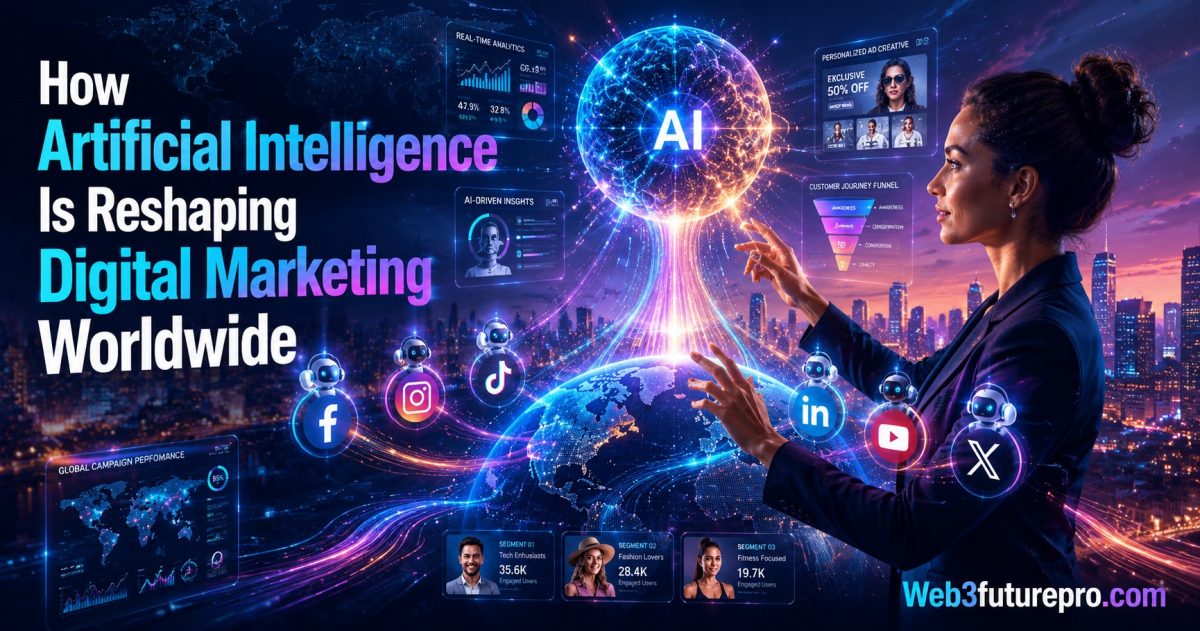
The digital marketing landscape has reached a pivotal inflection point, characterized not by incremental change, but by a total structural transformation. The integration of Artificial Intelligence is no longer merely a competitive advantage; it is the fundamental prerequisite for relevance in a hyper-connected, global marketplace. From the granular precision of predictive behavioral analytics to the real-time generative capabilities of LLMs, AI is deconstructing and rebuilding the traditional marketing funnel.
But how is artificial intelligence reshaping digital marketing worldwide, and what does this mean for the future of brand-consumer relationships? In this in-depth analysis, we examine the rapid convergence of machine learning and omnichannel marketing, exploring how leading enterprises are deploying autonomous systems to capture market share, optimize conversion rates, and anticipate consumer needs before they are even articulated. Whether you are an CMO or a digital strategist, understanding these shifts is essential to navigating the new reality of the 2026 AI-driven economy.
CHECK: How Artificial Intelligence Is Transforming the Global Economy in 2026
Artificial intelligence is no longer a futuristic add-on in digital marketing — it has become the core operating system. In 2026, AI doesn’t just assist marketers; it anticipates customer needs, creates personalized experiences at scale, optimizes campaigns in real time, and fundamentally changes how brands connect with audiences across the globe.
From hyper-personalized ads that feel almost psychic to AI-generated content that rivals human creativity, and from predictive analytics that forecast consumer behavior to autonomous agents managing entire campaigns, artificial intelligence is delivering unprecedented efficiency, creativity, and return on investment. Global marketing budgets are shifting rapidly toward AI-powered tools, with companies reporting 20–40% improvements in key metrics such as conversion rates, customer acquisition costs, and engagement.
This comprehensive guide explores exactly how AI is reshaping digital marketing in 2026, the most impactful applications, real-world results, emerging tools and platforms, regional differences, ethical challenges, and practical strategies for marketers and businesses to thrive in this new era.
The Scale of the AI Marketing Transformation
The numbers tell a compelling story. In 2026:
- Over 85% of global enterprises have integrated AI into at least some marketing functions.
- AI-driven personalization generates 15–25% higher engagement rates on average.
- Programmatic advertising powered by machine learning now accounts for the vast majority of digital ad spend.
- Generative AI tools are used daily by millions of marketers for content creation, strategy, and customer service.
- Predictive analytics models achieve accuracy rates that were unimaginable just five years ago.
What makes this shift different from previous technology waves is speed and scale. AI allows even small businesses to compete with enterprise giants by delivering enterprise-level personalization and optimization at a fraction of the traditional cost.
How Artificial Intelligence Is Reshaping Digital Marketing Worldwide in 2026
1. Hyper-Personalization: From Segments to Individuals
The era of broad audience targeting is ending. AI now enables true one-to-one marketing at massive scale.
How it works:
- Real-time analysis of behavior, preferences, location, past purchases, and even emotional signals.
- Dynamic content adjustment across websites, emails, ads, and apps.
- Predictive journey mapping that anticipates the next best action for each user.
Real-world impact:
- E-commerce conversion rates have risen significantly for brands using AI recommendation engines.
- Email open and click-through rates improve dramatically with AI-optimized subject lines and send times.
- Retailers deliver personalized offers based on weather, local events, or individual browsing patterns.
Global brands in fashion, travel, and consumer electronics are leading this trend, creating experiences that feel bespoke even for millions of customers.
2. Generative AI: The New Creative Powerhouse
Generative AI has transformed content creation from a bottleneck into a strategic advantage.
Key Applications in 2026:
- Automated ad copy, social media posts, blog articles, and video scripts.
- Personalized video and image generation at scale.
- A/B testing variations created and evaluated automatically.
- Multilingual content adaptation for global campaigns.
Marketers are no longer limited by team size or budget. A single strategist can now oversee campaigns that previously required large creative teams. However, the most successful brands use generative AI as a collaborator — human judgment still guides strategy, tone, and brand voice.
3. Predictive Analytics and Customer Intelligence
AI has turned marketing from reactive to predictive.
Advanced Capabilities:
- Churn prediction with high accuracy, allowing proactive retention campaigns.
- Lifetime value forecasting to optimize acquisition spend.
- Sentiment analysis across social media, reviews, and support tickets.
- Demand forecasting for inventory and campaign planning.
Companies using these tools report significantly better ROI on marketing spend and stronger customer relationships through timely, relevant interventions.
4. Programmatic Advertising 2.0
Programmatic advertising has evolved into a highly intelligent, autonomous system.
2026 Features:
- Real-time bidding optimized by deep learning models.
- Cross-device and cross-platform journey tracking.
- Creative optimization that tests thousands of variations simultaneously.
- Fraud detection that eliminates invalid traffic more effectively.
The result is higher efficiency, lower wasted spend, and better audience targeting even in cookieless environments.
5. Conversational Marketing and AI Agents
Chatbots have evolved into sophisticated AI agents capable of complex conversations, personalized recommendations, and even completing transactions.
Impact Areas:
- 24/7 customer support with human-like understanding.
- Conversational commerce directly inside messaging apps.
- Voice search and voice commerce optimization.
- Personalized sales assistants that understand context and history.
This shift has dramatically improved response times and customer satisfaction scores while reducing support costs.
6. SEO and Search in the AI Era
Search engines themselves are now AI-powered, forcing marketers to adapt.
Key Changes:
- Focus on topical authority and entity-based content rather than keyword stuffing.
- Optimization for AI-generated answers and featured snippets.
- Voice and visual search becoming more prominent.
- Zero-click searches requiring brands to appear in AI summaries.
Successful SEO strategies in 2026 combine traditional best practices with AI-assisted content planning and performance prediction.
7. Creative and Visual Marketing Revolution
AI tools now generate high-quality images, videos, 3D models, and interactive experiences in minutes.
Applications:
- Personalized product visualizations.
- Virtual try-on experiences in fashion and beauty.
- Automated video editing and highlight reels.
- Synthetic influencers and brand ambassadors.
This dramatically lowers production costs while increasing customization possibilities.
Regional Differences in AI Marketing Adoption
North America and Europe: Lead in enterprise adoption, compliance-focused AI, and sophisticated personalization. Strong emphasis on privacy regulations (GDPR, CCPA).
Asia-Pacific: Fastest growth, especially in China, India, and Southeast Asia. Mobile-first AI experiences and super-app integration dominate.
Latin America and Africa: High growth in conversational AI and affordable tools that help smaller businesses compete. Mobile money and local language models are key enablers.
Middle East: Significant investment in sovereign AI and luxury personalized marketing.
Major Challenges and Ethical Considerations
Despite the benefits, AI in marketing raises important issues:
- Privacy and Data Ethics — Balancing personalization with consumer rights.
- Bias and Fairness — AI models can perpetuate stereotypes if not carefully managed.
- Transparency — Customers want to know when they’re interacting with AI.
- Job Displacement — Automation of routine tasks requires workforce reskilling.
- Over-Reliance — Human creativity and strategic thinking remain irreplaceable.
Leading brands address these through clear AI governance policies, regular audits, and transparent communication.
How Marketers and Businesses Should Prepare for 2026 and Beyond
Immediate Actions:
- Audit current marketing technology stack for AI readiness.
- Invest in quality data infrastructure and governance.
- Train teams on prompt engineering and AI collaboration.
- Start with pilot projects in personalization or content creation.
- Develop ethical AI guidelines specific to your brand.
Longer-Term Strategy:
- Build first-party data relationships with customers.
- Experiment with autonomous AI agents for campaign management.
- Focus on human-AI collaboration rather than full replacement.
- Measure success beyond traditional metrics to include customer trust and experience quality.
The Future of Marketing: Human + AI Symbiosis
In 2026 and the years ahead, the most successful marketers will be those who master working alongside AI. Technology will handle scale, speed, and optimization, while humans provide creativity, emotional intelligence, strategic vision, and ethical oversight.
AI is not replacing marketers — it is amplifying them. Those who embrace this partnership will deliver more relevant, effective, and human-centered marketing than ever before.
The digital marketing landscape has been permanently altered. Brands that treat AI as a core strategic capability rather than a tactical tool will lead their industries. The question is no longer whether AI will reshape marketing, but how quickly and creatively organizations will adapt.
The future belongs to marketers who combine artificial intelligence with authentic human insight.