Laptop prices in 2026 are rising, creating a difficult buying decision for students, remote workers, business owners, gamers, and technology professionals. With memory and storage costs increasing, manufacturers facing supply constraints, and demand for AI infrastructure competing for semiconductor resources, purchasing a new laptop has become more expensive in several markets.
As Black Friday approaches, many consumers are asking an important question: should you buy a laptop now before prices increase further, or wait for seasonal discounts in the hope of getting a better deal?
One of the biggest factors behind the rising cost of laptops is the global shortage of memory components. Modern computers depend on DRAM for system memory and NAND flash for SSD storage. Both are important parts of laptop manufacturing, but demand from AI data centres and other high-performance computing applications is putting pressure on available supply. When manufacturers pay more for these components, some of those additional costs eventually reach consumers through higher retail prices, reduced specifications, or fewer affordable configurations.
Here is the number that explains this autumn’s laptop market. In the third quarter of 2026, worldwide PC shipments fell by more than a fifth compared with a year earlier: down 22.4% to 55.4 million units according to Gartner, and down 20.1% to 62.7 million according to IDC. That is the lowest level since early 2023. It did not happen because people stopped needing computers. Gartner’s analyst said it was driven by higher prices, by vendors rationing scarce components and by a shift toward more expensive configurations, and that DRAM costs surged five times year over year in the second quarter.
In plain terms: the memory chips inside your next laptop have become far more expensive, and the cost is showing up in what you pay and in what you get for the money. Black Friday falls on November 27, 2026, with Cyber Monday on November 30. Should you buy before then, wait for the deals, or wait longer? This guide lays out the evidence, the arguments on both sides, a simple way to decide and a checklist for telling a real deal from a fake one.
How this guide was researched
We used the analyst releases and coverage for the third quarter of 2026 (Gartner’s October 12 release and IDC’s October 8 preliminary data, as reported by IT Pro, TBreak and others), Tom’s Hardware’s report on a laptop maker’s price increases, and our own earlier research on specific laptops. Black Friday deals have not been announced yet, so we have no verified Black Friday prices and we do not pretend to.
Three limits matter. First, most figures here are U.S. or global, and local prices differ. Second, several statistics reached us through secondary sites that relay analyst reports, and we label them. Third, nobody can forecast memory prices with confidence, and the experts we found disagree, which we explain below.
What is happening: the memory squeeze in numbers

The shipment drop. Gartner’s preliminary results, published October 12, 2026, put Q3 PC shipments at 55.4 million units, down 22.4% from 71.3 million a year earlier and level with early 2023. IDC’s preliminary data, dated October 8, put them at 62.7 million, down 20.1% from 78.5 million and down 9.1% from the second quarter, which is notable because the third quarter normally gets a back-to-school lift. The two firms count differently, so the totals are not comparable, but they agree on direction and cause.
The cause. Gartner said “the impact of higher memory and storage costs is now fully reflected in PC pricing” and that DRAM costs surged five times year over year in the second quarter, with vendors passing those costs to customers. According to secondary coverage, the AI data-center boom is absorbing a large share of memory chip production, and Omdia estimated that memory’s share of total PC component cost rose from about 15% to nearly 40%. We saw the Omdia figure only through a relay, so treat it as indicative.
A retail-level example. On September 25, 2026, Tom’s Hardware reported that the maker of XMG and Schenker laptops said the price of DDR5 laptop memory modules had risen about sixfold since July 2025, and announced price increases of roughly $113 to $228 on most gaming models and $342 on one professional laptop. The company said it expects tight supply through 2027 and beyond.
Who has been hit hardest. Gartner reported that all six leading PC makers shipped fewer PCs. HP fell 30.9%, Dell fell 25.4% to about 7.6 million units, Lenovo fell 22.4% in line with the market, and Apple saw the smallest decline at 7.1%. Gartner linked HP’s drop to its exposure to price-sensitive buyers.
Stockpiling distorted the picture. IDC said vendors and retailers bought extra inventory in the first half of the year to get ahead of expected price rises, which inflated early-year shipments and left the third quarter “starved of demand.” That matters for Black Friday, and we return to it below.
The earlier forecast. In February, according to a secondary summary, Gartner predicted that combined DRAM and SSD prices could climb about 130% by the end of 2026, lifting average PC prices about 17% and cutting full-year shipments by roughly 10%. The third-quarter decline is double that annual forecast, as one outlet noted.
What it means in the store: higher prices, fewer cheap models, quiet downgrades
The shipment numbers translate into three things you will see when you shop.
1. Higher sticker prices. A reseller’s summary of the market says Dell, Lenovo, Acer and ASUS have raised laptop prices by roughly 15% to 30%, which can push a mid-range model that used to cost around $900 past $1,200. That is a secondary source and a rough range, not a measured average, but it matches Gartner’s statement that costs have been passed through.
2. Fewer cheap models. Gartner said the shortage raised average selling prices and reduced the availability of lower-cost devices, with a shift toward higher-priced configurations. Cheap laptops are not disappearing, but the cheapest ones are harder to find.
3. Quiet downgrades. Tom’s Hardware’s price tracker coverage, relayed by a secondary site, says some manufacturers have delayed launches or redesigned upcoming models around smaller memory configurations to keep sticker prices from climbing further. In practice that means an “8GB” model where last year’s equivalent had 16GB, a smaller SSD, or a cheaper panel. We cover how to spot this below.
There is also a hidden cost for people who planned to upgrade later. Most thin laptops now solder their memory, so you cannot add it afterward, and replacement memory modules have become expensive. The sensible move is to buy the memory you need on day one.
Will prices fall? Two camps, one honest answer
The most useful thing we found is that credible industry voices disagree, and the disagreement is the real reason the decision is hard.
Camp one: relief is coming, but not soon. ASUS CEO Jason Chen predicted that component prices will begin reversing in the second half of 2027, argued that memory makers’ warnings about long-term high prices partly reflect a wish to keep margins high, said Chinese memory makers raising output would help, and said price increases are reportedly cooling as consumers refuse to pay more.
A March 2026 TrendForce report cited by a secondary site noted a pullback in some DDR5 retail prices and one analyst’s view that 16GB modules might normalize by the end of 2026, though that view was specific to China, and the same source says most analysts expect meaningful relief no earlier than 2027 and some say 2028 or later.
Camp two: higher for longer. Micron’s CEO said DRAM shortages will run well into 2027, according to Tom’s Hardware’s report, and the XMG maker echoed that, expecting tight supply into 2027 and beyond. IDC said it does not expect PC prices to return to last year’s levels, and a secondary summary says HP has warned the shortage could last into 2027. Another outlet describes Gartner as calling the shortage structural rather than cyclical, a characterization we could not trace to Gartner’s own words.
The honest answer. Nobody knows. The earliest credible relief date in what we found is the second half of 2027, which is eight months or more away, and several voices say later. Waiting for lower prices means betting on the optimistic camp. If your laptop is failing, that is a poor bet. If your laptop is fine, patience costs you nothing.
What to expect on Black Friday 2026
This section is analysis, not data, because the deals are not live yet.
Discounts will be measured against higher prices. A percentage off a raised list price can still leave a laptop costing more than it did last year. Judge deals by the actual price and configuration, not the size of the red “percent off” badge.
Inventory bought early may be discounted. IDC said channels stocked up in the first half, ahead of the price rises. Retailers and makers that bought memory cheaply and are sitting on older configurations may have room to discount them. Our expectation, not a finding, is that the best deals will be on older or last-generation models and specific retailer-stocked configurations, not on new launches.
Scarcity is real. Fewer low-cost configurations are being made, so doorbuster quantities may be small and sell out quickly. A deal that disappears in minutes is not evidence of anything, so do not let a countdown clock make your decision.
Some deals will be traps. Watch for older chips, 8GB memory, small SSDs, refurbished stock labeled as new, or models made only for one retailer. One Black Friday guide we read warned that some Surface laptops advertised at $849 to $949 use 8GB and an older Snapdragon chip, and that they do not meet the 16GB memory requirement for Copilot+ PC features. We saw that in a single secondary source, so check any model you consider.
The calendar. Black Friday is November 27 and Cyber Monday is November 30. Early deals often appear in the week before, and some retailers extend sales. If you are buying, you have time to research, but not months.
Buy now, wait or skip? A decision guide
This is our editorial guidance, built from the evidence above. It is not financial advice, and your situation may differ.
| Your situation | Our suggestion | Why |
|---|---|---|
| Your laptop is broken, failing or blocking your income | Buy now | The earliest credible relief date is the second half of 2027. Do not gamble your livelihood on it. Use the return window to test the machine. |
| Your laptop is 4 or more years old, slow but working | Shop the sales with a firm budget and spec floor | A verified deal on a good configuration may be worth taking, but do not stretch for a weak one. |
| Your laptop is under 3 years old and works | Wait | Nothing forces you to pay shortage prices. |
| You start a course soon | Check your department’s software requirements first, then buy | The wrong platform costs more than any discount. See our university students guide. |
| You buy for a business or team | Request quotes early, pilot, and consider a longer refresh cycle | Vendors are passing costs through, and supply of low-cost configurations is thinner. |
| You want the newest “AI laptop” for its own sake | Skip or wait for independent reviews | Brand-new platforms carry a launch premium and little independent testing. |
| You want a gaming laptop | Wait unless a verified deal appears | Makers have announced increases on gaming models, such as the XMG hikes reported by Tom’s Hardware. |
A simple rule: buy when you have a real need, a verified deal and a spec floor you will not go below. If any of the three is missing, wait.
The Deal Reality Check: an 8-point test
Black Friday listings are designed to make you feel rushed. Run this test on any laptop deal before you click buy. Give one point for each “yes.”
| # | Question | Why it matters |
|---|---|---|
| 1 | Is the full model number identical to the standard version, with the same processor, memory, storage and screen? | Retailer-exclusive versions often use cheaper parts under the same name. |
| 2 | Is this the lowest price in the last 90 days, according to a price-history tracker? | Many “was” prices are inflated. Trackers exist for Amazon-style listings (for example Keepa and CamelCamelCamel; we did not test them), or check the same model at several retailers. |
| 3 | Does a Windows laptop have at least 16GB of memory? | Our editorial floor for a four-year laptop, and a stated requirement for Copilot+ PC features. |
| 4 | Does it have at least 512GB of storage? | 256GB fills quickly, and storage is also getting more expensive. |
| 5 | Is the return window at least 14 days, from a seller you can name, with no “final sale” clause? | You need time to test battery and compatibility. |
| 6 | Is it clearly new, open-box or refurbished, with a manufacturer or seller warranty? | Mislabelled refurbished stock is a common trap. |
| 7 | Is the chip current or last generation, still supported by the maker? | An old chip at a new price is not a deal. |
| 8 | Is the final price all-in, with tax and shipping, and without a forced bundle or subscription? | Add-ons can erase the discount. |
Score 7 to 8: strong deal. 5 to 6: acceptable if you need it. 4 or fewer: pass, and wait.
Beware the countdown. Limited stock is real this year, but urgency is also a sales tactic. A good deal will survive ten minutes of checking.
Spec downgrade watch
When costs rise, the price on the tag is not the only thing that can change. Compare the full specification sheet, not the marketing name.
| Check | What to look for | Red flag |
|---|---|---|
| Memory | Capacity and whether it is soldered | 8GB where last year’s version had 16GB |
| Storage | Capacity and drive type | 256GB, or an unnamed drive |
| Display | Resolution, brightness and panel type | A lower-brightness panel sold under the same model name |
| Battery | Capacity in watt-hours | A smaller battery than the previous generation |
| Chip | The exact chip name and generation | An older or cut-down chip with a similar name, such as an older Snapdragon version, as in the Surface example above |
| Ports | Number and type | Fewer ports than the earlier model |
| Model number | The full code | Retailer-only codes that do not match the manufacturer’s page |
We cannot say how widespread downgrades are, because we found no systematic study. What we can say, from Gartner’s “shift toward higher-priced configurations” and Tom’s Hardware-based reports of redesigns around smaller memory, is that the risk is real this year.
What to buy at each price level

The prices below come from our earlier research on specific models and were gathered on different dates. Memory costs have moved since then, so check live prices before you rely on any of them. For the details behind each pick, follow the links.
Under about $700
• MacBook Neo. Reported at launch in March 2026 at $599 for the 256GB model, $699 for 512GB with Touch ID, and $499 with education pricing, with 8GB of memory that cannot be upgraded, according to Tom’s Guide and GSMArena. In a shortage, a fixed 8GB is a trade-off: fine for writing, browsing and calls, a poor fit for heavy multitasking. Confirm the current price.
• Chromebooks and refurbished business laptops are worth considering for browser-based work. We did not verify specific models, so check recent reviews and warranty terms.
About $700 to $1,100
• Asus Zenbook A14 (2026, Snapdragon X2 Elite). Notebookcheck reported a record low of $879 at Best Buy on September 14, 2026 for the 16GB and 512GB model, compared with an earlier $1,349.99 for the same configuration. That swing shows how much timing matters. It runs Windows on Arm, so confirm your software works first.
• Lenovo IdeaPad Slim 5X (2026, Snapdragon X2 Plus). A deal tracker recorded drops to $949.99 and $1,074.99 against a $1,249.99 list price. Same Windows on Arm caveat.
• MacBook Air 13-inch (M5). $1,099 at launch with 512GB, per Macworld. See our remote-work laptop guide for the full case.
Premium Laptops
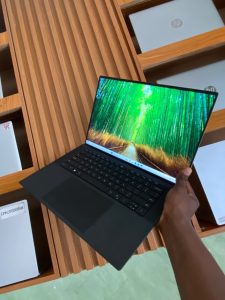
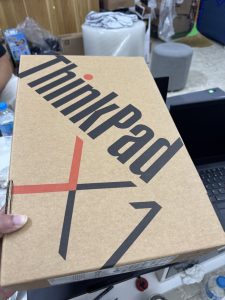
• Dell XPS 14 (2026) was reported between $1,349 and $1,599 to start, and the ThinkPad X1 Carbon Gen 14 from about $2,139. Buy these only if you need x86 Windows and the build quality, since they carry the most price risk.
For developers and AI work, where memory matters most, see our Web3 developer PC guide and our AI engineers‘ computer guide.
Smarter ways to save
• Prioritize memory and storage over the processor tier. A mid-range chip with 16GB beats a top chip with 8GB for most people.
• Consider last year’s model. One review noted the older Zenbook A14 can still be cheaper, which may be better value if you do not need the newest chip.
• Use education pricing if you qualify. Apple’s reported education price drops the MacBook Neo to $499. Confirm eligibility.
• Buy open-box or refurbished with a real warranty. Check battery health and chip generation.
• Use the return window as your test lab. Run your real workday and return what does not work.
• Check card protections. Some credit cards offer purchase protection or price-drop protection. Terms vary, so read yours.
• Do not pay for upgrades you cannot make later. With soldered memory, choose it at purchase, but do not overpay for capacity you will not use.
• Be patient between sales. Cyber Monday can bring a second round of deals, so there is no need to buy in the first hour.
If Windows memory efficiency interests you, see our analysis of the Windows 11 26H2 RAM changes, which concludes that a leaner operating system does not replace buying enough memory.
If you are buying outside the United States

This is general guidance, because we did not research local markets. Import duties, taxes and exchange-rate movements can change the final price more than a promotional discount does. Buy from authorized regional sellers so that the warranty is valid in your country, check that the keyboard layout and power plug suit you, and be wary of grey-market imports with no local service. If prices are quoted in a foreign currency, compare the all-in price in your own.
Frequently asked questions
Why are laptop prices going up in 2026?
Memory and storage chips have become much more expensive. Gartner said DRAM costs surged fivefold year over year in the second quarter, and reports say AI data centers are absorbing a large share of memory production. PC makers have passed the costs on.
How much have laptop prices increased?
It varies. Gartner’s February forecast, via a secondary summary, was about 17% higher average PC prices. One reseller’s summary says several brands raised prices by roughly 15% to 30%. A single maker, XMG, raised prices by about $113 to $342 per model. None of these is a measured average across the market, so compare the specific model you want.
Should I buy a laptop now or wait?
Buy now if you need one. Wait if your current laptop works and you can. Credible voices disagree about timing: ASUS’s CEO expects relief in the second half of 2027, while Micron’s CEO and others expect shortages well into 2027.
Will laptop prices drop after Black Friday?
Not necessarily. IDC does not expect prices to return to last year’s levels, and several analysts expect high memory costs through 2027. Black Friday discounts apply to higher starting prices.
Is Black Friday 2026 a good time to buy a laptop?
It can be, particularly for older models and retailer-stocked inventory, but deals have not been announced. Use the 8-point test, and compare the same configuration across retailers.
Is 8GB of RAM enough in 2026?
For light use such as browsing, writing and video calls it can work, but our editorial view is that 16GB is the safer choice for a laptop you plan to keep for four years. Memory is often soldered, so you cannot add it later, and Copilot+ PC features require 16GB.
Should I buy a MacBook Neo?
If macOS suits you and 8GB of fixed memory is enough for your workload, it was reported as the cheapest Mac at $599, or $499 for students, at its March launch. Check the current price and your needs.
Are refurbished laptops a good idea in a shortage?
Often yes, if the seller offers a clear warranty, battery information and a current-generation chip. Avoid listings with vague specifications.
Which laptop makers are affected most?
Gartner reported that every major vendor shipped fewer PCs in Q3, with HP down 30.9%, Dell down 25.4% and Apple down only 7.1%. That reflects shipments, not prices, so check each model.
How do I know a Black Friday deal is real?
Check the lowest price in the last 90 days, confirm the exact model number and specifications, verify the seller and return policy, and compare at several retailers.
Will RAM prices go down in 2027?
Some executives expect easing in the second half of 2027, and others expect shortages to last longer. Nobody can forecast it reliably, so do not base a purchase on a prediction.
The 2026 laptop market is unusual: prices are rising, the cheapest configurations are harder to find, and the cause, a global memory squeeze, is not something any shopper can change. PC shipments fell by more than a fifth in the third quarter, and experts disagree on whether relief will come in late 2027 or later. For most people the practical answer is not “buy now” or “wait.” It is to decide by need: buy if your laptop is failing, wait if it works, and in either case demand a spec floor, a verified price and a real return window.
Black Friday is on November 27. Use the Deal Reality Check, compare the full specifications and treat every countdown timer as noise. We will refresh this guide with verified deals as they appear. Check the sources below, and confirm every price on the retailer’s page before you buy.
Sources
URLs below were returned during our October 29, 2026 research. Secondary sources are labeled; verify key figures against the primary releases before quoting.
- 1. Gartner: PC shipments collapse by nearly a quarter. IT Pro, October 2026. Q3 2026 shipments of 55.4 million, down 22.4% from 71.3 million; the “DRAM costs surged five times” statement; Apple’s 7.1% decline.
- 2. Gartner: Worldwide PC shipments fall 22.4% in Q3. TechEdgeAI (relays Gartner’s October 12, 2026 release; HP down 30.9%, Lenovo in line with the market).
- 3. PC shipments fall 22.4% as memory costs push prices higher. BackendNews (Gartner relay; Dell down 25.4% to about 7.6 million units).
- 4. PC shipments fall 20% in Q3 as the memory crunch hits demand, IDC says. TBreak, October 26, 2026 (IDC preliminary data of October 8: 62.7 million, down 20.1%; IDC does not expect prices to return to last year’s levels).
- 5. IDC: PC shipments plunge 20.1% in Q3 2026. PC Test Bench (secondary; 78.5 million a year earlier, down 9.1% from Q2, Gartner’s February forecast relayed).
- 6. PC shipments drop 20.1% in Q3 2026 as DRAM soars. Tech Insider (secondary; Omdia’s memory-share estimate).
- 7. DDR5 laptop memory prices surge 6X in 12 months. Tom’s Hardware, September 25, 2026. XMG and Schenker price increases; Micron CEO and ASUS CEO views.
- 8. Why Laptop Prices Are Rising in 2026: Inside the RAM Shortage. InsightHubb (secondary; relays Tom’s Hardware tracking, TrendForce and launch redesigns).
- 9. Laptop Market 2026: Prices Up, Shipments Down. Distritech (reseller blog; 15% to 30% price-increase range, a commercial source; treat as indicative).
- 10. Best Black Friday Laptop Deals 2026: Prices to Beat. Memeburn (secondary; 8GB Surface configurations; “structural” characterization of Gartner’s view that we could not trace to Gartner).
- 12. Earlier research used for specific models: Macworld (MacBook Air M5), Tom’s Guide and GSMArena (MacBook Neo), Notebookcheck (Zenbook A14 price), Technobezz (IdeaPad Slim 5X deal prices), HotHardware (XPS 14, ThinkPad X1 Carbon). Links appear in our linked laptop guides.