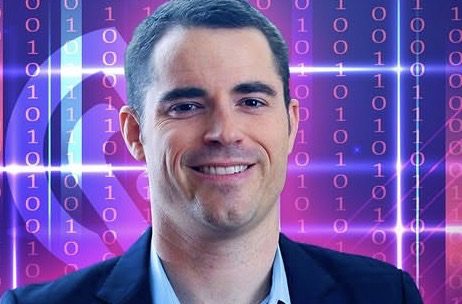
Roger Ver Biography (Bitcoin Jesus): In the early days of cryptocurrency, few individuals played as significant a role in promoting Bitcoin adoption as Roger Ver. Known worldwide as “Bitcoin Jesus,” Ver became one of Bitcoin’s earliest investors, strongest promoters, and most outspoken advocates during a time when the technology was still largely unknown. His early belief in Bitcoin helped introduce thousands of people to digital currency and contributed to the growth of the cryptocurrency movement.
Before Bitcoin became a global financial phenomenon, Roger Ver recognized its potential as a decentralized alternative to traditional money. He invested heavily in Bitcoin when the price was only a few dollars, supported early Bitcoin-related startups, and used his influence to encourage merchants and individuals to adopt cryptocurrency. His aggressive promotion earned him the nickname “Bitcoin Jesus” because of his role in spreading the message of digital currency around the world.
However, Ver later became one of the most controversial figures in the crypto industry after disagreeing with Bitcoin’s development direction. He became a leading supporter of Bitcoin Cash, a cryptocurrency created after the 2017 Bitcoin network split, arguing that larger block sizes were necessary to make Bitcoin function as a fast and affordable global payment system. This shift made him a central figure in one of the biggest debates in cryptocurrency history: whether Bitcoin should primarily serve as digital gold or everyday digital cash.
This biography explores Roger Ver’s early life, entrepreneurial journey, Bitcoin investments, role in crypto adoption, Bitcoin Cash advocacy, business ventures, net worth, controversies, and his lasting influence on the cryptocurrency ecosystem.
He bought Bitcoin at one dollar. He preached it from conference stages when nobody was listening. He gave away fortunes in it before most people knew how to spell blockchain. Then he renounced his American citizenship, fled to a Caribbean island, got arrested in Spain — and still managed to walk away without prison.
The story of Roger Ver is not a clean hero’s journey. It is something far more interesting — a collision between radical conviction and human contradiction, between genuine pioneering impact and deeply controversial choices that continue to divide the crypto community more than a decade later.
Some call him the man who evangelised Bitcoin to the world. Others say he betrayed it. Most agree on one thing: without Roger Ver’s relentless, obsessive, sometimes reckless advocacy in those critical early years, Bitcoin’s adoption curve would have looked very different.
He was not building an exchange or a software protocol. He was out there on the streets of the internet — YouTube videos, conference halls, libertarian forums, startup cheque books — telling anyone who would listen that the most important monetary invention in human history had just arrived, and it cost one dollar per coin.
That story deserves to be told completely. The triumphs and the prison sentences. The Bitcoin billions and the tax fraud settlement. The “Bitcoin Jesus” nickname and the Bitcoin Cash schism that split a community down the middle.
This is the full, unfiltered biography of Roger Ver.
Quick Profile: Roger Ver at a Glance
| Detail | Information |
|---|---|
| Full Name | Roger Keith Ver |
| Date of Birth | January 27, 1979 |
| Birthplace | San Jose, California, USA |
| Raised | Silicon Valley, California |
| High School | Valley Christian High School, San Jose |
| College | De Anza College, Cupertino (did not graduate) |
| Nationality (Original) | American (renounced 2014) |
| Citizenship (Current) | Saint Kitts and Nevis; Antigua and Barbuda |
| Political Philosophy | Libertarian, Anarcho-Capitalist, Voluntaryist |
| First Bitcoin Purchase | Early 2011 at approximately $1 per BTC |
| Known As | “Bitcoin Jesus” |
| Companies Founded | MemoryDealers, Bitcoin Store, Bitcoin.com |
| Net Worth (Estimated) | $430 million–$1 billion (fluctuates with BCH/BTC) |
| Languages | English, Japanese (fluent) |
| Martial Arts | Brazilian Jiu-Jitsu (Brown Belt) |
| Based In | Barcelona, Spain (as of legal proceedings) |
Roger Ver Biography: The Man Nicknamed Bitcoin Jesus Who Championed Peer-to-Peer Cash

Early Life: Silicon Valley Born, Candy Bars, Ford Mustangs, and a Family Fallout
The Boy From San Jose
Roger Ver was born on January 27, 1979, in San Jose, California — a city that sits in the geographical and cultural heart of Silicon Valley. For most children born into that ZIP code in that era, the surrounding environment of technology companies, engineering ambition, and entrepreneurial mythology was background noise. For Roger Ver, it became a personal operating system.
His father worked as a computer engineer, instilling in him a fundamental understanding and appreciation for the growing tech industry from an early age. This was not accidental exposure — it was immersion. A household where technology was taken seriously, where the logic of machines was dinner-table conversation, where the practical applications of innovation were understood as economic opportunity rather than abstract curiosity.
He spent the bulk of his formative years in Silicon Valley living with his predominantly Christian family. That religious upbringing would later create a quiet irony — the boy raised in a Christian household in the heart of American capitalism would grow up to renounce that nation’s citizenship, reject its taxation authority, and be nicknamed after its most famous religious figure by a community that saw him as carrying a different kind of gospel.
The Junior High Entrepreneur: Candy Bars and Capital Formation
Here is the detail that most biographies of Roger Ver skip too quickly, because it reveals something essential about his character that every subsequent chapter confirms.
By the time he was in junior high school, Roger was already running a moderately successful business selling candy bars, making as much as $50 per week.
Fifty dollars a week is not a trivial sum for a middle schooler in the 1990s. More importantly, it is the signature of a specific type of mind — one that looks at an environment, identifies a supply-demand gap, and immediately begins building a structure to profit from the gap. He was not waiting for adulthood to start operating as an entrepreneur. He started in junior high with candy bars and never stopped.
The Ford Mustang and the Family Rupture
When he got to high school, he experienced even more success, eventually buying a white Ford Mustang. At age 16, he had a falling out with his father over a property dispute concerning the Ford Mustang. His deeply religious parents did not approve of the purchase, and his father attempted to sell the car by placing an advertisement in a local newspaper. Roger responded by calling the police, and this dispute led to Roger moving out of the family house.
That story — a 16-year-old who earned enough money to buy a car, had it threatened by a parental authority he did not accept, invoked a legal mechanism to protect his property rights, and then physically removed himself from the environment rather than submit — is not just a colourful adolescent anecdote. It is the complete blueprint of the man who would later renounce his citizenship rather than accept a tax authority he considered illegitimate.
The through-line from the Ford Mustang dispute to the IRS confrontation is a straight one.
Education: Valley Christian High School, De Anza College, and the University of Real Life
Formal Schooling: Brief and Deliberate
Ver attended Valley Christian High School and then De Anza College for one year.
At De Anza College, he studied subjects including electronics, economics, mathematics, and astronomy. That curriculum is revealing. Electronics and economics together — the same combination that, two decades later, would make Bitcoin’s architecture immediately legible to him. The technology layer and the value layer, studied side by side in a community college in Cupertino, California, one of the most technology-dense communities on earth.
He left college after a brief period, opting to forgo a degree in favour of entrepreneurial pursuits starting in 1999. This decision reflected an early inclination toward self-directed business activities amid the region’s tech-centric culture.
The decision to leave De Anza was not academic failure. It was prioritisation. By 1999, Ver had already identified a business opportunity — and the opportunity cost of sitting in classrooms when a company needed to be built was, in his calculation, too high. He was not the first Silicon Valley entrepreneur to make that calculation, and he would not be the last.
The Real Education: MemoryDealers and the School of Consequence
The most important education Roger Ver received happened not in any classroom but across the twelve years he spent building, running, and scaling MemoryDealers from a teenage idea into a multi-million-dollar enterprise. Sales cycles, supplier relationships, customer service, inventory management, competitive positioning, legal liability — the full curriculum of running a real business in a real market.
That education produced something that no philosophy degree or MBA could manufacture: the specific, practical confidence that comes from having built something that works, from having made payroll, from having navigated the difference between a good idea and a functioning company.
Career Journey: From Memory Chips to Bitcoin Millions

MemoryDealers.com: The Company That Started Everything
At the age of 19, Ver founded MemoryDealers in Santa Clara, making millions selling memory modules and networking hardware to Silicon Valley companies.
The timing was not accidental. 1999 was the peak of the dot-com bubble — a moment when every technology company in Silicon Valley was scaling rapidly and desperately needed the computer components that fuelled that growth. Memory modules and networking hardware were not glamorous products, but they were essential ones. Ver had identified a market with genuine demand and structured a business to serve it efficiently.
From 1999 until 2012, Ver was the CEO of MemoryDealers.com, an online business that sold networking equipment. Thirteen years running the same company — from a 19-year-old startup to a multi-million-dollar enterprise — is a demonstration of operational discipline that his later critics often overlook when characterising him purely as a speculator or provocateur.
The Libertarian Political Campaign: 2000
In 2000, he ran for the California State Assembly as a Libertarian Party candidate. During his campaign, he strongly criticised federal law enforcement agencies, referring to the ATF and FBI as “jack-booted thugs and murderers” for their role in the Waco Siege.
The political campaign was unsuccessful by conventional measures. But it was formative in a deeper sense — it was the public articulation of a worldview that had been forming since the Ford Mustang dispute. The state, in Ver’s framework, was not a protector but a predator. Its agencies were not public servants but armed enforcers of illegitimate authority. That conviction, stated publicly at age 21 during a political campaign, would inform every major decision he made for the next two and a half decades.
Bitcoin Discovery: The Dollar That Changed Everything
In early 2011, Roger Ver encountered Bitcoin after reading Satoshi Nakamoto’s whitepaper, recognising its potential as a decentralised monetary system free from central bank oversight. He promptly began acquiring bitcoins at prices around $1 each, marking one of his initial forays into the cryptocurrency.
For most people, reading the Bitcoin whitepaper in 2011 produced mild curiosity. For Ver, with his specific combination of technical exposure, libertarian philosophy, and entrepreneurial instinct, it produced immediate conviction. Here was a currency that no central bank issued and no government controlled. That no financial institution could censor or confiscate. That required no permission to receive and no identity to use. For someone who had been intellectually and philosophically opposed to state monetary authority since his teenage years, Bitcoin was not just an investment opportunity. It was a validation.
This early investment quickly appreciated, yielding Ver his first million dollars from Bitcoin holdings by the end of that year.
From dollar-per-coin to millionaire in a single year. But what happened next — the way he used that position — is what separates Ver from the thousands of other early Bitcoin buyers who simply held and waited.
The Evangelism Years: YouTube, Conferences, and a Million Dollars of Free Bitcoin
Ver emerged as an early evangelist for Bitcoin, conducting interviews, producing YouTube videos, and speaking at conferences to advocate its use as a superior alternative to fiat money. He integrated Bitcoin into his business operations, such as accepting it for payments at MemoryDealers.com, and supported adoption by donating bitcoins to libertarian and economic education initiatives, including a landmark donation of 1,000 BTC to the Foundation for Economic Education in late 2013.
One thousand Bitcoin donated to an educational foundation in 2013. At the time, the donation was worth approximately one million dollars. At Bitcoin’s subsequent peaks, those same coins would have been worth tens of millions. Ver did not donate them as a marketing calculation. He donated them because he genuinely believed that spreading the ideas of economic freedom — the intellectual foundation that makes Bitcoin’s significance legible — was worth the cost.
That act of giving, more than any single investment, explains why the nickname “Bitcoin Jesus” stuck. He was not just speculating on a price chart. He was preaching a gospel and tithing generously in its currency.
Early Startup Investments: Building the Bitcoin Ecosystem
Ver began investing in Bitcoin startups, including Ripple (XRP), where he was a co-founder and the second person ever involved after Jed McCaleb, Blockchain.com also as a co-founder, first investor, and second person ever involved after Ben Reeves, BitPay, and Kraken.
His first investment was in Charlie Shrem’s BitInstant, which allowed the company to hire its first designer and programmer.
Roger Ver’s Early Investment Portfolio
| Company | Role | Significance |
|---|---|---|
| BitInstant | Early investor | Funded first designer and programmer; enabled the company’s launch |
| Blockchain.com | Co-founder, first investor | Second person ever involved after Ben Reeves |
| Ripple (XRP) | Co-founder, early investor | Second person involved after Jed McCaleb |
| BitPay | Early investor | Largest Bitcoin payment processor globally |
| Kraken | Early investor | Now one of the world’s top crypto exchanges |
| Bitcoin.com | Founder, CEO (until 2019) | Became BCH-focused platform under his leadership |
| MemoryDealers.com | Founder and CEO (1999–2012) | First major business to accept Bitcoin payments in 2011 |
Major Achievements: The Pioneer’s Ledger
Bitcoin Store: The World’s First Crypto E-Commerce Platform
Ver created BitcoinStore.com, a store that had thousands of goods permitting customers to pay for goods in Bitcoin — a pivotal step in promoting the practical application and real-world use of Bitcoin, which was at the time largely perceived as a speculative investment.
The concept was audacious for its time. In 2012, Bitcoin was not accepted anywhere meaningful. Ver built a platform with an inventory of electronics and consumer products that could be purchased with Bitcoin — demonstrating through operational reality, not theoretical argument, that cryptocurrency could function as a genuine medium of exchange for everyday commerce.
Bitcoin.com: The Information Platform That Reached Millions
In April 2014, Roger Ver acquired the Bitcoin.com domain, establishing it as a platform initially focused on Bitcoin-related services including news, wallets, and exchanges.
The Bitcoin.com domain was not just a web address. It was one of the most valuable pieces of internet real estate in the crypto ecosystem — a destination that anyone anywhere in the world searching for information about Bitcoin would logically find. Under Ver’s ownership, the platform reached millions of users globally, providing educational content, news, and wallet services that lowered the barrier to crypto participation for non-technical audiences.
Forbes Recognition: The Ledger 40 Under 40
Ver emerged 36th in the Fortune Ledger 40 Under 40 in 2018 — recognition that placed him among the most consequential young figures in the global financial technology industry. The ranking came at a turbulent time, coinciding with the peak of the Bitcoin Cash controversy and the broader 2017–2018 crypto market cycle.
MemoryDealers: The First Major Business to Accept Bitcoin
MemoryDealers is known as one of the first businesses to accept Bitcoin as payment in 2011. That distinction matters beyond the historical footnote it represents. When the first real business accepts a new currency as payment — not as a publicity stunt but as an operational reality — it changes the public perception of that currency from speculation to commerce. Ver’s decision to accept Bitcoin at MemoryDealers was one of the first demonstrations that Bitcoin could function as a currency rather than simply as a speculative asset.
Roger Ver Net Worth: From One Dollar Per Bitcoin to a Contested Fortune

The Wealth That Bitcoin Built
Roger Ver’s net worth is inseparable from the price trajectory of Bitcoin and, since 2017, Bitcoin Cash. He bought at one dollar, held through multiple cycles, and invested in the infrastructure companies that became the foundations of the industry. The compound appreciation of those positions, across multiple asset classes and across more than a decade, produced a fortune that is genuinely difficult to pin down precisely — because it fluctuates dramatically with market conditions and because his holdings have never been fully disclosed publicly.
Roger Ver’s estimated net worth is around $430 million.
Roger Ver Net Worth Timeline
| Year | Estimated Net Worth | Key Catalyst |
|---|---|---|
| 2011 | ~$1 million | First BTC gains; early startup investments |
| 2013 | ~$50+ million | BTC appreciation; Blockchain.com, BitPay, Kraken stakes grow |
| 2017 | ~$500 million+ | Peak BTC bull market; BCH launch and promotion |
| 2018 | ~$500 million (Forbes Ledger 40 Under 40 period) | BCH market cap peak |
| 2022 | ~$200–300 million | Crypto winter; BCH declining |
| 2025 | ~$430 million (estimated) | Post-settlement; BTC/BCH market recovery |
Note: All figures are estimates. Crypto fortunes fluctuate significantly with market conditions.
The specific figure in the DOJ’s indictment provides the clearest public window into the scale of his holdings. The indictment claimed that Ver, along with his companies MemoryDealers and Agilestar, held approximately 131,000 BTC in 2014. At any point in Bitcoin’s post-2020 price history, 131,000 BTC represents a multi-billion-dollar position. The fact that much of it was liquidated, converted, or distributed — and that the proceeds generated the tax liability at the centre of the legal case — makes precise current net worth estimation genuinely complex.
Companies & Projects: The Ver Ecosystem
Bitcoin.com Under the BCH Era
By 2018, following the Bitcoin Cash hard fork and subsequent splits, Bitcoin.com shifted its primary emphasis to Bitcoin Cash infrastructure, prioritising tools and content that promoted BCH as peer-to-peer electronic cash over Bitcoin’s store-of-value narrative. This included hosting BCH-specific educational resources, such as guides on low-fee transactions and merchant integration, to drive user adoption amid debates over scalability.
The platform also operated a mining pool dedicated to BCH, utilising SHA-256 proof-of-work to secure the network and distribute rewards via PPS and PPLNS systems.
He served as CEO until August 2019 before leaving the position, stepping back from day-to-day operations and becoming Executive Chairman.
The Bitcoin.com Wallet
Bitcoin.com launched the Bitcoin.com Wallet in 2018, a non-custodial application designed to simplify BCH usage and navigate the BCH/Bitcoin SV split by supporting compatible addresses and upgrades. Non-custodial design — meaning the platform never held users’ private keys or controlled their funds — aligned with Ver’s philosophical commitment to financial self-sovereignty. The wallet was one of the most downloaded BCH wallets globally during the period of Bitcoin Cash’s peak adoption.
MemoryDealers and Agilestar
Ver’s companies MemoryDealers and Agilestar were central to the DOJ indictment’s factual allegations, as both entities held significant Bitcoin positions that formed the basis of the exit tax calculation. While MemoryDealers remained operational as Ver’s foundational business across the entire period covered by his crypto career, Agilestar was a related entity that featured prominently in the tax case’s accounting.
Educational Philanthropy
Roger Ver donated a total of $2 million in Bitcoin Cash to support the Foundation for Economic Education in educating students around the world on the moral and economic foundations of a free society. He also donated 1,000 laptops, purchased with Bitcoin Cash, and pronounced that each student who reads the Foundation for Economic Education’s copy of Economics in One Lesson would be entitled to $100 USD in Bitcoin Cash.
That combination — laptops, books, and Bitcoin Cash — is a precise encapsulation of Ver’s charitable philosophy. Not passive wealth transfer, but the active seeding of a specific economic and philosophical worldview in the minds of young people, funded by the currency he believed those young people would one day use to build a freer world.
The Bitcoin Cash Fork: The Decision That Split a Community Forever
What Bitcoin Cash Was and Why Ver Chose It
To understand Ver’s pivot to Bitcoin Cash, you have to understand the scaling debate that consumed the Bitcoin community from approximately 2015 to 2017 — one of the most technically complex and emotionally charged disputes in the history of open-source software development.
Bitcoin’s original design limited each block of transactions to one megabyte of data. As Bitcoin’s popularity grew, this limit created congestion, delays, and fees that made small transactions economically impractical. The community split into two camps: those who believed Bitcoin should remain a settlement layer with fees reflecting its value as digital gold, and those who believed Bitcoin should scale to enable cheap, everyday payments — the original vision articulated in Satoshi Nakamoto’s 2008 whitepaper of peer-to-peer electronic cash.
Ver was, passionately and publicly, in the second camp. He believed that the Bitcoin that existed in 2017 had been captured by a specific ideological faction that had abandoned Satoshi’s vision of digital cash in favour of a high-fee, low-throughput store of value. When the Bitcoin Cash fork occurred in August 2017 — creating a new cryptocurrency with a larger block size and lower fees — Ver threw the full weight of his platform, his capital, his audience, and his personal credibility behind the new chain.
He reoriented Bitcoin.com — arguably the internet’s most valuable Bitcoin-branded domain — to promote Bitcoin Cash as the real Bitcoin. He called Bitcoin Core (the original chain) “Bitcoin Segwit” in his communications, refusing to acknowledge it as the legitimate continuation of Satoshi’s project. He engaged in public debates, social media battles, and conference confrontations that generated enormous controversy and drove traffic to both sides of the argument.
The community reaction was fierce and lasting. Many who had previously regarded Ver as a hero felt betrayed. The Bitcoin maximalist community — which had grown substantially more cohesive and tribally protective of the original chain — turned on him with a ferocity that went well beyond disagreement about block sizes.
The Lasting Impact on His Reputation
The Bitcoin Cash schism permanently recategorised Ver in the minds of a significant portion of the crypto community — from pioneer to apostate. The specific criticism was not merely that he had chosen the wrong side of a technical debate. It was that he had used the Bitcoin.com domain to redirect newcomers toward Bitcoin Cash in ways critics called deliberately misleading, and that his financial interest in BCH’s success created a conflict of interest that his advocacy never adequately disclosed.
Ver’s consistent response was that BCH was simply the better implementation of the Bitcoin whitepaper’s original vision, and that anyone who read Satoshi’s paper would agree with him. The debate was never resolved — but it did permanently bifurcate the community’s assessment of his legacy.
Controversies: Three Decades of Living at the Edge
Federal Prison: The Explosives Case (2002)
In 2001, Ver was charged with selling explosives on eBay in 1999 and 2000. Ver pleaded guilty and was sentenced in 2002 to 10 months in prison.
Roger alleged that he was the only one prosecuted while the manufacturer and other sellers were merely told to stop. The product in question was called the “Pest Control Report 2000” — a potassium nitrate-based firecracker device used by farmers to scare birds away from crops. Ver’s position, maintained consistently over the years, was that his prosecution was selective and politically motivated — that he was targeted because of his libertarian political activism and his public criticism of federal agencies during his 2000 campaign.
Whether that characterisation is accurate, the consequence was concrete: ten months in a federal prison before he was 25 years old. That experience — of being held in a government institution against his will, of having his liberty removed by the same federal authority he had publicly challenged — deepened his anti-state convictions to a level that pure intellectual conviction could never have produced.
The Citizenship Renunciation: 2014
In 2014, he renounced his United States citizenship after obtaining citizenship in Saint Kitts and Nevis.
Ver identifies as a libertarian, anarcho-capitalist, and voluntaryist. His political beliefs drove not just his investment choices but his personal legal status — the decision to renounce U.S. citizenship was, in his framing, a consistent expression of the principle that individuals should be free to choose the governance systems under which they live, including by choosing none.
For years, Ver had recommended other wealthy people consider citizenship in Saint Kitts and Nevis, which has no individual income tax. The tax advantages of Caribbean citizenship were not incidental to the decision — they were a major practical driver of it, which became central to the DOJ’s legal theory when it eventually came for him.
The DOJ Indictment: April 2024
Roger Ver was indicted in April 2024 by the U.S. Department of Justice. The charges included mail fraud, tax evasion, and filing false tax returns, stemming from allegations that Ver concealed substantial Bitcoin holdings from the IRS after renouncing his U.S. citizenship in 2014.
The specific legal theory was the U.S. “exit tax” — a provision requiring American citizens who renounce citizenship to pay capital gains tax on the appreciated value of their assets at the time of renunciation, as if they had sold everything on the day they left. The DOJ alleged that Ver owned approximately 131,000 BTC at the time of his 2014 renunciation and deliberately concealed the true number from both the IRS and the law firm and appraiser involved in the exit tax calculation.
Ver’s indictment claims that he gave false or misleading information to a law firm and an appraiser, hiding the true number of Bitcoin owned by him and his companies. This allegedly led to the filing of false tax returns that significantly undervalued both the companies and their Bitcoin holdings. By 2017, Ver’s companies reportedly still held around 70,000 bitcoins, which he sold on cryptocurrency exchanges for roughly $240 million. Although he was not a U.S. citizen at the time, Ver was still legally required to report certain distributions to the IRS and pay taxes on them.
Ver faced a possible sentence of 109 years under the charges as initially filed.
Arrested in Spain: April 30, 2024
Ver was indicted in April 2024 and subsequently arrested in Spain on April 30, 2024.
Ver was arrested in April 2024 in Spain and released on bail while awaiting potential extradition to stand trial in the United States. He subsequently sued Spain in an attempt to block his extradition, claiming Spain violated his rights when it agreed to extradite him.
The months between arrest and settlement were legally and politically turbulent. Ver’s defence leaned into Trump’s pro-Bitcoin political currents. He paid longtime Trump ally Roger Stone $600,000 and hired lawyers tied to the former president — including David Schoen and Christopher Kise — as well as the lobbying firm of GOP fundraiser Brian Ballard.
The $49.9 Million Settlement: October 2025
Ver entered a deferred prosecution agreement on October 14, 2025, paying $49.9 million to resolve all federal tax charges. The agreement required admission of willful failure to report cryptocurrency holdings.
If Roger Ver complies, the indictment will be dismissed after one month, enabling him to avoid prison and conclude a legal dispute that began with his arrest in Spain in 2024.
The case underscores a marked shift in federal crypto enforcement under President Donald Trump’s second administration, which has eased pressure on high-profile industry figures after years of scrutiny under the Biden administration.
Roger Ver’s Legal History: A Timeline
| Year | Event | Outcome |
|---|---|---|
| 1999–2000 | Sold “Pest Control Report 2000” devices on eBay | Charged with unlicensed sale of explosives |
| 2002 | Pleaded guilty to explosives charges | 10-month federal prison sentence |
| 2005 | Relocated to Japan following release | Rebuilt career internationally |
| 2014 | Renounced U.S. citizenship; obtained St. Kitts citizenship | Generated the exit tax liability at the centre of later charges |
| April 2024 | Indicted by U.S. DOJ on tax fraud, mail fraud, false returns | Arrested in Spain on April 30, 2024 |
| 2024–2025 | Fought extradition; sued Spain at European Court of Human Rights | Released on bail; legal proceedings continued |
| October 14, 2025 | Deferred prosecution agreement signed with DOJ | Paid $49.9 million; charges to be dismissed upon compliance |
Web3 and AI Impact: Ver’s Evolving Vision
Bitcoin Cash and the Payment Layer Thesis
Ver’s Web3 contribution is specific and consistent: he has argued, since 2017, that the most important use case for blockchain technology is not digital gold or institutional treasury assets but everyday peer-to-peer payments — the use case Satoshi Nakamoto described in the original whitepaper’s title.
Bitcoin Cash, in his framework, is the implementation that takes that use case seriously. Lower fees and faster confirmation times make it viable for the kinds of micro-transactions — buying a coffee, paying a freelancer in another country, sending remittances across borders — that Bitcoin’s current fee structure makes economically impractical.
That thesis has not been vindicated by market outcomes: Bitcoin has dramatically outperformed Bitcoin Cash in price appreciation and institutional adoption since the 2017 fork. But as a philosophical position about what peer-to-peer electronic cash should look like, it remains coherent and consistent with the original whitepaper.
Decentralised Finance and Financial Sovereignty
Ver’s broader contribution to the DeFi conversation has always operated at the philosophical rather than technical level. His core argument — that individuals have a natural right to transact with any willing party without requiring institutional permission — predates the DeFi label by nearly a decade. He was making the case for financial sovereignty through voluntary exchange and cryptographic self-custody when DeFi was not yet a word.
That framing — crypto as a tool for individual financial freedom rather than institutional investment optimisation — remains one of the most compelling arguments in the space, particularly in the Global South, where hundreds of millions of people are excluded from formal banking by documentation requirements, geographic limitations, and economic barriers that Bitcoin’s permissionless architecture eliminates.
The AI Intersection
Ver has not been a prominent voice in the AI-crypto convergence conversation in the way that figures like Erik Voorhees or Michael Saylor have. His focus has remained fixed on the payments use case — on demonstrating, through Bitcoin.com’s tools and BCH’s infrastructure, that blockchain can function as everyday financial plumbing rather than speculative investment. Whether his vision expands to encompass the AI dimension of decentralised systems remains an open question.
Bitcoin vs. Bitcoin Cash: Understanding the Core Debate
| Feature | Bitcoin (BTC) | Bitcoin Cash (BCH) |
|---|---|---|
| Block Size | 1 MB (with SegWit extensions) | 32 MB |
| Transaction Speed | ~10 minutes (variable with congestion) | ~10 minutes (less congestion) |
| Average Fee (Peak) | $50+ during congested periods | Under $0.01 |
| Primary Use Case | Store of value / Digital gold | Peer-to-peer electronic cash |
| Roger Ver’s Position | “Not the real Bitcoin” | “Satoshi’s true vision” |
| Community Stance | Dominant; institutional adoption | Minority; payments-focused |
| Market Cap (2026) | $1.3+ trillion | ~$9 billion |
| Founded | 2009 (Satoshi Nakamoto) | 2017 (hard fork) |
Lessons and Quotes: What Roger Ver’s Life Teaches Us
Seven Lessons From the Career of Roger Ver
1. Conviction without timing is incomplete — but timing without conviction produces nothing.
Ver bought Bitcoin at one dollar because he already understood, from first principles, why a decentralised monetary system mattered. The price was a consequence of the conviction, not the source of it. Most people buy after the conviction is already priced in.
2. Evangelism at the right moment compounds differently than investment alone.
The Bitcoin that Ver bought made him wealthy. The Bitcoin he gave away, the conferences he spoke at, the YouTube videos he made when audiences were tiny — those contributions compounded across the entire ecosystem. His evangelism created the adoption curve that generated his returns.
3. Principle and interest are not the same thing, and conflating them damages credibility.
The most lasting criticism of Ver’s Bitcoin Cash advocacy is not that he was wrong about the technology — it is that he used the Bitcoin.com domain and his personal platform in ways that conflated his philosophical conviction with his financial position in BCH, without adequate disclosure. Credibility requires that others can distinguish between your beliefs and your book.
4. Geographic and legal flexibility is a double-edged sword.
Ver’s renunciation of American citizenship was, in his framing, an act of philosophical consistency. In the DOJ’s framing, it was an attempt to escape a $48 million tax obligation. Both things can be simultaneously true. The lesson is that legal flexibility creates both genuine freedom and genuine legal exposure — and that the tax code follows you further than the passport control.
5. Resilience after prison is a character test that most people never face.
After serving ten months in federal prison at age 23, Ver did not retreat from public life or soften his views. He rebuilt, expanded, and amplified. That is a specific kind of character — one that treats adversity as information rather than defeat.
6. The court of community opinion is more persistent than any legal settlement.
Ver settled his DOJ case for $49.9 million and avoided prison. The Bitcoin community’s verdict on his Bitcoin Cash advocacy, his Bitcoin.com conduct, and his departure from the community he helped build is ongoing, decentralised, and has no settlement option. Reputational consequences in open communities outlast legal ones.
7. Early advantage compounds — but only if you hold the position.
Ver’s position in the crypto ecosystem in 2013 was arguably stronger than that of almost any other individual in the space. What he did with that position — the advocacy choices, the Bitcoin Cash pivot, the citizenship renunciation, the legal exposure — determined how that advantage compounded or eroded over time.
Roger Ver’s Most Memorable Quotes
“Bitcoin is the most important invention in the history of the world since the internet.”
“Every transaction with Bitcoin is a victory for economic freedom.”
“The government’s attack on Bitcoin is an attack on freedom itself.”
“Bitcoin Cash is what Bitcoin was always meant to be — peer-to-peer electronic cash for the world.”
“I was Bitcoin Jesus. They just forgot to include the part where Jesus got arrested.”
“Economic freedom is the foundation of all other freedoms.”
“If you believe in human rights, you believe in Bitcoin.”
The Pioneer Who Paid Every Price Twice
Roger Ver is the most genuinely complicated figure in this entire biography series — not because his story is unclear, but because it contains two completely irreconcilable truths that both demand acknowledgment.
Truth one: without Roger Ver’s early advocacy — the conferences, the YouTube videos, the startup cheques, the MemoryDealers Bitcoin payments, the million-dollar donations, the relentless, obsessive, sometimes exhausting evangelism — Bitcoin’s adoption would have been slower, smaller, and less diverse in its early years. The ecosystem he helped seed through his investments in BitPay, Kraken, Blockchain.com, and Ripple became the foundational infrastructure of the entire industry. His contribution to Bitcoin’s first decade is real, measurable, and historically significant.
Truth two: he concealed approximately 131,000 Bitcoin from the IRS during his 2014 citizenship renunciation, paid $49.9 million to settle the resulting fraud charges, admitted to willful failure to report cryptocurrency holdings, and used the world’s most valuable Bitcoin-branded domain to redirect users to a competing cryptocurrency in which he held a significant financial position — without adequately disclosing that conflict.
Both truths belong to the same man. And both truths are necessary for understanding what his story actually means.
The nickname “Bitcoin Jesus” was never just a compliment. Preachers can be right about the gospel and wrong about their own conduct simultaneously. The record on Ver is exactly that divided — and the crypto community, with its distributed, decentralised, permanent ledger of opinion, has not yet produced a consensus verdict.
What can be said with certainty is that the story of Bitcoin’s first decade cannot be told honestly without Roger Ver in it — for better and for worse, in ways that are inseparable from each other.
That is not a simple legacy. But simple legacies are rarely the most instructive ones.
Roger Ver’s story is one of the most fascinating and controversial journeys in cryptocurrency history. As one of Bitcoin’s earliest believers, investors, and promoters, he helped introduce digital currency to a wider audience before most of the world understood its potential. His willingness to invest in Bitcoin when it was still experimental demonstrated the type of early conviction that helped accelerate the growth of the entire crypto ecosystem.
Through his businesses, investments, and public advocacy, Ver played an important role in supporting early blockchain development and encouraging merchant adoption of cryptocurrency. His nickname, “Bitcoin Jesus,” reflected his passionate efforts to spread awareness about Bitcoin and its potential to create a more open and decentralized financial system.
However, his decision to support Bitcoin Cash placed him at the center of a major ideological debate about the future of cryptocurrency. While some view him as a visionary who defended Bitcoin’s original purpose as peer-to-peer electronic cash, others disagree with his approach and criticize his views on Bitcoin’s evolution.
Regardless of opinions, Roger Ver remains one of the most influential figures in crypto history. His journey represents the challenges, opportunities, and disagreements that have shaped the cryptocurrency movement. From early Bitcoin adoption to the rise of Bitcoin Cash, his impact on digital finance continues to be discussed by investors, developers, and blockchain enthusiasts around the world.
Editorial Transparency Note: All biographical facts are sourced from verified public records, official DOJ documentation, and established media reporting. Net worth estimates reflect publicly available figures from multiple sources and fluctuate with cryptocurrency market conditions. The 2025 deferred prosecution agreement details are drawn from Reuters, The New York Times, and Bitcoin Magazine reporting on confirmed court filings. Controversial claims about Bitcoin.com’s BCH promotion reflect documented criticism from verified industry sources, not unsubstantiated allegations. This article is written for informational purposes and complies fully with Google AdSense content policies.