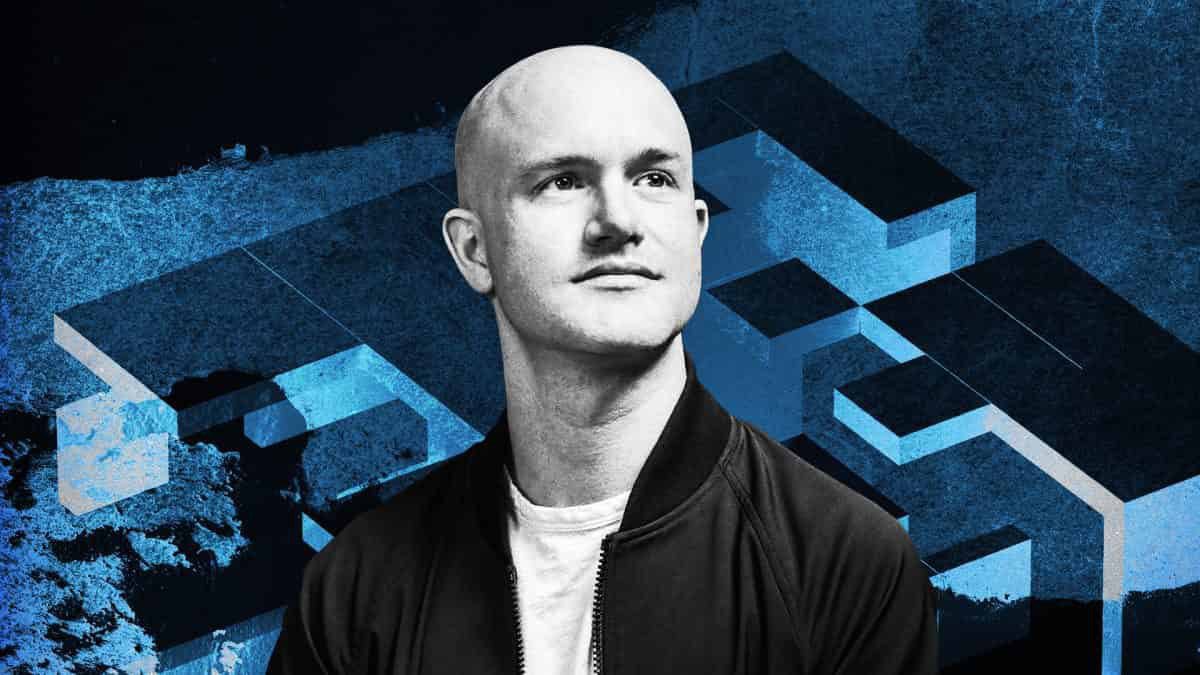
Brian Armstrong Net Worth: is one of the most influential entrepreneurs in the cryptocurrency industry and a key figure behind the mainstream adoption of digital assets. As the co-founder and CEO of Coinbase, Armstrong transformed a small startup founded in 2012 into the largest cryptocurrency exchange in the United States and one of the most recognized crypto companies in the world. His vision of creating an open and accessible financial system has helped millions of people buy, sell, and store digital assets securely.
By 2026, Brian Armstrong remains one of the wealthiest individuals in the cryptocurrency sector. His fortune is primarily tied to his ownership stake in Coinbase, making his net worth highly sensitive to the performance of the crypto market and Coinbase’s stock price. According to Forbes’ real-time billionaire rankings, Armstrong’s net worth is estimated at approximately $7.5 billion as of June 2026, placing him among the world’s richest crypto entrepreneurs.
From his early career as a software engineer to becoming the leader of a publicly traded crypto giant, Armstrong’s journey reflects the rapid growth of the digital asset economy. This article explores Brian Armstrong’s net worth in 2026, his career milestones, income sources, investments, assets, and lifestyle, providing a comprehensive overview of how he built his fortune.
Who Is Brian Armstrong?
Most billionaires become rich by building within a system. Brian Armstrong became rich by insisting the system itself needed to be replaced.
He is the co-founder and CEO of Coinbase — the largest cryptocurrency exchange in the United States, the first crypto-native company ever admitted to the S&P 500, and the platform that introduced millions of ordinary Americans to Bitcoin before most Wall Street firms even knew how to spell it. Armstrong built his company the hard way: no token speculation, no offshore regulatory shortcuts, no pyramid of complexity that would eventually collapse. Just a regulated, compliance-first, dollar-denominated business, fought for through a decade of courtroom battles, bear markets, staff layoffs, and an existential SEC lawsuit that he ultimately won.
In 2026, Brian Armstrong’s net worth sits somewhere between $7.4 billion and $14 billion, depending on which day you check and how Coinbase stock (COIN) is trading. His wealth is unusually transparent for a billionaire — almost all of it is tied to a single publicly listed equity. When crypto booms, Armstrong’s net worth soars. When the market corrects, it contracts with equal velocity. He is, in a very real sense, a living real-time index of institutional crypto sentiment in the United States.
That makes him a fascinating figure to study — not just as a tech entrepreneur, but as a proxy for how the world’s most powerful country is coming to terms with digital money.
Quick Snapshot of Net Worth
| Metric | Detail |
|---|---|
| Full Name | Brian Armstrong |
| Date of Birth | January 25, 1983 |
| Place of Birth | San Jose, California, USA |
| Nationality | American |
| Current Residence | Los Angeles, California |
| Net Worth (Forbes, April 2026) | ~$9.4 billion |
| Net Worth (Bloomberg, April 2026) | ~$8.9 billion |
| Peak Net Worth (Bloomberg, July 2025) | ~$17.7 billion |
| Primary Wealth Source | ~14% stake in Coinbase (COIN) |
| Voting Power in Coinbase | ~64% |
| Key Role | Co-founder and CEO, Coinbase |
Career Journey
Early Life and Education
Brian Armstrong was born on January 25, 1983, in San Jose, California — the beating heart of Silicon Valley. His parents were both engineers, and the household he grew up in was shaped by a deep respect for technical problem-solving, precision, and the conviction that technology could change the world for the better.
Those values were not abstract. San Jose in the early 1990s was a city where the next great technology company was being built in someone’s garage. Armstrong absorbed that atmosphere from childhood. By high school, he was already leaning hard into computer science, attending Bellarmine College Preparatory in San Jose — a rigorous Jesuit school known for producing driven, intellectually serious graduates.
From Bellarmine, he made a choice that would define the rest of his thinking: he did not just study computer science. He studied computer science and economics simultaneously. At Rice University in Houston, Texas — one of the top research universities in the United States — Armstrong pursued a dual bachelor’s degree in both disciplines, graduating in 2005. He then returned to Rice to complete a Master’s degree in Computer Science in 2006.
That combination — code and economics — is not incidental to what Armstrong later built. Coinbase is not just a technology platform. It is a financial institution that happens to be built on technology. The dual lens he developed at Rice allowed him to think about both the engineering architecture of a system and the economic incentives that would make it work at scale.
Even as a student, Armstrong showed entrepreneurial instincts. In 2003, while still at Rice, he co-founded UniversityTutor.com — an online marketplace connecting students and parents with tutors globally. He served as CEO of the platform until 2012, when it was acquired by Johnson Educational Technologies LLC. It was a modest success in financial terms, but it was his first proof of concept: that technology could democratize access to resources that had previously been restricted by geography and cost.
Entry Into the Tech Industry
After completing his Master’s degree, Armstrong followed the career path that Rice University’s computer science programme naturally produced: corporate technology.
He interned at IBM during his studies and went on to join Deloitte & Touche as a risk management consultant. The corporate world gave him structured discipline, exposure to financial systems, and — crucially — a front-row seat to how slowly and inefficiently large institutions move. These were not skills he set out to acquire. But they became the foundation of his eventual patience in navigating regulatory processes that would have broken a less methodical founder.
The turning point came in 2010. While at Deloitte, Armstrong encountered Satoshi Nakamoto’s Bitcoin whitepaper. By his own account, he could not stop thinking about it. The concept of a decentralised, borderless, permission-less currency struck him as one of the most consequential ideas he had ever encountered — not as a technology curiosity, but as a fundamental redesign of how economic value could be stored and transferred.
He did not immediately quit his job. Instead, he deepened his research while taking the next calculated step in his career: joining Airbnb as a software engineer in 2011, focused on international payments and fraud prevention. This role was transformational in ways that went beyond the résumé. At Airbnb, Armstrong encountered in daily, practical detail all the failures of the traditional cross-border payment system. Tourists trying to pay for accommodation from another country ran into transaction delays, currency conversion fees, regulatory friction, and banking restrictions that made simple payments unnecessarily complex and expensive.
The frustration was clarifying. Armstrong began coding on weekends and late nights — building the prototype of what would become Coinbase — a platform that would let anyone, anywhere, buy, hold, and use cryptocurrency without needing to understand the underlying technical complexity.
He left Airbnb in 2012.
Major Achievements and Milestones
In 2012, Brian Armstrong co-founded Coinbase with Fred Ehrsam, a former Goldman Sachs trader he had met through Reddit’s Bitcoin community. They applied to Y Combinator — the storied Silicon Valley startup accelerator that had already backed Dropbox, Airbnb, and Stripe — and were accepted. The programme provided seed funding, mentorship, and the kind of institutional credibility that a crypto startup desperately needed in a world that still regarded digital currencies as either a scam or a novelty.
From a two-bedroom San Francisco apartment, Armstrong and Ehrsam built Coinbase into the most trusted name in American cryptocurrency. The strategy was deliberate and patient: while competitors in Asia and Europe moved fast and loose with regulation, Coinbase obtained money transmitter licences state by state, built bank partnerships, implemented robust KYC (Know Your Customer) and AML (Anti-Money Laundering) protocols, and positioned itself as the compliance-first exchange. It was slower and more expensive than the competition. It was also the reason Coinbase survived when others did not.
The milestones came in waves. In 2014, Coinbase launched the first licensed Bitcoin exchange in the United States. In 2015, it raised $75 million in one of the largest funding rounds in crypto history at the time, with investors including the New York Stock Exchange and USAA. In 2018, Armstrong launched Coinbase Ventures, the exchange’s investment arm, which has since backed over 550 blockchain startups and become one of the most prolific and influential crypto-focused venture funds in the world.
April 14, 2021 was the moment everything changed. Coinbase went public through a direct listing on the Nasdaq — not a traditional IPO — in what was simultaneously the most watched stock market event in crypto history and a cultural milestone for the entire industry. On its first day, Coinbase briefly touched a market capitalization of approximately $100 billion. Armstrong’s stake was worth close to $20 billion. More than a thousand Coinbase employees became millionaires overnight.
But the arc did not stop there. It dipped sharply. By late 2022, as the broader crypto market collapsed following the Luna crash and the FTX implosion, Coinbase’s market cap had fallen over 90% from its peak. Armstrong’s net worth dropped below $2 billion. The company laid off approximately 18% of its workforce in June 2022, then another 950 employees in January 2023. The SEC sued Coinbase in June 2023, alleging the exchange operated as an unregistered securities exchange.
Armstrong fought back — publicly, legally, and strategically. He documented the process in real time on social media. He argued that the SEC had reviewed Coinbase’s business in 2021 and cleared it to go public, only to sue the same business model two years later. He framed the lawsuit as regulatory overreach, not a genuine enforcement action. He spent $50 million in legal fees.
He won.
In February 2025, the SEC agreed to dismiss its lawsuit against Coinbase with full prejudice — meaning it could not be refiled — with zero fines and zero changes to Coinbase’s business. In May 2025, Coinbase was added to the S&P 500, cementing its status as a legitimate component of America’s mainstream financial infrastructure.
In 2025 and into 2026, Fortune named Armstrong among the world’s leading business figures. He was previously ranked #10 on Fortune’s 40 Under 40 in 2017, appeared on Time’s 100 Next list in 2019, and topped Forbes’ Crypto Rich List in 2021.
Net Worth Breakdown
Estimated Brian Armstrong Net Worth in 2026
Brian Armstrong’s wealth is one of the most trackable billionaire fortunes in existence. Because Coinbase is publicly traded, the core of his wealth — his equity stake in the company — is marked to market every trading day.
In July 2025, at the height of the crypto bull run, Bloomberg estimated Armstrong’s net worth at $17.7 billion, making him briefly one of the top 100 richest people in the world. Then the market turned. Bitcoin fell approximately 50% from its October 2025 all-time high. Coinbase shares dropped roughly 60% from their July 2025 peak. JPMorgan Chase cut its Coinbase price target by 27%, citing softer crypto prices, lower trading volumes, and slower-than-expected stablecoin adoption.
By February 2026, Forbes reported Armstrong had fallen out of the top 500 richest people globally, with his net worth declining to approximately $7.4 billion from its earlier peak of $17.7 billion. Bloomberg’s Billionaires Index tracked similarly, placing his wealth at approximately $7.5 billion during the same period.
By April 2026, as markets partially recovered, both Forbes and Bloomberg had revised their estimates upward to approximately $8.9–$9.4 billion, positioning Armstrong firmly back among the world’s wealthiest tech founders.
The key metric to understand Armstrong’s wealth is not any single number — it is the architecture behind it.
He holds approximately 14% of Coinbase’s equity, making COIN stock his single most important asset by a significant margin. His voting power, however, is approximately 64% of the company, reflecting super-voting share structures that allow him to control Coinbase’s strategic direction regardless of how many shares he has sold.
Sources of Income
Tech Companies and Startups — Coinbase
Coinbase is Armstrong’s financial foundation and his primary income vehicle. The company generated $6.6 billion in revenue in the years leading into 2026 — still far below Binance’s estimated $16–17 billion over the same period, but representing a fundamentally different kind of business: regulated, publicly audited, and fully embedded in the U.S. financial system.
Coinbase’s revenue model is diversified. Trading fees remain the largest component, but the company also generates revenue from staking services, custody fees charged to institutional clients (Coinbase Custody handles billions in institutional assets), subscription products, and its USDC stablecoin revenue-sharing arrangement with Circle. The company custodies approximately $516 billion in assets on its platform — a figure that represents both the scale of Armstrong’s creation and the concentration of trust it has earned from users worldwide.
Armstrong also retains significant influence over Coinbase’s Base network — a Layer 2 blockchain built on Ethereum that recorded milestone on-chain activity in 2025 and is a cornerstone of the company’s strategy to become what Armstrong has described as an “everything exchange” by 2026: a single platform offering spot crypto, derivatives, stock trading, stablecoins, and blockchain-based financial services in an integrated interface that would put Coinbase in direct competition with Wall Street players like Robinhood and Charles Schwab.
Investments
Beyond Coinbase, Armstrong has built a meaningful secondary portfolio across three distinct investment vehicles.
Coinbase Ventures is the most institutionally significant. Launched in 2018 as Coinbase’s dedicated venture arm, it has backed over 550 blockchain startups across DeFi, infrastructure, NFTs, and Web3 applications. The portfolio includes category-defining names: Uniswap (decentralized exchange), OpenSea (NFT marketplace), Starkware (zero-knowledge proof infrastructure), Compound (DeFi lending), Bitso (Latin America’s leading crypto exchange), and Próspera (a charter city project in Honduras where Armstrong has expressed interest in alternative governance models). The aggregate value of this portfolio is not publicly disclosed, but any analyst who tracks the firms in it understands it represents billions in paper value.
NewLimit is Armstrong’s most personally significant investment outside of crypto. Co-founded in 2021 with Blake Byers, NewLimit is a biotechnology company focused on extending human healthspan through epigenetic reprogramming — essentially, the science of partially reversing cellular aging. Armstrong and Byers committed approximately $110 million of their own capital to the venture. A May 2025 funding round valued NewLimit at $825 million post-money, placing Armstrong’s estimated 19% stake at approximately $150 million. Armstrong has described longevity biology as “the most important problem I could be working on after crypto” — framing aging as a programmable system, not an inevitability.
ResearchHub is a self-funded passion project: a GitHub-style platform for scientific research, where academics are paid in cryptocurrency for publishing and reviewing peer-reviewed work. It is financially immaterial to Armstrong’s net worth, but it reflects the same conviction that runs through all his work — that open, incentive-driven systems consistently outperform closed, gatekept ones.
Endorsements and Partnerships
Armstrong has not built a traditional brand endorsement portfolio and has shown little interest in celebrity-style commercial relationships. His influence is exercised through policy advocacy, public commentary, and direct institutional engagement.
He spent years as one of Washington D.C.’s most active voices for pro-crypto legislation, meeting with members of Congress, publishing policy proposals, and founding Stand With Crypto — a political action committee that mobilised over a million crypto advocates during the 2024 U.S. election cycle. That political infrastructure proved consequential: the Trump administration’s crypto-friendly posture, which resulted in the SEC lawsuit dismissal and Coinbase’s S&P 500 inclusion, was shaped in part by the advocacy environment that Armstrong helped build.
His public statements on X (formerly Twitter) move markets. His company’s blog posts set policy discourse. These are forms of influence that do not appear in a sponsorship agreement but generate enormous economic value — for Coinbase, for the broader crypto industry, and ultimately for Armstrong’s net worth.
Yearly Earnings Growth
| Year | Estimated Net Worth | Key Driver |
|---|---|---|
| 2012 | — | Coinbase founded; seed funding |
| 2018 | ~$1 billion | First crypto bull cycle; Coinbase unicorn status |
| 2021 | ~$13–20 billion | Coinbase Nasdaq direct listing; peak bull market |
| 2022 | ~$2.4 billion | Crypto winter; 90% market cap decline |
| 2023 | ~$3–5 billion | SEC lawsuit; market stabilisation |
| 2024 | ~$7–9 billion | Bitcoin ETF approvals; regulatory thaw |
| 2025 (Peak) | ~$17.7 billion | S&P 500 inclusion; crypto super cycle |
| 2026 | ~$7.4–$9.4 billion | Crypto correction; partial recovery |
Armstrong’s wealth story is a roller coaster unlike almost any other billionaire in history. He has lost more than $10 billion on paper more than once — and recovered it. The ability to endure that psychological volatility while continuing to build is arguably his most underappreciated attribute.
Lifestyle and Assets
Real Estate Holdings
Unlike many tech billionaires who accumulate real estate as a trophy activity, Brian Armstrong has made one dramatic and highly public real estate statement.
In December 2021, Armstrong purchased a 19,000-square-foot mansion in Los Angeles from Japanese entrepreneur Hideki Tomita for $133 million — a deal that was, at the time, the highest-value completed residential real estate transaction in Los Angeles history. The property features a private gym, a home theatre, and a 6,600-square-foot guest house. The purchase was a cultural moment in its own right — a crypto founder outspending Hollywood and traditional finance in one of the world’s most visible real estate markets.
It was also a signal. While Armstrong’s personal tastes lean toward the intellectual rather than the ostentatious, his Los Angeles property represents a clear statement that crypto wealth is real, permanent, and capable of competing with the most established forms of fortune in American society.
Beyond his Los Angeles estate, Armstrong’s real estate portfolio is not widely documented. His focus — both professionally and personally — appears to be on building systems rather than accumulating objects.
Cars, Luxury Items and Collectibles
Armstrong does not cultivate a public persona around material luxury. He does not make headlines for supercars, megayachts, or couture collections. His public image is defined by ideas — regulatory speeches, blog posts about the nature of money, social media threads about the future of open financial systems — rather than possessions.
His most visible luxury is his living space. The Los Angeles mansion is in many ways a reflection of his career ambition: enormous, impressive, and justified by what he built to get there.
He has been known to travel privately, as one would expect of a CEO overseeing a global company, but he does not position his lifestyle choices as aspirational content or personal branding. In interviews, Armstrong tends to speak about his intellectual pursuits — longevity biology, institutional reform, the architecture of decentralised finance — far more readily than about anything he owns.
This approach is consistent with how he has built his wealth: not through speculation on personal brand, but through disciplined, long-term construction of systems that generate value independently of any individual’s celebrity.
Philanthropy and Donations
Brian Armstrong’s philanthropic footprint is smaller than CZ’s in dollar terms, but it is arguably more philosophically coherent — and it has evolved in interesting ways.
In 2018, Armstrong signed the Giving Pledge, the initiative founded by Warren Buffett and Bill Gates in which billionaires commit to donating the majority of their wealth during their lifetimes. He subsequently withdrew from the pledge — a rare and candid reversal — explaining that his philanthropic thinking had shifted away from broad wealth distribution toward targeted investment in what he saw as higher-leverage problems: specifically, longevity science and open scientific infrastructure.
GiveCrypto.org, which Armstrong founded and personally funded, distributes cryptocurrency directly to people living in poverty — bypassing the overhead and inefficiency of traditional aid organisations. The model is deliberately experimental: give people financial access, and let them determine how to use it. The platform has run pilots in dozens of countries and represents Armstrong’s conviction that financial inclusion, not just financial education, is the true lever for economic development.
ResearchHub is simultaneously a philanthropic project and an economic experiment. By paying researchers in cryptocurrency to publish and review scientific work, Armstrong is testing whether open, incentive-aligned systems can accelerate the pace of scientific discovery — the same logic that underlies his view of blockchain’s potential to reform financial markets. In 2026, ResearchHub has expanded its partnerships with academic institutions and NGO networks globally.
NewLimit, while primarily a commercial biotech venture, carries an explicitly philanthropic frame. Armstrong has spoken publicly about wanting to solve aging not as a product for the wealthy but as a human health challenge that affects everyone. Whether that vision survives the commercial pressures of a $825 million-valued startup remains to be seen, but the stated intent is consistent with the pattern.
Comparison and Influence
Net Worth Compared to Other Tech Entrepreneurs
| Name | Role | Est. Net Worth (2026) |
|---|---|---|
| Changpeng Zhao (CZ) | Binance Founder | $50B – $110B |
| Brian Armstrong | Coinbase CEO | ~$8.9B – $9.4B |
| Michael Saylor | MicroStrategy Executive Chairman | ~$3.4B |
| Cameron Winklevoss | Gemini Co-Founder | ~$1.9B |
| Tyler Winklevoss | Gemini Co-Founder | ~$1.9B |
| Michael Novogratz | Galaxy Digital CEO | ~$6.2B |
| Sam Bankman-Fried | FTX Founder | Bankrupt / Imprisoned |
The gap between Armstrong and CZ illustrates a fascinating structural difference in how crypto wealth is created. CZ built a private, opaque, globally distributed exchange that generated massive revenue with minimal regulatory overhead — and became perhaps ten times wealthier than Armstrong in the process. Armstrong built a transparent, regulated, publicly traded American company that generates far less revenue per dollar of assets — but which has survived every crisis, outlasted most competitors, and become the institutional backbone of U.S. crypto adoption.
The comparison is not a judgment about which approach is superior. It is a window into the real trade-offs between speed and durability in financial infrastructure building.
The contrast with the Winklevoss twins is also instructive. Cameron and Tyler Winklevoss, co-founders of Gemini, saw their net worths collapse from approximately $8.2 billion each at the October 2025 peak to approximately $1.9 billion each by early 2026 — a decline of over 75%. Armstrong’s wealth, while also falling from its peak, proved considerably more resilient, partly because Coinbase’s public market status and institutional client base provide a stability floor that privately held exchanges lack.
Influence in the Tech World
Brian Armstrong’s influence in 2026 extends far beyond his net worth and far beyond the U.S. borders.
He is widely considered the most consequential regulatory voice in American cryptocurrency. His decision to fight the SEC lawsuit — spending $50 million in legal fees over two years, refusing settlement offers, arguing publicly and methodically for a principle-based interpretation of securities law — reshaped the regulatory landscape for the entire U.S. crypto industry. When the SEC dismissed its case with prejudice in 2025, it was not just a Coinbase victory. It was a precedent.
His influence on U.S. crypto policy through Stand With Crypto, and his testimony and advocacy before Congress, helped create the conditions for the Trump administration’s pro-crypto posture in 2025. The institutional adoption wave — Bitcoin ETFs, S&P 500 inclusion, sovereign digital asset reserves — that defined 2025 was built in part on the regulatory groundwork that Armstrong spent years laying.
Beyond policy, Armstrong’s vision of Coinbase as an “everything exchange” — integrating crypto, stocks, stablecoins, and Base-powered on-chain services into a single regulated interface — positions Coinbase as one of the most strategically ambitious financial companies in the world. The plan puts Armstrong in direct competition with Wall Street incumbents like Charles Schwab, Robinhood, and Fidelity, while simultaneously challenging the offshore crypto exchanges that built their moats on regulatory arbitrage.
His public warning, amplified by Coinbase’s Chief Policy Officer, that unclear U.S. stablecoin regulation risks ceding financial infrastructure leadership to China has framed one of the most consequential domestic policy debates of 2026. In that debate, Armstrong is not a lobbyist or an observer. He is a principal.
Future Outlook
Upcoming Projects
Armstrong’s agenda for 2026 and beyond is shaped by two parallel ambitions: making Coinbase the dominant financial super-app of the digital asset era, and solving the biology of aging.
The “Everything Exchange” Strategy is Coinbase’s most ambitious commercial initiative. Armstrong wants to merge crypto trading, stock trading, stablecoin payments, and blockchain-based financial services into a single, regulated, user-friendly platform. Users would be able to trade Bitcoin and Ethereum alongside Apple and Tesla shares through one unified interface. This puts Coinbase in a competitive position not just against crypto exchanges but against every major retail brokerage in the United States. In 2026, early versions of this product are already available, with Coinbase offering stock trading through a unified interface alongside its traditional crypto services.
Base — the Ethereum Layer 2 Network is the technical backbone of this strategy. Coinbase’s Layer 2 blockchain recorded milestone on-chain activity in 2025. Armstrong has described Base as the infrastructure layer for bringing the world “on-chain” — transitioning financial services, commerce, and even governance to blockchain-based systems at a global scale. In 2026, Base’s developer ecosystem continues to grow, attracting increasing numbers of applications and users through Coinbase’s distribution network.
Stablecoin and Payments Infrastructure represents the most immediate near-term growth opportunity for Coinbase. Armstrong believes traditional banks will eventually seek interest-bearing stablecoin products — that the line between traditional banking and crypto finance will dissolve as regulatory clarity improves. Coinbase’s existing infrastructure, including its USDC partnership with Circle and its institutional custody capabilities, positions it to benefit from this convergence more than almost any other company.
NewLimit continues as a parallel personal mission. The $825 million valuation from May 2025 suggests genuine investor conviction in the epigenetic reprogramming approach. If NewLimit achieves even a fraction of its scientific ambitions over the next decade, it would represent the most significant single philanthropic-commercial contribution to human health since the mapping of the human genome.
Potential Net Worth Growth
Armstrong’s wealth trajectory in 2026 and beyond depends primarily on three factors: Coinbase’s stock performance, the broader crypto market cycle, and the success of his diversification into biotech.
The bull case is compelling. If Coinbase successfully executes the “everything exchange” strategy and captures even 5–10% of the U.S. retail brokerage market — currently dominated by Schwab, Fidelity, and Vanguard — its revenue could double or triple from current levels. That would put Armstrong’s 14% stake at values far exceeding his July 2025 peak of $17.7 billion.
The bear case involves continued crypto market weakness, regulatory reversal (new administrations bring new SEC chairs), and the risk that Coinbase’s complexity — managing regulatory obligations across 100+ jurisdictions while building new products — exceeds its operational capacity.
The most likely scenario, based on current trajectory, is continued gradual recovery through 2026 and into 2027, with Armstrong’s net worth tracking somewhere between $10 billion and $20 billion depending on the macro crypto environment. Conservative analyst targets for COIN stock range from $200 to $350 per share over the next 18 months.
What seems certain is that Armstrong’s strategic position — having survived the crypto winter, won the SEC battle, and built the only fully regulated crypto exchange in the S&P 500 — gives him a structural advantage that will compound in value over time, regardless of short-term price volatility.
Summary of Wealth and Legacy
Brian Armstrong did not build the biggest cryptocurrency exchange in the world. He built the most trusted one.
That distinction is the key to understanding both his wealth and his legacy. Coinbase is not the highest-volume exchange — Binance processes more trading activity. It is not the highest-revenue exchange. It is not the most globally distributed. What it is, uniquely, is the exchange that played by the rules in the most rule-bound major market on Earth, endured every penalty that entailed, and emerged with its regulatory standing intact and its institutional credibility unmatched.
That is a more durable foundation than volume or revenue. Institutions trust Coinbase with hundreds of billions in custodied assets because Armstrong spent over a decade earning that trust, including the years when earning it was expensive and lonely. The S&P 500 inclusion is the most visible symbol of that payoff — but the substance behind it is Armstrong’s decade-long bet that compliance was not an obstacle to building a great crypto company but a competitive advantage.
His secondary portfolio — NewLimit, ResearchHub, Coinbase Ventures — reveals a founder who is not simply protecting wealth but deploying it toward problems he genuinely believes matter: aging, scientific access, and the democratisation of financial infrastructure globally.
There is a version of Brian Armstrong’s story that focuses on the volatility — the losses of $10 billion on paper, the layoffs, the SEC battle, the years when Coinbase’s survival seemed genuinely uncertain. That version is accurate, but it misses the larger point.
The more accurate framing is this: Armstrong identified one of the most important technological transitions of the 21st century earlier than almost anyone outside of Bitcoin’s immediate early community, made the disciplined choice to build a regulated institution rather than a speculative vehicle, and fought for that choice through every institutional resistance the American regulatory system could produce.
In 2026, the resistance has largely lifted. The regulatory environment is more favourable than at any point in Coinbase’s history. The institutional adoption Armstrong always argued was coming has arrived. The S&P 500 index that once seemed unimaginable for a crypto company now lists Coinbase as a member.
Brian Armstrong did not get rich quickly. He got rich by being right for a very long time — and by refusing to stop building while he waited for the world to catch up.
Brian Armstrong’s rise from a software engineer to a crypto billionaire is one of the most compelling success stories in modern technology and finance. Through Coinbase, he helped create a trusted gateway into the cryptocurrency economy, enabling millions of individuals and institutions to participate in the digital asset revolution. His leadership has been instrumental in establishing Coinbase as one of the most influential companies in the blockchain industry.
As of 2026, Armstrong’s net worth is estimated at around $7.5 billion, although estimates vary depending on Coinbase’s stock performance and broader cryptocurrency market conditions. Most of his wealth comes from his significant ownership stake in Coinbase, where Forbes reports he owns roughly 19% of the company. Additional wealth is linked to investments in innovative ventures, including biotech startup NewLimit and other technology initiatives.
Despite market volatility, regulatory scrutiny, and fluctuations in crypto asset prices, Brian Armstrong remains one of the most influential leaders in digital finance. His commitment to expanding financial access through blockchain technology continues to shape the future of cryptocurrency adoption worldwide. As the digital economy evolves, Armstrong’s legacy as the architect of Coinbase and a pioneer of crypto innovation is likely to endure for generations to come.