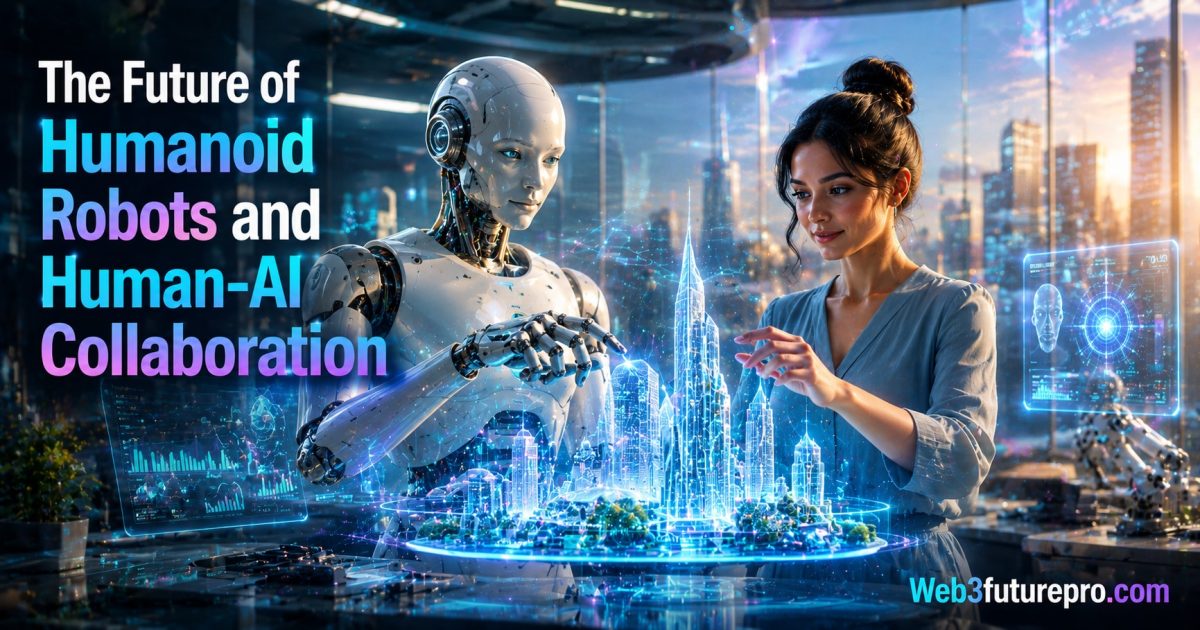
The future of humanoid robots is rapidly becoming one of the most exciting technological revolutions of the modern era. Powered by advancements in artificial intelligence, robotics, machine learning, and automation, humanoid robots are evolving from science fiction concepts into real-world innovations capable of transforming industries, workplaces, and everyday human life. From healthcare and customer service to manufacturing and education, these intelligent machines are expected to play a major role in reshaping how humans interact with technology in the coming decades.
Leading technology companies such as Tesla, Boston Dynamics, and Figure AI are investing billions into developing humanoid robots designed to assist humans with complex tasks, improve productivity, and solve labor shortages across various industries. Modern humanoid robots are now capable of recognizing speech, understanding emotions, navigating environments autonomously, and learning through AI-powered systems, making human-AI collaboration more realistic than ever before.
As artificial intelligence continues to advance, the relationship between humans and intelligent robots is expected to shift from simple automation toward deeper collaboration. Instead of replacing humans entirely, the next generation of AI-powered humanoid robots aims to work alongside people, enhancing efficiency, supporting decision-making, and improving quality of life. This emerging partnership between humans and AI systems could redefine the future of work, communication, healthcare, and global innovation in ways never seen before.
What if the colleague working beside you in 2030 isn’t entirely human — but a humanoid robot that learns from you, anticipates your needs, and collaborates seamlessly on complex tasks? Or imagine a home assistant that doesn’t just follow commands but understands context, emotion, and long-term goals to genuinely help you live better.
This future is arriving faster than most people realize. In 2026, humanoid robots have moved from science fiction prototypes to early commercial deployments. Companies like Tesla, Figure AI, Boston Dynamics, Agility Robotics, and Sanctuary AI are shipping or piloting advanced humanoid systems. At the same time, breakthroughs in large language models, multimodal AI, and embodied intelligence are enabling deeper, more natural human-AI collaboration.
The convergence of humanoid robotics and advanced AI is poised to reshape industries, labor markets, healthcare, education, elder care, and daily life. This isn’t about robots replacing humans — it’s about creating powerful new forms of partnership that amplify human potential.
This comprehensive guide explores the current state and future trajectory of humanoid robots, how human-AI collaboration is evolving, the key technologies driving progress, major applications, economic implications, ethical challenges, and practical steps for individuals, businesses, and societies to prepare for this transformative era.
The State of Humanoid Robotics in 2026
Humanoid robots in 2026 are no longer clumsy experimental machines. They feature:
- Advanced Dexterity — Hands capable of delicate manipulation, tool use, and even basic cooking or assembly work.
- Natural Movement — Improved balance, walking, and interaction through better proprioception and reinforcement learning.
- Multimodal Intelligence — Integration of vision, language, touch, and reasoning models that allow them to understand and respond to complex instructions.
- Learning Capability — Many systems can learn new tasks through demonstration (imitation learning) or limited trial-and-error.
Leading Players in 2026:
- Tesla Optimus — Aggressive development timeline with focus on factory and household use.
- Figure AI — Strong partnerships (including with OpenAI) for general-purpose humanoid intelligence.
- Boston Dynamics (Atlas) — Exceptional mobility and strength, shifting toward commercial applications.
- Agility Robotics (Digit) — Already deployed in warehouses for material handling.
- Sanctuary AI — Heavy emphasis on safe, helpful human collaboration.
- Apptronik and several Chinese developers pushing cost reduction and rapid iteration.
Prices are dropping rapidly. While early commercial units still cost hundreds of thousands of dollars, projections show general-purpose humanoids becoming economically viable for businesses within the next 3–5 years.
The Rise of Human-AI Collaboration
The most important development isn’t the robots themselves — it’s how humans and AI systems (embodied in robots or digital agents) work together:
Types of Collaboration Emerging in 2026:
- Augmentation — Robots handle repetitive or dangerous physical tasks while humans focus on creativity, judgment, and oversight.
- Co-Creation — Humans and AI/robots jointly design products, solve problems, or provide care.
- Supervision — Humans set high-level goals; AI agents and robots execute, adapt, and report back.
- Emotional & Social Intelligence — Advanced models that recognize and respond appropriately to human emotions.
This partnership model is proving more powerful than pure automation. Studies and early deployments show that human-AI teams often outperform both humans alone and fully autonomous systems in creativity, adaptability, and complex problem-solving.
Key Technological Enablers
Several breakthroughs are accelerating progress:
- Foundation Models for Robotics — Large models trained on video, simulation, and real-world data that provide generalist capabilities.
- Embodied AI — Training AI directly in physical bodies or high-fidelity simulations.
- Multimodal Sensing — Integration of vision, touch, audio, and proprioception.
- Efficient Hardware — Better actuators, batteries, and materials making robots lighter, stronger, and more energy-efficient.
- Cloud-Robot Integration — Robots accessing massive shared intelligence while maintaining local real-time control.
Major Applications and Industry Impact
Manufacturing and Logistics Humanoids are beginning to fill labor shortages in warehouses and factories, working safely alongside humans. Early ROI is strongest here due to repetitive tasks and 24/7 operation potential.
Healthcare and Elder Care Humanoid robots are being piloted for companionship, medication reminders, mobility assistance, and basic nursing support. This could dramatically alleviate caregiver shortages in aging societies.
Hospitality and Service Hotels, restaurants, and retail are testing humanoids for cleaning, delivery, and customer interaction — especially in labor-constrained markets.
Construction and Hazardous Environments Robots handle dangerous or physically demanding work (e.g., disaster response, mining, infrastructure inspection).
Education and Research Personalized tutoring robots and research assistants that can conduct experiments or literature reviews.
Home and Personal Use Early consumer models focused on specific high-value tasks (cleaning, elderly monitoring, childcare assistance) are expected within the next 5–7 years.
Economic and Societal Implications
Labor Market Transformation Rather than mass unemployment, experts anticipate a shift toward human-robot teams. Jobs will evolve — many will become more fulfilling as robots take over dull, dirty, or dangerous work.
Productivity Explosion Widespread humanoid deployment could significantly boost global GDP through increased output and new service categories.
New Economic Models Robot-as-a-Service (RaaS) subscriptions, shared robot fleets, and decentralized ownership through DAOs may emerge.
Geopolitical Dynamics Nations and companies that lead in humanoid robotics and embodied AI will gain substantial strategic advantages in the coming decades.
Critical Challenges Ahead
- Technical Hurdles — Dexterity, long-term autonomy, and energy efficiency still need major improvements.
- Safety and Reliability — Ensuring robots operate safely around humans remains paramount.
- Ethical Questions — Job displacement, privacy, emotional attachment to robots, and accountability for robot actions.
- Regulation — Governments are racing to create appropriate frameworks for safety, liability, and deployment.
- Cost and Accessibility — High initial prices could widen inequality if not addressed through innovative business models.
- Energy Consumption — Scaling fleets of robots will require significant clean energy infrastructure.
How to Prepare for the Humanoid + AI Future
For Individuals:
- Develop skills in AI collaboration, robotics oversight, creative problem-solving, and emotional intelligence.
- Stay curious and experiment with current AI tools and early robot platforms.
- Focus on lifelong learning — the ability to adapt will be more valuable than any single skill.
For Businesses:
- Start with pilot programs in high-ROI areas (warehousing, repetitive tasks).
- Invest in workforce training for human-AI teamwork.
- Design processes that integrate robots thoughtfully rather than as direct replacements.
- Monitor ethical implications and build responsible AI principles into operations.
For Policymakers:
- Create balanced regulations that encourage innovation while protecting workers and citizens.
- Invest in education systems that prepare people for collaboration with intelligent machines.
- Address potential inequality through retraining programs and new social contracts.
The Long-Term Vision: A New Era of Human Flourishing
By 2030–2035, humanoid robots and advanced AI collaborators could become as commonplace as smartphones are today. This doesn’t mean the end of human work — it means the beginning of a new chapter where humans are freed from many physical and cognitive constraints to pursue higher purposes: creativity, relationships, exploration, and solving humanity’s greatest challenges.
The most successful societies and organizations will be those that view robots and AI not as competitors, but as powerful partners in building a more abundant, sustainable, and fulfilling future.
The age of humanoid robots and deep human-AI collaboration is no longer coming. It has already begun. The only question is how thoughtfully and intentionally we choose to shape it.
The future of humanoid robots and human-AI collaboration represents a major technological shift that could redefine the way society lives, works, and interacts with intelligent systems. As robotics and artificial intelligence continue advancing at an unprecedented pace, humanoid robots are becoming more capable of assisting humans in healthcare, education, manufacturing, research, customer service, and countless other industries.
Companies developing next-generation robotics technologies are focused on creating AI systems that complement human abilities rather than simply replacing them. Through advanced machine learning, natural language processing, and autonomous decision-making, humanoid robots are expected to improve workplace productivity, support aging populations, and help solve complex global challenges. The growing collaboration between humans and intelligent machines may ultimately unlock new levels of innovation and economic growth across the world.
While concerns surrounding ethics, privacy, employment, and AI regulation remain important discussions, the potential benefits of human-AI collaboration continue to drive global investment and technological progress. As humanoid robots become increasingly integrated into daily life, the future will likely be defined not by competition between humans and machines, but by a powerful partnership capable of transforming civilization and creating smarter, more connected societies for generations to come.