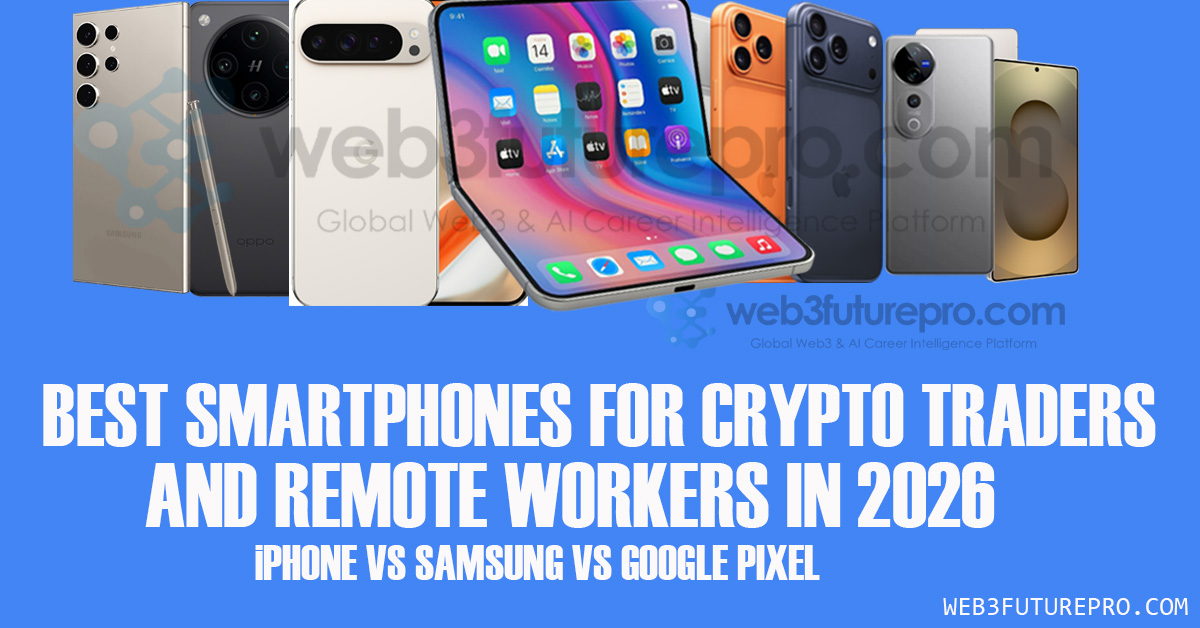
The best smartphones for crypto traders and remote workers in 2026 need to do much more than run social media and messaging apps. For people who trade cryptocurrency, manage wallets, use DeFi platforms, attend virtual meetings, work with AI tools, and manage business tasks away from a desk, a smartphone can function as a portable workstation and an important part of their digital-security setup.
Three flagship families stand out in this comparison: Apple’s iPhone, Samsung’s Galaxy S Ultra, and Google’s Pixel Pro series. Current 2026 comparisons put devices such as the iPhone 18 Pro, Samsung Galaxy S26 Ultra, and Google Pixel 11 Pro/Pro XL at the center of the premium smartphone market, with each taking a different approach to performance, AI, security, and productivity.
For crypto users, security is particularly important. Samsung’s Knox Vault, for example, uses an isolated hardware-based security subsystem to protect sensitive information including cryptographic keys, biometric data, and blockchain credentials. Crypto-trading comparisons also highlight hardware-backed security and long-term software support as important factors when choosing a smartphone for digital-asset activities.
CHECK: Best Phones for Crypto & Web3 in 2026: Top Smartphones for Trading, Wallets, DeFi & Web3 Apps
Remote workers have additional priorities. A large, bright display can make charts, spreadsheets, documents, and video calls easier to manage. Battery life matters when working away from a power outlet, while strong processors and AI features can improve multitasking, research, writing, communication, and content creation. Samsung also brings productivity-focused features such as the S Pen and DeX, while Google’s Pixel lineup emphasizes Gemini-powered AI and Apple’s iPhone combines powerful silicon with its wider device ecosystem.
This guide compares the best smartphones for crypto traders and remote workers in 2026, looking at trading performance, crypto security, wallet use, AI capabilities, productivity, multitasking, battery life, displays, cameras, software support, and work-from-anywhere features.
Best Smartphones for Crypto Traders & Remote Workers 2026: iPhone vs Samsung vs Pixel

Crypto trading and remote work have quietly converged into the same use case for a growing number of people: someone monitoring DeFi positions from a co-working space, executing trades between video calls, or running a full workday from a phone because that’s the only device on hand. That overlap raises the bar for what a phone actually needs to do — it’s no longer just about camera quality or app store size, it’s about hardware-backed wallet security, an assistant that can chain multi-step tasks, and the ability to turn a 6.9-inch screen into something resembling a real workstation when you need one.
This guide compares the three phones that actually matter for this dual use case in 2026 — the iPhone 17 Pro Max, Samsung Galaxy S26 Ultra, and Google Pixel 11 Pro XL — across the specific criteria that matter to someone both trading crypto and working remotely: security architecture, AI capability, desktop-style multitasking, display quality, and battery performance. None of this is financial advice, and no phone substitutes for a proper hardware wallet when holding significant crypto value.
Apple iPhone (17/18 Pro Max Class)
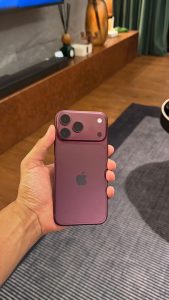
Apple’s latest Pro Max models remain the benchmark for polished security and ecosystem integration.
Strengths for Crypto Traders
The Secure Enclave provides industry-leading isolation for cryptographic keys and biometric data. Face ID is fast and reliable in most conditions. iOS offers a mature, tightly controlled environment with excellent support for major wallet and exchange apps. Performance from the A-series Pro chip (A19 Pro or successor) is consistently strong for concurrent charting, wallet, and browser use. Long software support and rapid security patching reduce ongoing risk. Resale value is typically high, lowering effective ownership cost.
Strengths for Remote Workers
Seamless continuity with Mac, iPad, and Apple Watch creates a highly productive environment for users already in the Apple ecosystem. Video call quality is excellent, Continuity and AirDrop streamline workflows, and the display is bright, color-accurate, and responsive. Battery life on Pro Max models supports full workdays with mixed use. Privacy controls and Focus modes help manage notifications during deep work or trading sessions.
Limitations
Less flexible for sideloading or advanced Android-only tools. Multitasking, while improved, remains more constrained than large Android tablets or foldables in true side-by-side productivity. Some power users prefer Android’s customization depth.
Best For
Users who value security simplicity, long-term support, ecosystem lock-in benefits, and a refined daily experience. Ideal for traders who also work extensively with Apple computers or who prioritize a low-friction, high-trust environment.
Samsung Galaxy S26 Ultra
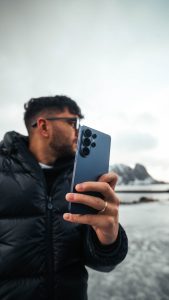
Samsung’s Ultra flagship emphasizes large displays, multitasking power, and long support.
Strengths for Crypto Traders
The large 6.9-inch high-resolution Dynamic AMOLED display with adaptive high refresh rate is excellent for detailed charts and multi-window layouts (trading app + wallet + news or analytics). Knox Vault delivers robust hardware security. Seven years of security updates provide multi-year confidence. S Pen support enables precise annotation of charts or note-taking during analysis. Performance from the latest Snapdragon 8 Elite-class chipset handles concurrent apps smoothly. Battery capacity and efficiency support extended monitoring sessions.
Strengths for Remote Workers
True multi-window productivity and DeX-like desktop modes (when connected to a monitor) make the Ultra a strong mobile workstation. The S Pen is useful for markup, signatures, and quick notes. Camera versatility aids documentation. Knox features and strong MDM support appeal to professional and enterprise environments. Long software support matches or exceeds many competitors.
Limitations
One UI adds features and some complexity compared with cleaner Android skins. The device is larger and can feel bulkier for one-handed use. Software experience is more feature-rich but less minimalist than Pixel or iOS.
Best For
Active traders who rely on large-screen multitasking and chart analysis, and remote workers who want maximum on-device productivity tools, stylus input, and Android flexibility. Particularly strong for users who frequently run multiple apps simultaneously.
Google Pixel 11 Pro / Pro XL
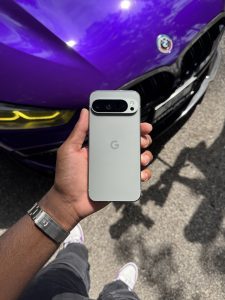
Google’s Pixel Pro models emphasize clean software, rapid updates, and AI-assisted productivity with strong security foundations.
Strengths for Crypto Traders
Hardware-backed security (Titan M series) and the cleanest path to privacy-focused custom ROMs such as GrapheneOS make Pixels attractive for security-conscious users willing to invest setup time. Fast monthly security updates reduce vulnerability windows. The display on Pro XL variants is large and capable for charts. Performance is solid for everyday trading and wallet use, even if peak benchmarks trail the absolute leaders in some sustained workloads. Call screening and recording tools can be useful for verification or record-keeping.
Strengths for Remote Workers
Clean Android experience with minimal bloat, excellent integration with Google Workspace tools, and strong on-device AI features for summarization, transcription, and drafting. Camera and computational photography excel for documentation and content. Battery life is competitive, and the software feels lightweight and responsive. Seven years of updates provide long-term viability.
Limitations
Peak sustained performance and some gaming/graphics workloads can lag the latest Snapdragon or A-series chips. The ecosystem continuity is strongest within Google services rather than a full hardware suite comparable to Apple. Some advanced multitasking features feel less polished than Samsung’s implementation.
Best For
Users who prioritize the fastest security patches, a clean software experience, Google service integration, or the option to run a hardened custom OS. Strong choice for privacy-focused traders and remote workers who live in Google Workspace or value AI productivity aids.
Head-to-Head Comparison Summary
| Category | iPhone Pro Max | Galaxy S26 Ultra | Pixel 11 Pro / XL |
|---|---|---|---|
| Hardware Security | Excellent (Secure Enclave) | Excellent (Knox Vault) | Very Strong (Titan + GrapheneOS option) |
| Display for Charts/Multitasking | Very Good | Outstanding (size + multi-window) | Very Good |
| Battery Endurance | Excellent | Excellent | Very Good to Excellent |
| Software Polish & Updates | Outstanding (long support) | Very Good (7 years) | Outstanding (fastest patches) |
| Productivity Features | Ecosystem continuity | S Pen, multi-window, DeX-like | Clean UI, strong AI tools |
| Crypto/Wallet App Support | Excellent | Excellent | Excellent |
| Video Calls & Camera | Excellent | Excellent | Excellent (often best computational) |
| Best Overall Fit | Security + simplicity + ecosystem | Multitasking power users | Privacy + clean experience + updates |
Recommendations by Primary Use Case
Primarily Crypto Trading with Secondary Remote Work
- Large-screen multitasking priority → Galaxy S26 Ultra
- Maximum simplicity and security trust → iPhone Pro Max
- Privacy maximalism or GrapheneOS interest → Pixel 11 Pro/XL
Primarily Remote Work with Secondary Trading
- Existing Apple ecosystem → iPhone Pro Max
- Heavy multitasking, stylus, or Android preference → Galaxy S26 Ultra
- Google Workspace + clean software + AI features → Pixel 11 Pro/XL
Balanced Crypto Trader + Remote Worker
Most users will find the iPhone Pro Max or Galaxy S26 Ultra the most complete daily drivers. The Pixel shines when update speed, software minimalism, or privacy hardening are non-negotiable.
Why These Three, and Why This Comparison Is Different
General flagship comparisons tend to weigh cameras and benchmark scores most heavily. For a crypto-trading remote worker, those factors matter far less than three things most reviews treat as secondary: whether the phone can isolate private keys in dedicated hardware, whether its AI assistant can genuinely reduce cognitive load during a demanding multi-app workday, and whether it can extend into a real external workstation when a laptop isn’t available.
According to an August 2026 flagship comparison from tech publication Smartprix, these three phones essentially answer the “best flagship” question in three different ways: Google leads with on-device AI compute and the deepest Gemini integration to date, Apple counters with efficient, powerful silicon and reliable camera results, and Samsung pitches a slimmer form factor, its comprehensive Galaxy AI suite, and the S Pen as a genuine productivity tool.
Verified Specs Side by Side
Before getting into the trading- and work-specific analysis, it’s worth establishing the actual hardware, since spec sheets for these three phones vary meaningfully in ways that affect real use.
| Spec | iPhone 17 Pro Max | Samsung Galaxy S26 Ultra | Google Pixel 11 Pro XL |
|---|---|---|---|
| Release date | September 2025 | March 2026 | August 2026 |
| Chip | A19 Pro (2nm-class efficiency gains) | Snapdragon 8 Elite Gen 5 | Tensor G6 |
| Display | 6.9″ OLED, 120Hz, 3,000 nits peak | 6.9″ AMOLED, 120Hz, 2,600 nits peak | 6.8″ OLED, 120Hz, up to 3,600 nits peak |
| Battery | 5,088mAh, up to 40W wired charging | 5,000mAh, 60W wired charging | 5,115mAh, 45W wired (75% in 30 min), 25W Pixelsnap wireless |
| RAM/Storage (base) | 12GB / 256GB | 12GB / 256GB | 12GB / 256GB |
| Starting price (256GB) | $1,199 | $1,300 | Competitively priced against both (regional pricing varies) |
| Rear cameras | Triple, new 18MP Center Stage front camera | Quad: 200MP main, 50MP ultrawide, 10MP 3x tele, 50MP 5x periscope (ALoP) | Triple: 50MP main, 48MP ultrawide, 48MP 5x telephoto |
Specs per PhoneArena’s verified comparison database and Smartprix/Digit’s 2026 flagship comparisons. Regional pricing and configurations vary; figures shown are US base-configuration MSRPs where available.
A few details stand out for this specific audience. The Pixel 11 Pro XL’s 45W charging hitting 75% in roughly 30 minutes, per Smartprix’s battery testing, is genuinely useful for anyone who needs a fast top-up between back-to-back calls or trading sessions rather than a long charging window. The Galaxy S26 Ultra’s 60W charging is faster still on paper. The iPhone 17 Pro Max’s 40W charging remains the slowest of the three, consistent with Apple’s historically conservative approach to fast charging.
Security Architecture: What Actually Protects Your Keys
For crypto specifically, hardware-backed key isolation is the single most important security factor, and all three phones implement it differently.
iPhone 17 Pro Max uses Apple’s Secure Enclave, a dedicated hardware-isolated coprocessor that can protect cryptographic keys for apps built to use Apple’s secure key APIs. Combined with Face ID and Apple’s consistently strong security-update track record, it remains a dependable foundation — with the caveat that whether any specific wallet app actually stores its keys inside that isolated hardware depends on how that individual app is built, not on the phone alone.
Galaxy S26 Ultra uses Samsung Knox Vault, a hardware-backed isolation system for authentication credentials and biometric data, and Samsung has committed to seven years of security updates and OS upgrades on this generation — among the longest support windows in the Android ecosystem. The S26 Ultra also includes a Privacy Display feature that reduces on-screen visibility from side angles, a small but genuinely useful feature for checking wallet balances or exchange positions in public spaces like co-working offices or cafés.
Pixel 11 Pro XL benefits from Google’s direct control over both hardware and software, meaning security patches arrive without third-party manufacturer delay — a structural advantage shared with Apple’s approach but distinct from most other Android manufacturers. Google’s hardware-backed security, verified boot, and Android’s application sandboxing provide a comparable foundation to the other two, and Google has historically been fast to patch newly disclosed vulnerabilities specifically because it doesn’t need to wait on a separate OEM software layer.
None of these three architectures makes any phone a substitute for a proper offline hardware wallet when holding significant crypto value — that principle holds regardless of which of these three devices you choose.
AI Assistants for Active Trading and Remote Work
This is where the three phones diverge most sharply in ways that matter for someone juggling trading positions and work simultaneously. According to a 2026 field review from Guide Techly, based on six months of parallel daily use across a Pixel 10 Pro and an iPhone 17 for real consulting and trading-adjacent work, Google’s Gemini Nano on-device model runs without an internet connection and handles genuinely useful real-time tasks — summarizing a long Slack or Discord thread, transcribing a call locally, or drafting a quick reply — faster and more reliably than Apple Intelligence’s current feature set, in that reviewer’s direct comparison.
A separate 2026 comparison from GenZeBlog found that Gemini-powered Assistant on Android is specifically designed to chain multi-step requests in a single flow — relevant for a trader who might want to ask an assistant to check a price alert, summarize recent portfolio activity, and set a reminder to review a position, all in one request — while Siri on iPhone, particularly on older setups, handles single-step requests more reliably than multi-step chains.
Samsung’s Galaxy AI suite, built on top of the same underlying Gemini integration Google offers on Pixel devices, adds Samsung-specific tools layered into its own ecosystem — though Smartprix’s 2026 comparison notes that Google’s own implementation currently leads specifically in depth of Gemini integration and raw on-device AI compute, meaning Pixel holds a slight edge over Samsung in this category specifically, despite Samsung offering broadly similar underlying AI capability wrapped in different software.
For a crypto trader specifically, the practical implication is this: an assistant that can reliably chain “check this, then do that” requests reduces the number of manual app-switches during a volatile market moment — a genuinely meaningful advantage when seconds matter, and one that currently favors Pixel and, to a slightly lesser extent, Samsung, over iPhone.
Desktop Mode: The Clearest Differentiator for Remote Work
If you regularly need to turn your phone into an actual workstation — plugging into a monitor at a co-working space, a hotel room, or a client site — this is the single most decisive category in this entire comparison, and it isn’t close.
Samsung Galaxy S26 Ultra supports Samsung DeX, the most mature desktop-mode implementation in the smartphone industry, transforming the device into a PC-like workspace with resizable, drag-and-drop windows, a taskbar, and full keyboard-and-mouse support, either wired via USB-C to HDMI or wirelessly to a compatible display. It’s worth noting a real caveat: Samsung’s recent One UI 8 update, built on Android 16, introduced some feature regressions and usability bugs affecting DeX’s core prosumer users, per a 2026 technical review from FaceOfIt — so the experience, while still the strongest available, isn’t flawless on the newest software.
Pixel 11 Pro XL supports native Android desktop mode on Android 16, but per the same FaceOfIt review, this remains a “buggy, developer-focused beta” that defaults to basic screen mirroring rather than a polished, ready-to-use desktop environment — a meaningfully less mature experience than Samsung’s.
iPhone 17 Pro Max has no desktop mode at all in 2026. A detailed technical investigation from ExternalDisplayiPhone.com confirmed that plugging a stock iPhone into an external monitor produces only a phone-shaped mirror between black bars, not a windowed desktop. Unfinished “Stage Manager-like” code was found briefly exploitable in iOS 26.1 before Apple closed that path in the 26.2 beta — meaning the capability may exist in some unfinished form but has not shipped and there’s no confirmed timeline for it.
For remote workers who need this capability regularly, Samsung is the clear winner, Pixel is a distant second with real limitations, and iPhone currently offers nothing comparable.
Trading-Specific Considerations: Screen, Multitasking, and Notifications
Active trading benefits from specific capabilities beyond general productivity. Native on-device split-screen multitasking — running a price chart alongside a news feed or a DeFi dashboard — favors both Android phones over iPhone, which doesn’t natively support split-screen on the phone itself; per a 2026 productivity comparison from Guide Techly, both Pixel and Samsung devices support genuine side-by-side split-screen plus a floating pop-up window layered on top, a three-app combination iOS cannot currently match natively.
Display brightness matters more for trading than it might initially seem, since checking charts in direct outdoor sunlight is a common scenario for remote workers who trade between meetings or while traveling. The Pixel 11 Pro XL’s peak brightness of up to 3,600 nits, per Digit’s verified specs comparison, is the highest of the three, with the iPhone 17 Pro Max close behind at 3,000 nits and the Galaxy S26 Ultra at 2,600 nits — a real, if modest, edge for Pixel in bright outdoor conditions.
For notification handling — critical for anyone setting price alerts across multiple exchanges or DeFi protocols — all three platforms handle standard push notifications comparably well; the meaningful difference lies in each platform’s automation depth. Android’s Tasker app, available on both Samsung and Pixel devices, allows genuinely custom automated workflows triggered by conditions like time, location, or app state — something iOS has no direct equivalent for, according to Wispr Flow’s 2026 productivity comparison.
Camera and Video Calling: A Secondary but Real Factor
For remote workers whose job includes regular video calls, camera quality still matters. According to a detailed 2026 camera comparison from ReviByte, the iPhone 17 Pro Max’s new 18MP Center Stage front camera is a genuine upgrade for video calls specifically — its square sensor design allows it to rotate between portrait and landscape framing without physically rotating the phone, and the higher resolution captures more detail for cropped shots, both useful for professional video presence.
The same comparison found the Pixel’s 42MP front camera produces the best skin-tone handling across different complexions, while the Galaxy S26 Ultra’s 12MP front camera is the weakest spec on paper among the three but benefits from strong AI processing that narrows the practical gap.
Battery and Charging for a Full Trading-and-Work Day
Battery capacity is close across all three: the Pixel 11 Pro XL leads narrowly at 5,115mAh, followed by the iPhone 17 Pro Max at 5,088mAh, with the Galaxy S26 Ultra slightly behind at 5,000mAh, per PhoneArena’s verified specs database. Charging speed tells a more differentiated story: the Galaxy S26 Ultra’s 60W wired charging is the fastest of the three, the Pixel 11 Pro XL’s 45W charging reaches 75% in roughly 30 minutes according to Smartprix’s testing, and the iPhone 17 Pro Max’s 40W charging remains the slowest — a real consideration for anyone who needs a quick top-up between a trading session and a client call rather than a full overnight charge.
Which Phone Fits Which Kind of Crypto Trader / Remote Worker
Choose the iPhone 17 Pro Max if: you’re deeply embedded in the Mac and iCloud ecosystem, you value Apple’s Secure Enclave and consistent security-update delivery, you prioritize video-call camera quality, and you don’t have a frequent, genuine need to turn your phone into an external workstation.
Choose the Galaxy S26 Ultra if: you regularly need real desktop-mode multitasking on an external monitor — Samsung DeX remains the clear leader here — you want the fastest charging of the three, you value the Privacy Display feature for checking positions in public, and you want the longest committed security-update window (seven years) among the three.
Choose the Pixel 11 Pro XL if: you want the deepest, most reliable multi-step AI assistant integration for reducing cognitive load during active trading and multitasking-heavy remote work, you want direct-from-Google security patches with no manufacturer delay, and you want the brightest display of the three for outdoor chart-checking.
Risks and Honest Limitations
This comparison reflects verified specs and reviewer testing as of the current 2026 device generation, and two things are worth flagging. First, Apple’s desktop-mode gap is the most decisive factor in this comparison specifically because it hasn’t shipped yet — unfinished code suggests it could arrive in a future iOS update, which would meaningfully change this analysis if and when it does. Second, no phone’s hardware security, however strong, eliminates the fundamental risks of mobile crypto use: phishing, malicious app downloads, and SIM-swapping attacks remain effective regardless of which of these three devices you choose, and none of them should hold significant crypto value without a proper offline hardware wallet as the primary custody solution.
For someone genuinely straddling crypto trading and remote work in 2026, the honest answer is that no single phone wins outright — each of these three makes a different, well-executed bet. Samsung’s Galaxy S26 Ultra is the strongest choice for anyone who needs a real external workstation and the fastest charging. Google’s Pixel 11 Pro XL leads on AI assistant depth and display brightness, both genuinely useful during active, multitasking-heavy trading sessions.
Apple’s iPhone 17 Pro Max remains the most polished, ecosystem-consistent option for anyone already committed to Mac and iCloud, with camera quality that edges out the competition for video-call-heavy remote work. The right choice depends less on brand loyalty than on which specific capability — desktop-mode flexibility, AI task-chaining, or ecosystem cohesion — actually shows up in your daily workflow most often.
Choosing among the best smartphones for crypto traders and remote workers in 2026 requires looking beyond processor speed and camera specifications. The ideal device needs to combine security, performance, battery life, AI capabilities, reliable software support, multitasking, and a strong ecosystem of work and crypto applications.
The iPhone, Samsung Galaxy S Ultra, and Google Pixel Pro lines each approach this differently. Apple’s latest Pro iPhones emphasize powerful hardware, ecosystem integration, and security, while Samsung’s Galaxy S26 Ultra combines flagship performance with Galaxy AI, S Pen functionality, DeX productivity features, and Knox security. Google’s Pixel 11 Pro/Pro XL focuses heavily on Gemini-powered AI, Google’s software ecosystem, and hardware-backed security.
For crypto traders, security should remain one of the first considerations. Samsung’s Knox Vault specifically provides hardware-isolated protection for sensitive credentials and blockchain keys, while crypto-trading evaluations also emphasize hardware-backed security and long-term software support. However, a secure smartphone does not eliminate crypto risk.
Users should still use reputable wallets and exchanges, enable multifactor authentication, keep software updated, verify transactions before signing them, and consider dedicated hardware wallets for substantial long-term holdings.
For remote workers, the decision may come down to workflow. Someone deeply invested in Apple’s ecosystem may value iPhone integration, while a professional who wants DeX, S Pen functionality, extensive multitasking, and Android flexibility may find Samsung’s approach particularly useful. A worker who relies heavily on Google services and AI may be attracted to the Pixel’s Gemini integration and clean Android experience.
The most important lesson is that there is no single smartphone specification that determines the best choice for everyone. Crypto traders should prioritize security and reliability; remote workers should prioritize productivity and battery life; AI-heavy users should examine the actual AI features available on their device and in their region.
In 2026, the best smartphone for a crypto trader and remote worker is ultimately the one that fits the user’s trading habits, security requirements, AI workflow, work ecosystem, budget, and everyday mobility.
References
- Smartprix — “Pixel 11 Pro XL vs. iPhone 17 Pro Max vs. Galaxy S26 Ultra: The Ultimate 2026 Flagship Comparison“
- Digit — “Google Pixel 11 Pro XL vs Apple iPhone 17 Pro Max vs Samsung Galaxy S26 Ultra: Price, camera, display and other specs compared“
- PhoneArena — “Samsung Galaxy S26 Ultra vs Apple iPhone 17 Pro Max Specs Comparison“
- ReviByte Opinions — “Galaxy S26 Ultra vs iPhone 17 Pro Max vs Pixel 10 Pro: Camera Comparison & Analysis“
- Guide Techly — “iPhone vs Android in 2026 – Which Is Better for Productivity?“
- GenZeBlog — “iOS vs Android AI Comparison 2026 – Which is Better for Daily Use?“
- FaceOfIt — “List of Phones with External Monitor: DeX, Pixel & iOS Support“
- ExternalDisplayiPhone.com — “Did iOS 26 Add Desktop Mode to the iPhone? The Real Answer“
- Wispr Flow — “Android vs iPhone: Which is better for productivity in 2026?“
- Traders Union — “Best Smartphones For Crypto Trading In 2026“